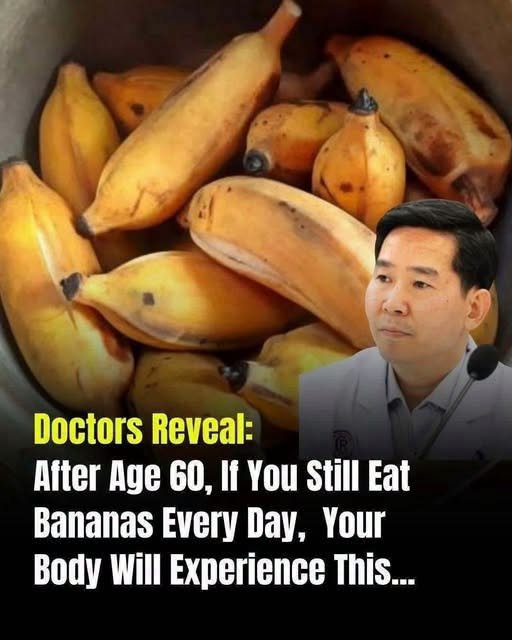
What Happens to Your Body When You Eat a Banana Regularly After Age 60?
As we get older, maintaining a balanced diet becomes increasingly important. And one familiar fruit can provide several nutrients that support healthy aging: the banana.
Bananas are rich in potassium, contain fiber and vitamin B6, and provide natural carbohydrates that help fuel everyday activities…. Continue Reading ⬇️
Potassium supports normal muscle and nerve function and helps the body regulate blood pressure. Getting enough potassium is particularly important as we age, although bananas are only one of many good dietary sources.
Fiber helps support digestion and regular bowel movements, which can become more challenging for some older adults.
Bananas also provide vitamin B6, which contributes to normal nervous-system function and helps the body process nutrients from food.
Another advantage is convenience. Bananas are soft, easy to prepare, and make a satisfying snack without added sugar.
However, eating a banana every day isn’t necessary for everyone, and it won’t prevent disease or reverse aging.
People with diabetes may need to consider portion sizes and their overall carbohydrate intake. Those with kidney disease, especially anyone instructed to limit potassium, should seek individualized medical guidance.
The takeaway? For many adults over 60, bananas can be a simple, affordable addition to a healthy diet.
Their benefits come from the nutrients they provide—not from any magical ability to transform the body. Combined with a varied diet and healthy daily habits, they can help support overall well-being.
Website Disclaimer
The information provided on this website is for general informational and educational purposes only. While we strive to ensure that all content is accurate and up to date, we make no guarantees regarding the completeness, reliability, or accuracy of any information published.
The views and opinions expressed in articles belong to their respective authors and do not necessarily reflect the views of this website. Any action you take based on the information found on this website is strictly at your own risk. We will not be liable for any losses, damages, or inconveniences arising from the use of our content.
Some articles may contain opinions, third-party information, or external links. We do not endorse or guarantee the accuracy of content on external websites and are not responsible for their practices or policies.
All content on this website is provided in good faith and is intended for informational purposes only. Readers are encouraged to verify information independently and seek professional advice where appropriate.