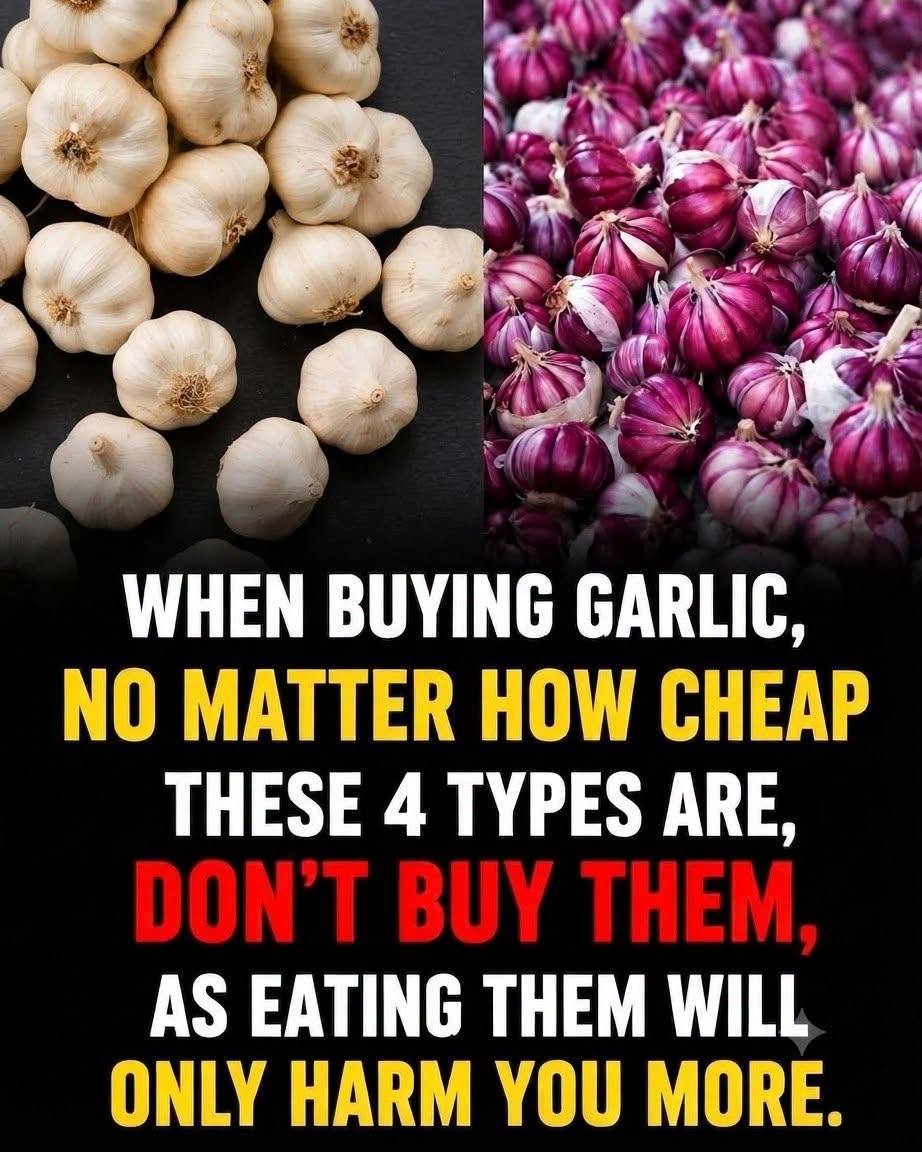
Garlic is a staple ingredient used in countless dishes worldwide, valued for both its flavor and potential health benefits. However, many viral claims about “bad garlic” are misleading and oversimplified.
You may have seen warnings telling you to avoid certain types of garlic based on color, price, or origin. In reality, these factors alone do not determine quality or safety.
Instead, what truly matters is freshness and condition. Shoppers should focus on firmness, dryness, smell, and any visible signs of spoilage rather than marketing myths.
One clear warning sign is mold. Garlic with green, blue, black, or fuzzy patches may be contaminated. Because cloves are tightly packed, mold can spread internally even if only part is visible.
Another type to avoid is garlic that feels soft, wet, or mushy. Fresh garlic should be firm. If it collapses under pressure or feels damp, it may already be rotting inside.
You should also be cautious of bulbs with dark spots, slimy texture, or a strong unpleasant odor. These are common indicators that the garlic is no longer fresh.
Sprouted garlic, on the other hand, is not dangerous. While the green shoot may affect taste slightly, the cloves are generally still safe to eat if they remain firm and dry.
In the end, choosing good garlic is simple: pick bulbs that are dry, firm, and free from visible damage. Paying attention to these basic signs helps ensure better flavor and safer cooking.
Website Disclaimer
The information provided on this website is for general informational and educational purposes only. While we strive to ensure that all content is accurate and up to date, we make no guarantees regarding the completeness, reliability, or accuracy of any information published.
The views and opinions expressed in articles belong to their respective authors and do not necessarily reflect the views of this website. Any action you take based on the information found on this website is strictly at your own risk. We will not be liable for any losses, damages, or inconveniences arising from the use of our content.
Some articles may contain opinions, third-party information, or external links. We do not endorse or guarantee the accuracy of content on external websites and are not responsible for their practices or policies.
All content on this website is provided in good faith and is intended for informational purposes only. Readers are encouraged to verify information independently and seek professional advice where appropriate.