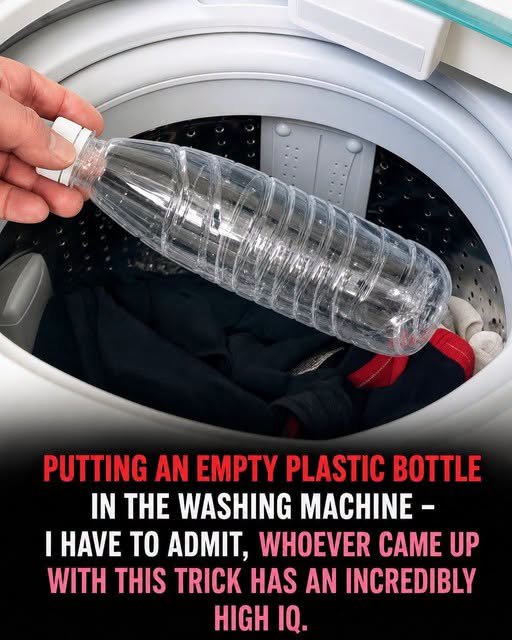
Some people claim that tossing one or two clean, sealed plastic bottles into the washing machine can help reduce wrinkles, prevent clothes from tangling, and improve the movement of laundry during a wash cycle. While the idea has gained attention as a simple household trick, there are a few important things to understand before trying it.
How Does the Plastic Bottle Trick Work?
The idea behind this method is that the bottles move around with the laundry, creating extra movement inside the drum. Some people believe this movement helps separate bulky fabrics, such as bedsheets, towels, and blankets, allowing water and detergent to circulate more freely.
When large items twist together during washing, they can form heavy bundles that prevent other clothes from moving properly. In theory, adding an object that moves independently might help disrupt some of that tangling. However, there is no strong scientific evidence showing that ordinary plastic bottles consistently improve washing performance or reduce wrinkles.
Can It Really Prevent Wrinkles?
Wrinkles usually develop when clothes become compressed, twisted, or left sitting in a damp pile. Fabric type, washing temperature, spin speed, and the amount of laundry in the drum all play important roles.
Plastic bottles are not designed as laundry accessories, and their effectiveness is uncertain. In some machines, they may simply bounce around without providing any noticeable benefit. They could also create unwanted noise or interfere with the normal movement of the laundry.
Are There Any Risks?
Before experimenting with unusual laundry tricks, remember that washing machines are designed to operate with specific types of loads. Plastic bottles can become dented, crushed, or damaged during a cycle. Caps or labels may also loosen, creating potential problems.
For this reason, check your washing machine manufacturer’s instructions before putting any bottles inside the drum. Avoid this trick if your manual prohibits foreign objects, and never use bottles that are cracked, brittle, or otherwise damaged.
Safer Ways to Keep Laundry Moving
Fortunately, there are several practical ways to improve washing results without relying on an unproven trick:
-
Avoid overloading the drum. Clothes need enough space to move freely during the wash cycle.
-
Wash bulky items separately. Sheets, blankets, and towels can twist around smaller garments.
-
Use the correct wash cycle. Choose settings designed for the fabric type and size of the load.
-
Remove laundry promptly. Taking clothes out soon after the cycle finishes can help prevent wrinkles from setting in.
-
Try dryer balls when appropriate. Reusable wool or manufacturer-approved dryer balls can help separate laundry and improve airflow in a tumble dryer. They are intended for the dryer, not automatically for the washing machine.
The Bottom Line
The plastic bottle laundry trick is an interesting idea, but it should not be considered a proven cleaning hack. Results may vary depending on the machine, the size of the load, and the fabrics being washed.
If your goal is cleaner clothes with fewer wrinkles and less tangling, the simplest solutions are often the most reliable: avoid overcrowding, select the right cycle, and follow your machine’s care instructions.
Have you ever tried putting plastic bottles in your washing machine? Did they make a difference, or did you notice no change at all? Share your experience in the comments!
Website Disclaimer
The information provided on this website is for general informational and educational purposes only. While we strive to ensure that all content is accurate and up to date, we make no guarantees regarding the completeness, reliability, or accuracy of any information published.
The views and opinions expressed in articles belong to their respective authors and do not necessarily reflect the views of this website. Any action you take based on the information found on this website is strictly at your own risk. We will not be liable for any losses, damages, or inconveniences arising from the use of our content.
Some articles may contain opinions, third-party information, or external links. We do not endorse or guarantee the accuracy of content on external websites and are not responsible for their practices or policies.
All content on this website is provided in good faith and is intended for informational purposes only. Readers are encouraged to verify information independently and seek professional advice where appropriate.