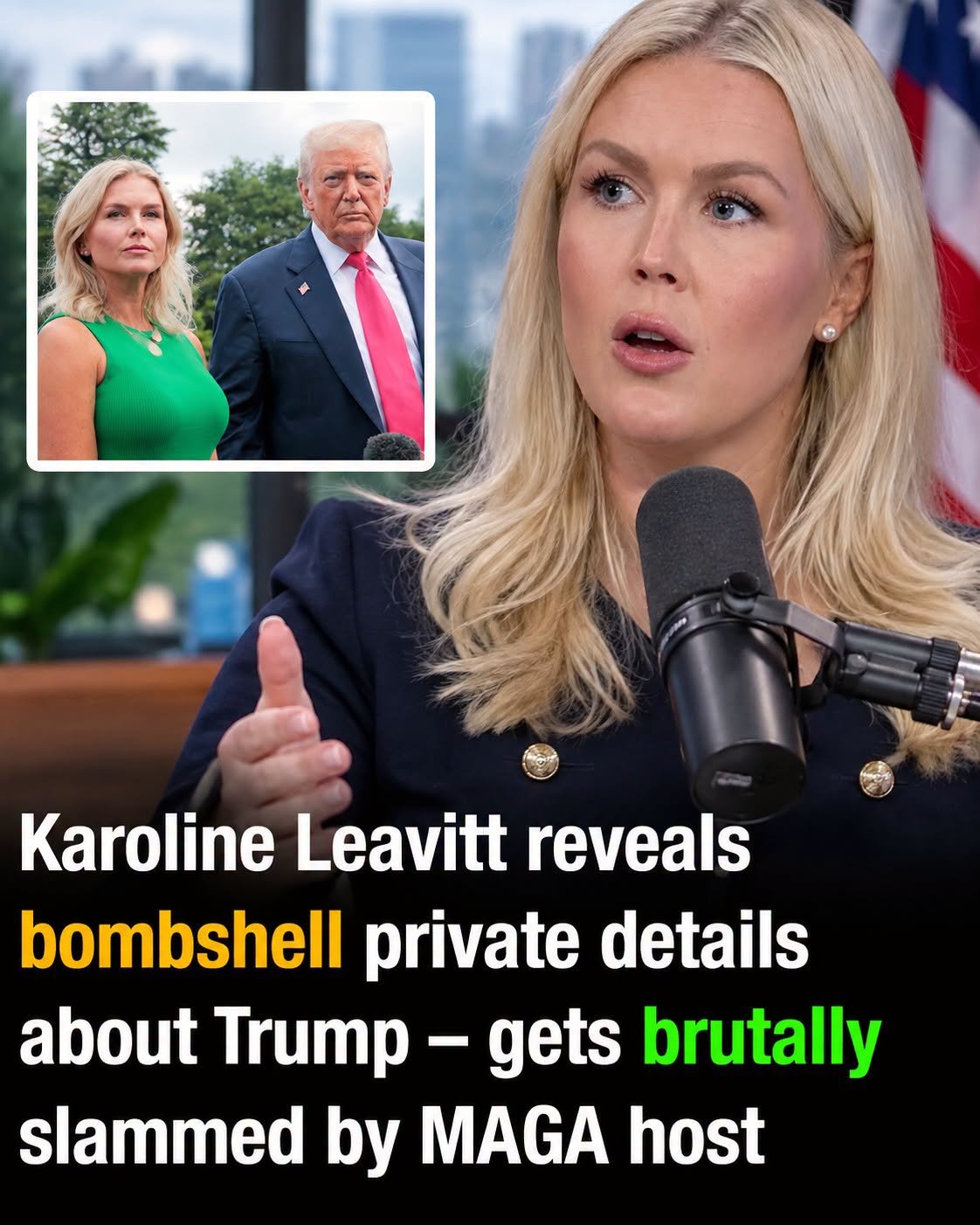
Karoline Leavitt brutally slammed after ‘gossiping’ about Trump’s private meetings

What began as an attempt to portray Donald Trump as consistent and unfiltered quickly became a controversy about where loyalty ends and disclosure begins.

During her appearance on Sean Hannity’s podcast, former White House press secretary Karoline Leavitt described Trump’s private interactions with foreign leaders, including conversations involving Russian President Vladimir Putin, Chinese President Xi Jinping, and then-British Prime Minister Keir Starmer. She said Trump’s private approach generally matched what he said publicly, arguing that there was little difference between his public persona and his behavior behind closed doors.

One of the most striking stories involved a lunch with Starmer. Leavitt recalled Trump criticizing British immigration policies directly during the meal, telling Starmer that his policies were “stupid” and urging stronger border enforcement. Leavitt presented the episode as evidence of Trump’s willingness to speak plainly even in sensitive diplomatic settings.

She also described conversations with Xi, saying Trump raised concerns about fentanyl precursor chemicals coming from China and pressed Beijing to purchase more American soybeans. Leavitt said subsequent developments involving those issues reinforced her view that Trump was pursuing specific results rather than simply creating dramatic moments for the cameras.

But the reaction from Greg Kelly shifted the story from Trump’s negotiating style to Leavitt herself. The Newsmax host publicly criticized her for discussing private presidential meetings after leaving the White House, arguing that former officials still have an obligation to protect confidential relationships. His comments characterized the revelations as gossip and a breach of trust.

That criticism exposed a broader disagreement over what political loyalty should look like after someone leaves government. Supporters of Leavitt’s approach can view firsthand accounts as useful context for understanding how major decisions are made. Critics can argue that private diplomatic conversations deserve a higher level of discretion, particularly when foreign leaders and sensitive negotiations are involved.

Leavitt, meanwhile, has already moved into a new chapter. She announced in August that she was leaving her position as White House press secretary to spend more time with her family after the birth of her second child. She has also returned to political activity outside the administration, while reports now say she is considering a book about her time inside the White House.

That possibility makes the controversy even more significant. If Leavitt continues sharing behind-the-scenes stories, the public could hear far more about what happened away from the cameras. At the same time, every additional revelation could revive the question Kelly raised: when does explaining an administration’s inner workings become revealing information that former officials were expected to keep private?

For now, there is no indication that the controversy has produced a formal disciplinary action against Leavitt, and the White House has not publicly announced a response to her comments. What remains is a very public argument over secrecy, loyalty, transparency, and the unwritten rules former government officials are expected to follow after leaving office.

And that may be the real story behind the backlash. Leavitt believed she was explaining what Trump was like when the cameras disappeared. Kelly believed she was revealing something that should have stayed inside the room. Between those two views lies a much larger question about Washington: how much of government should the public eventually get to see—and how much should remain behind closed doors?

Website Disclaimer

The information provided on this website is for general informational and educational purposes only. While we strive to ensure that all content is accurate and up to date, we make no guarantees regarding the completeness, reliability, or accuracy of any information published.

The views and opinions expressed in articles belong to their respective authors and do not necessarily reflect the views of this website. Any action you take based on the information found on this website is strictly at your own risk. We will not be liable for any losses, damages, or inconveniences arising from the use of our content.

Some articles may contain opinions, third-party information, or external links. We do not endorse or guarantee the accuracy of content on external websites and are not responsible for their practices or policies.

All content on this website is provided in good faith and is intended for informational purposes only. Readers are encouraged to verify information independently and seek professional advice where appropriate.


Related Posts

Leave a Reply

Your email address will not be published. Required fields are marked *