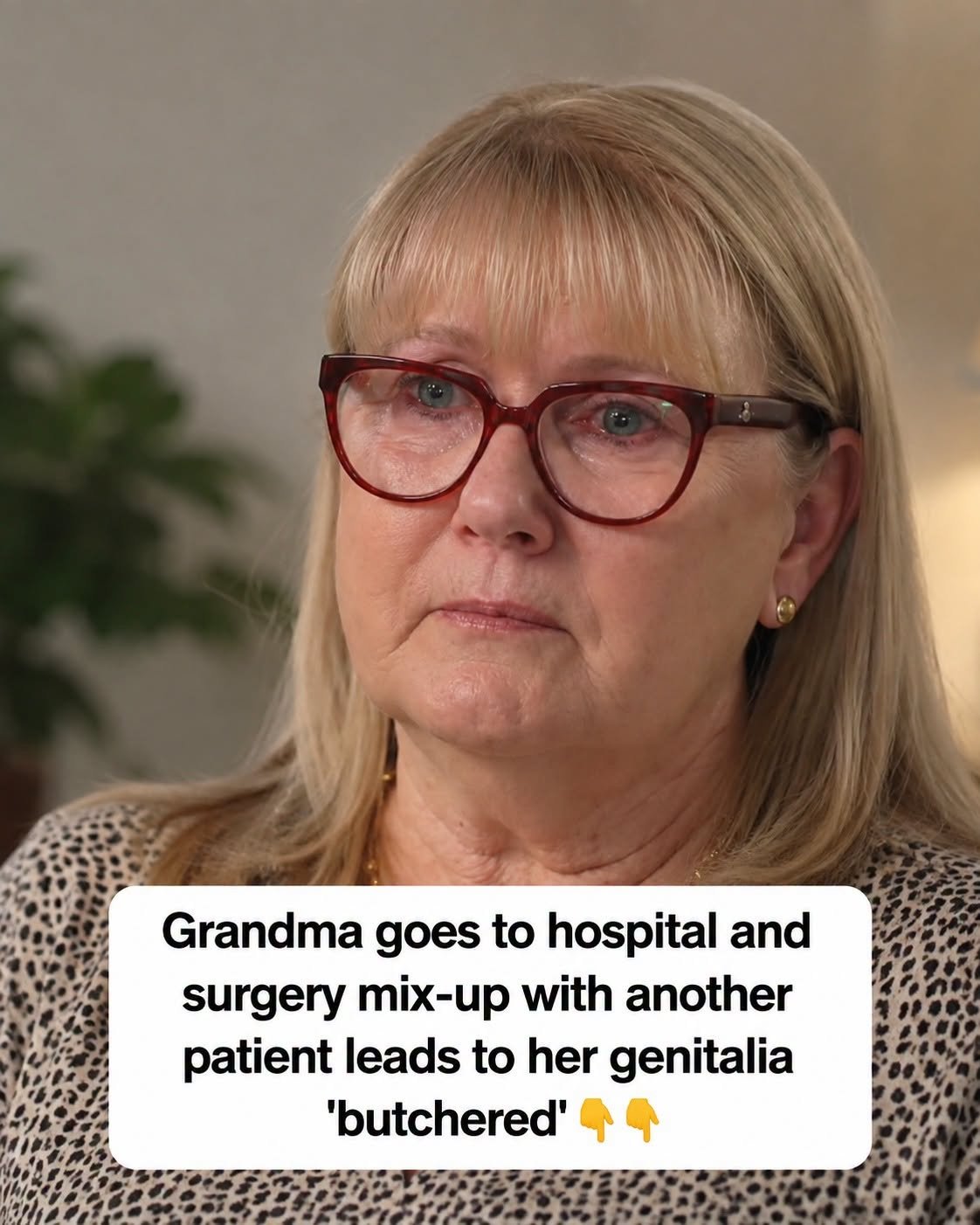
An Australian grandmother has spoken publicly about an extraordinary hospital error that she says resulted in her undergoing a surgical procedure intended for another patient. Debra Buchanan attended Joan Kirner Women’s and Children’s Hospital in Melbourne’s west in January 2026 expecting a relatively minor procedure to remove a cancerous lesion from her pelvic area. Instead, Buchanan and her lawyer say she woke from anesthesia to discover that surgeons had operated on a different area of her body, leaving her with significant pain and permanent scarring.
The incident is now under investigation. According to Buchanan’s account, the confusion may have begun before she entered the operating theatre. She said another patient with a similar first name was waiting in the same pre-operative area. Buchanan recalled hearing staff call for “Deborah” and responding, while another woman nearby also indicated that the name belonged to her. Buchanan said she questioned whether staff actually meant her, but was reassured that they had the correct patient.
That moment has taken on much greater significance for Buchanan in hindsight. Having worked as a dental nurse, she said she was familiar with the importance of accurately identifying patients. Nevertheless, she trusted the hospital team when staff assured her that everything was correct. She proceeded toward surgery believing the procedure she had previously discussed and consented to was about to be performed.
Buchanan has also described feeling uncertain shortly before anesthesia was administered because she did not see the surgeon she expected. Despite that concern, she believed the medical team had the information necessary to proceed safely. Like most patients entering an operating theatre, she was relying on established hospital identification and consent procedures to ensure the correct treatment was performed.
According to Buchanan and her lawyer, that safeguard failed.
Buchanan had expected doctors to remove a cancerous lesion from her pelvic area. When she regained consciousness, however, she did not initially know that anything different had occurred. It was only when she later attempted to walk to the bathroom that she realized something was seriously wrong.
She experienced substantial bleeding and immediately sought assistance from hospital staff. Buchanan said she asked why she was bleeding so heavily and was told it was connected to the operation. That response confused her because the location of the bleeding did not correspond with the procedure she believed she had undergone.
She then checked the area containing the lesion she had expected surgeons to remove.
According to Buchanan, it was still there.
That discovery raised an obvious and frightening question: if the original lesion had not been removed, what operation had actually been performed?
Buchanan said she requested an explanation. According to her account, a junior doctor subsequently described a procedure involving the removal and suturing of tissue. Buchanan was stunned because she had not expected or consented to that operation.
ABC News reported that Buchanan’s lawyer, Erin Monsalve Fear, said her client woke to discover that a portion of external tissue from her genital area had been removed. The lawyer said the procedure left Buchanan with permanent scarring. These details are attributed to Buchanan and her legal representative while formal investigations into the incident continue.
Buchanan contacted her husband, Alex, after realizing what had happened. According to the couple’s account to Australian media, she told him that hospital staff had performed the wrong operation. Alex later recalled how much pain his wife was experiencing during the immediate aftermath.
The physical consequences did not end when Buchanan left the hospital.
She has described ongoing discomfort in the surgical area and a persistent sensation of tightness associated with the stitches and resulting scarring. Buchanan has also said the experience damaged her confidence and left her anxious about receiving medical treatment.
There was another major problem.
The cancerous lesion she had originally gone to the hospital to have removed was still present.
Buchanan therefore had to return for another operation in February so doctors could address the original lesion. Her lawyer told ABC News that returning to surgery was particularly distressing because Buchanan had already experienced what she believed was an extraordinary failure of the system that was supposed to protect her.
That second operation illustrates why the consequences extended beyond the incorrect procedure itself. Buchanan was not simply recovering from an operation she says she never consented to; she also still required treatment for the medical issue that brought her to hospital in the first place.
Her lawyer has described the incident as a “complete systemic failure.”
Monsalve Fear said numerous safeguards should normally exist to prevent a patient from receiving a procedure intended for someone else. In Buchanan’s case, she argued, those protections either failed or were not properly followed.
Patient identification is a fundamental component of surgical safety. Hospitals normally use multiple pieces of information to establish a patient’s identity rather than relying only on a first name. The intended procedure and consent are also expected to be verified as part of the surgical process.
Exactly which safeguards failed in Buchanan’s case is one of the issues investigators are now examining.
Buchanan has suggested that the presence of two patients with similar first names may have contributed to the confusion. She has also said she was given information suggesting staffing pressures may have been relevant.
Those explanations should not be treated as the final findings of the investigation.
A formal review is intended to determine precisely what happened, why it happened and what changes may be necessary to prevent a similar incident.
The Victorian government has confirmed that the matter is being investigated.
Safer Care Victoria, the state agency responsible for healthcare quality and safety improvement, has engaged with Western Health over the incident. Government minister Vicki Ward publicly described what happened as “extraordinary” and said it was unacceptable.
Western Health, which operates the hospital, has said patient confidentiality prevents it from publicly discussing Buchanan’s individual medical care in detail.
However, Western Health chief operating officer John Ferraro issued a broader statement explaining the organisation’s approach when adverse patient events occur. He said Western Health is committed to open and transparent communication and referred to Victoria’s statutory duty of candour requirements.
Under that framework, Ferraro said that when an adverse event occurs, the health service provides an apology, meets with the patient, reviews the incident and shares findings and actions intended to prevent recurrence.
Buchanan’s lawyer, however, told ABC News that despite some acknowledgment that the wrong procedure had occurred, her client had not received what she considered an adequate personal apology.
For Buchanan, that absence has reportedly added to her frustration.
She has said she still wants clear answers about how she could enter a hospital expecting one operation and awaken after a fundamentally different procedure. She has also said she had not received the direct explanation she wanted from the surgeon involved.
Her lawyer is seeking damages on Buchanan’s behalf.
That legal process should be distinguished from the separate safety investigations. A compensation claim may examine the harm Buchanan says she suffered and the responsibility of those involved, while healthcare regulators and hospital reviews can focus on how the incident occurred and what systemic changes may be required.
The precise legal outcome remains unresolved.
It is therefore important not to describe allegations or legal arguments as final judicial findings.
What is already confirmed publicly is significant: the Victorian government says an investigation is underway into a case where a woman was mistakenly given surgery intended for another patient, and Western Health has acknowledged that an incorrect procedure occurred.
Buchanan’s decision to speak publicly is partly motivated by her desire to prevent another patient from experiencing something similar.
She has emphasized that a medical mistake involving a person’s body cannot simply be treated like damage to an object. For her, the consequences have included physical pain, permanent scarring and psychological distress.
Her comments also highlight the importance of informed consent.
Consent for one procedure does not automatically constitute consent for a different operation. Patients need to understand what treatment is planned, while healthcare providers have systems intended to verify that the correct patient receives the correct procedure.
Buchanan’s lawyer has identified this issue as one of the most serious aspects of the case.
The investigation will now need to determine exactly how the apparent patient-identification failure occurred and whether existing protocols were followed.
It will also need to examine whether additional safeguards could reduce the possibility of another wrong-patient or wrong-procedure event.
For patients, Buchanan’s experience may understandably sound frightening. However, it should not be interpreted as evidence that surgical mix-ups are an ordinary part of hospital care. The fact that the Victorian government described this incident as extraordinary reflects how seriously such an event is regarded.
Patients can still participate actively in their own care.
Before a procedure, it is reasonable to confirm your full name, date of birth, planned operation and the location where the procedure will occur. If something being discussed does not match what you understood or consented to, asking staff to stop and verify the information is appropriate.
The responsibility for surgical safety, however, does not rest solely with the patient.
Hospitals and medical professionals are responsible for maintaining identification, consent and procedural safeguards, particularly when patients are entering anesthesia and cannot protect their own interests.
For Buchanan, those safeguards are at the heart of what she wants investigators to examine.
She entered Joan Kirner Women’s and Children’s Hospital expecting treatment for a cancerous lesion.
She says she awakened after an operation she had not expected, while the original lesion remained untreated.
She subsequently needed another surgery and says she continues living with the physical and emotional consequences.
The government investigation and Western Health’s review may eventually provide more detailed answers about precisely how the error happened. Until those findings are available, speculation about individual responsibility should be avoided.
Buchanan, meanwhile, has made clear why she wants the incident discussed publicly.
She hopes greater scrutiny will lead to answers, accountability and improvements that prevent another patient from experiencing the same kind of mistake.
For her, the issue extends beyond one operation.
It concerns something every patient entering a hospital depends upon: the expectation that the healthcare system has correctly identified who they are, understands what treatment they agreed to receive and will perform the procedure intended specifically for them.
Website Disclaimer
The information provided on this website is for general informational and educational purposes only. While we strive to ensure that all content is accurate and up to date, we make no guarantees regarding the completeness, reliability, or accuracy of any information published.
The views and opinions expressed in articles belong to their respective authors and do not necessarily reflect the views of this website. Any action you take based on the information found on this website is strictly at your own risk. We will not be liable for any losses, damages, or inconveniences arising from the use of our content.
Some articles may contain opinions, third-party information, or external links. We do not endorse or guarantee the accuracy of content on external websites and are not responsible for their practices or policies.
All content on this website is provided in good faith and is intended for informational purposes only. Readers are encouraged to verify information independently and seek professional advice where appropriate.