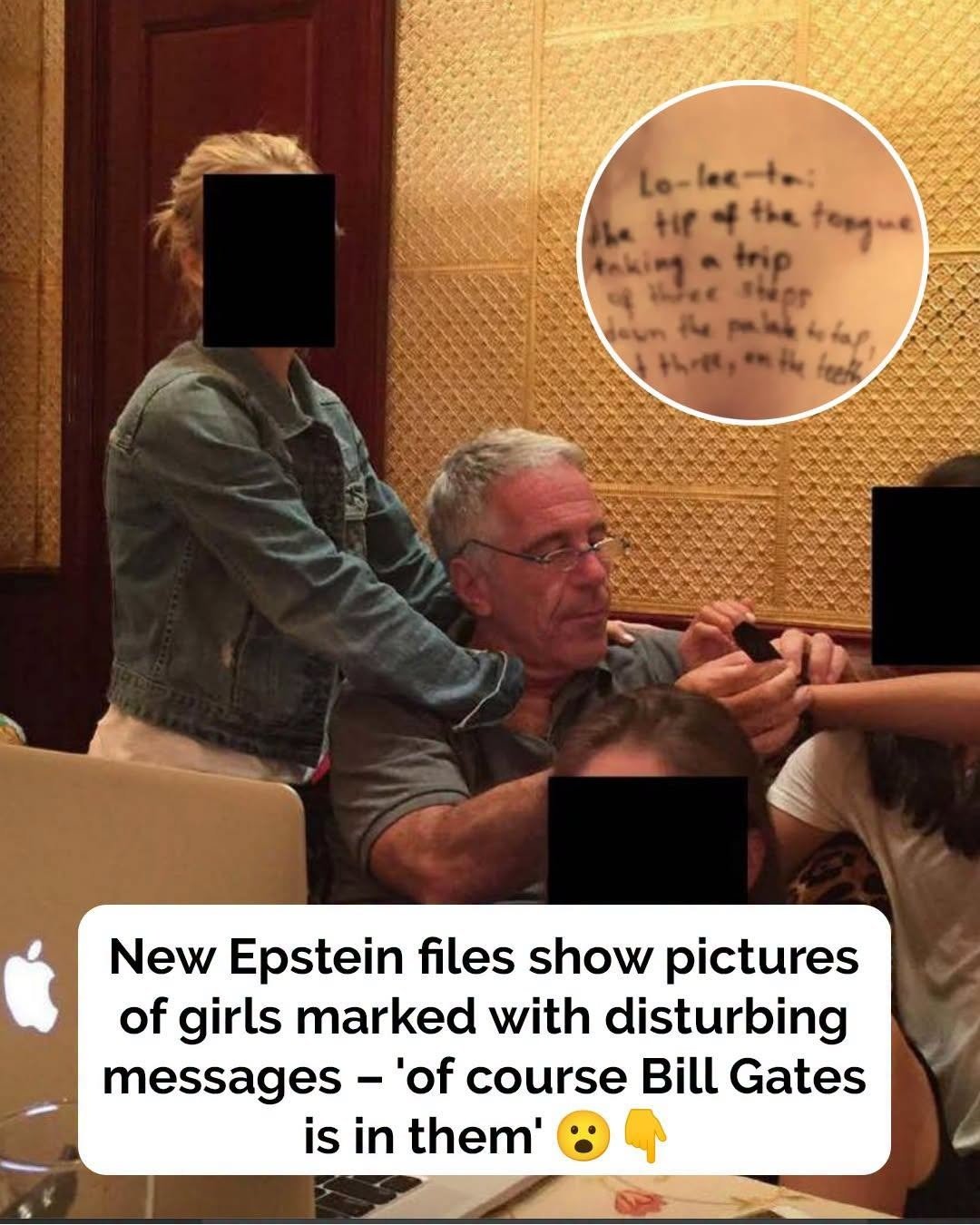
The “Lolita” inscriptions turn Epstein’s case from a story of secretive abuse into something even darker: a deliberate, literary staging of domination. These weren’t random scribbles. They were carefully chosen lines from Nabokov’s novel, written onto real bodies in real rooms, echoing a fictional predator’s obsession with a 12‑year‑old girl. That choice suggests not only awareness of the harm, but a twisted pride in mirroring it.
Seen alongside redacted passports, maps of private islands, and messages about “sending girls,” the photos feel less like isolated evidence and more like a manifesto of how far power believed it could go without consequence. The Epstein Transparency Act forced this material into daylight, stripping away the comfortable distance of rumor. What remains is a record that demands witnesses, not just readers — and a public willing to keep asking who enabled this, and why it was allowed to endure.
Website Disclaimer
The information provided on this website is for general informational and educational purposes only. While we strive to ensure that all content is accurate and up to date, we make no guarantees regarding the completeness, reliability, or accuracy of any information published.
The views and opinions expressed in articles belong to their respective authors and do not necessarily reflect the views of this website. Any action you take based on the information found on this website is strictly at your own risk. We will not be liable for any losses, damages, or inconveniences arising from the use of our content.
Some articles may contain opinions, third-party information, or external links. We do not endorse or guarantee the accuracy of content on external websites and are not responsible for their practices or policies.
All content on this website is provided in good faith and is intended for informational purposes only. Readers are encouraged to verify information independently and seek professional advice where appropriate.