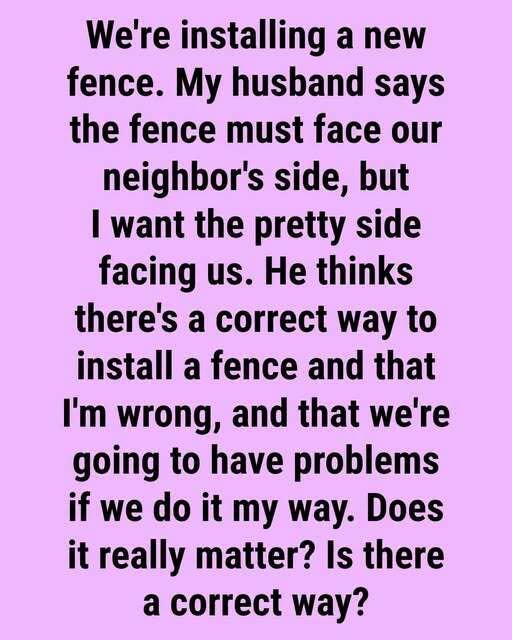
When building a fence between properties, homeowners often focus on privacy and security. However, a key principle that’s sometimes overlooked is the direction the finished side of the fence faces. Facing the polished, attractive side toward your neighbor is more than a design choice—it’s a reflection of mutual respect and can positively influence neighborly relationships.
Displaying the finished side outward shows thoughtfulness and consideration. It signals that you care about how your property impacts those around you. Conversely, leaving the structural, unfinished side facing your neighbor can be interpreted as careless or even disrespectful, potentially leading to unnecessary tension or disputes.
In many areas, this practice is not just polite—it’s required. Local governments and homeowner associations often mandate that the finished side of a fence face outward for the sake of neighborhood appearance. Failing to follow these rules can result in complaints, fines, or forced alterations to your fence.
From a practical standpoint, the orientation of the fence also affects curb appeal and home value. A clean, finished exterior presents a well-maintained image and blends better with the neighborhood. On the other hand, an unfinished fence may seem uninviting or unkempt, which could reduce visual appeal and future resale interest.
This practice also connects to a broader value: showing respect for shared spaces. It’s a simple yet powerful way to demonstrate empathy for your neighbors and to promote harmony in the community. Small gestures like this often go a long way in maintaining peaceful, positive relations.
For a smooth fence installation, it’s essential to check local codes, discuss plans with neighbors, and explore design options like double-sided fences. Keeping the fence well-maintained ensures it continues to serve its purpose—offering privacy, security, and above all, reinforcing a spirit of respect and cooperation.
Website Disclaimer
The information provided on this website is for general informational and educational purposes only. While we strive to ensure that all content is accurate and up to date, we make no guarantees regarding the completeness, reliability, or accuracy of any information published.
The views and opinions expressed in articles belong to their respective authors and do not necessarily reflect the views of this website. Any action you take based on the information found on this website is strictly at your own risk. We will not be liable for any losses, damages, or inconveniences arising from the use of our content.
Some articles may contain opinions, third-party information, or external links. We do not endorse or guarantee the accuracy of content on external websites and are not responsible for their practices or policies.
All content on this website is provided in good faith and is intended for informational purposes only. Readers are encouraged to verify information independently and seek professional advice where appropriate.