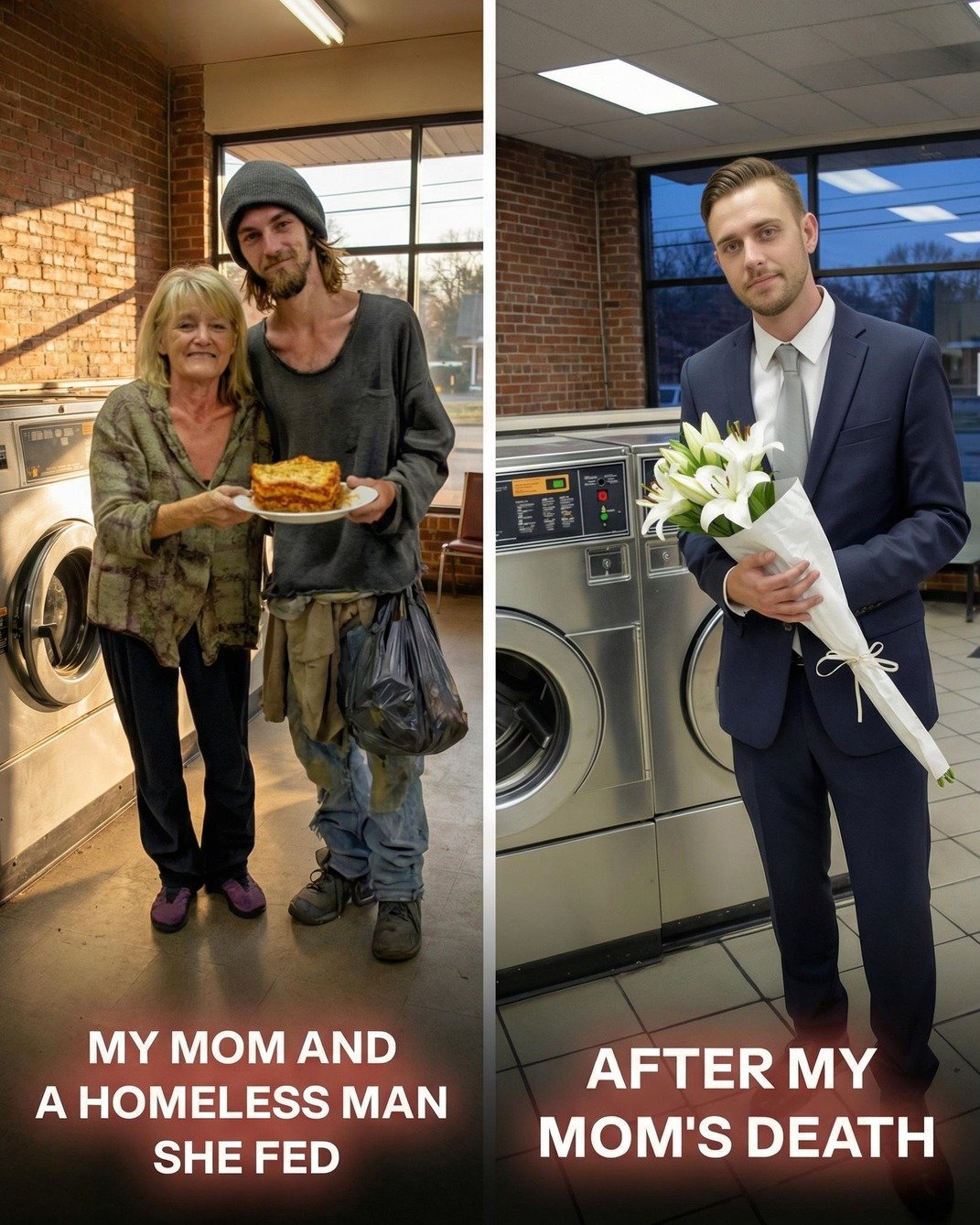
Christmas Eve in our home always carried a quiet tradition that few people outside our family ever noticed. While others focused on lights, music, and celebrations, my mother reserved part of the evening for something simple yet meaningful. She prepared a warm dinner that filled our small apartment with comforting aromas—roasted meat, buttery potatoes, and fresh cornbread. But one plate was always set aside. She wrapped it carefully in foil, placed it in a plain grocery bag, and carried it with us when we stepped out into the cold night. When I was young, curiosity led me to ask who the extra meal was for. My mother smiled gently and said it was meant for someone who might need it more than we did. That someone was Eli, a quiet young man who often spent his evenings sitting in the corner of our neighborhood laundromat.
Over the years, Eli became a quiet but familiar part of our Christmas Eve routine. He never asked for help and never expected the meal, yet my mother continued to visit him every year. Sometimes they exchanged a few soft-spoken words, and slowly small pieces of his story emerged. He had faced many challenges growing up and had moved through several foster homes after losing his only sibling. My mother listened without judgment and never pushed him to share more than he wished. Occasionally she added small practical items to the bag—warm gloves, thick socks, or a scarf for the cold winter nights. Once she mentioned programs that might help him find training or housing, but he politely declined. My mother respected his choice and kept the tradition simple: a warm meal, kindness, and the reminder that someone cared.
Years later, my mother passed away after a short illness, leaving a silence in our home that was hard to fill. When the next Christmas Eve arrived, I stood alone in her kitchen wondering whether I had the strength to continue the tradition she had started. For a moment I considered letting it fade away. But memories of her quiet determination stayed with me. I prepared the same meal, wrapped it carefully, and drove to the laundromat. When I walked inside, I was surprised to see Eli standing there looking very different from the man I remembered. He wore a neat suit and held a small bouquet of white lilies.
When he recognized me, his face softened with emotion. Eli explained that years earlier my mother had gently encouraged him to explore a community training program. With patience and effort, he had rebuilt his life and found steady work. He had promised her that one day he would return to show how much her kindness had meant. As we talked, he shared something I had never known: long ago, when I briefly became separated from my parents at a crowded fair, he was the one who noticed and helped guide me to safety. That moment had inspired my mother to begin the Christmas Eve tradition. Later that night we placed the lilies beside her resting place, and I realized her kindness had never truly ended—it had simply continued through the lives she touched.