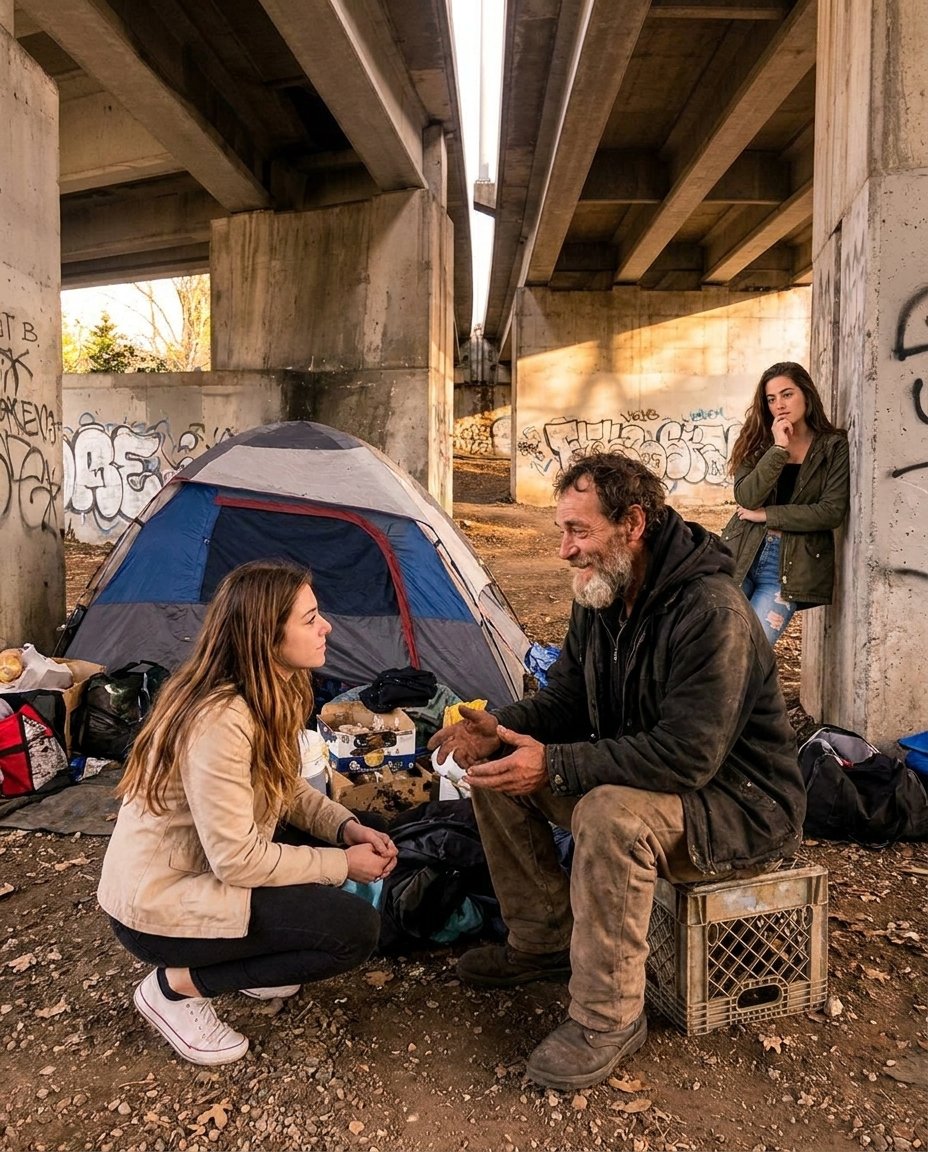
For thirteen years, I lived with a name that was never truly mine and a past that felt buried somewhere beyond reach. I woke beneath a bridge one cold morning with blood on my jacket, pain splitting through my skull, and not a single memory to explain who I was or how I got there. No family. No address. No birthday. Just the sound of traffic overhead and the terrible emptiness that comes when even your own reflection feels unfamiliar. At first, I waited for answers the way stranded people wait for rescue. I searched faces in crowds, stared through bus windows, and watched strangers passing by, convinced someone would stop and say they knew me. No one ever did. Over time, survival replaced searching, and I learned to live as “Fred,” the name people under the bridge had given me when I could not give them one myself.
Life beneath that bridge taught me hard lessons. I refused to beg, not because I judged anyone who did, but because something inside me still wanted to stand on my own feet. I cleaned parking lots before sunrise, hauled boxes in warehouses, painted fences, and trimmed hedges for anyone willing to pay cash. Some nights I ate well enough to sleep. Other nights hunger curled through my stomach like an animal refusing to rest. Winters cut through every layer of clothing I owned, and summers brought mosquitoes and the smell of river water that settled into everything. I became invisible in the way people without homes often do—seen, yet somehow not acknowledged. Still, I made rules for myself: stay clean when possible, take only what you earn, and never let hardship convince you that you matter less than anyone else. Those rules became my identity when memories could not.
Three days ago, that fragile routine shifted. I was hired to help renovate a small café with dusty windows and a faded awning. The owner, a man named Niles, barely asked questions, which suited me fine. But throughout the day, I noticed him watching me. Not suspiciously. Not the way people sometimes watch someone they don’t fully trust. He looked unsettled, as though my face carried a memory he could not place. Before I left, he asked quietly, “Have we met before?” I gave him my usual answer—“If we did, I don’t remember”—and tried to laugh it off. But his expression lingered with me long after I returned to my tent under the bridge. Something in his eyes suggested recognition, and for the first time in years, I allowed myself to wonder whether the past I had buried might still be searching for me too.
The next morning, I woke to the sound of tires crunching over gravel near my tent. Usually, cars only came that close if police were moving people along. But when I unzipped the tent flap, I saw a white SUV idling nearby. Before I could react, two teenage girls ran toward me. They looked about sixteen, maybe seventeen, their dark hair whipping in the wind and tears already streaming down their faces. I froze. Something about them pulled at me in a way I could not explain. One stopped just feet away, her voice trembling as she whispered a single word: “Dad?” The sound hit me harder than the cold ever had. A woman stepped from the SUV behind them, shaking so badly she could barely stand. Niles stood beside her, pale and apologetic. “I had to call them,” he said softly. The woman looked at me with eyes full of grief and hope and spoke a name that echoed through my chest like it had been waiting years to return. “Mark,” she said. “Oh God… it’s really you.”
Website Disclaimer
The information provided on this website is for general informational and educational purposes only. While we strive to ensure that all content is accurate and up to date, we make no guarantees regarding the completeness, reliability, or accuracy of any information published.
The views and opinions expressed in articles belong to their respective authors and do not necessarily reflect the views of this website. Any action you take based on the information found on this website is strictly at your own risk. We will not be liable for any losses, damages, or inconveniences arising from the use of our content.
Some articles may contain opinions, third-party information, or external links. We do not endorse or guarantee the accuracy of content on external websites and are not responsible for their practices or policies.
All content on this website is provided in good faith and is intended for informational purposes only. Readers are encouraged to verify information independently and seek professional advice where appropriate.