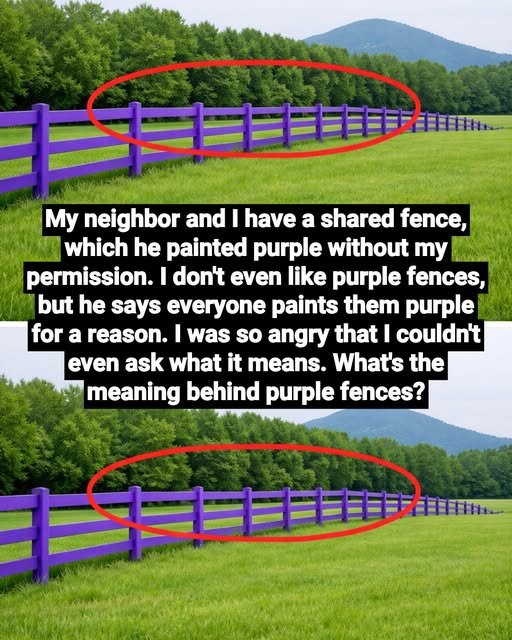
A purple fence might look like an unusual design choice, but in many areas it carries a clear and important meaning. If you come across a fence or tree marked with bright purple paint, the message is typically straightforward: no trespassing. Rather than being decorative, the color is used as a visible signal that the land beyond the marking is private property.
The use of purple has practical reasons behind it. In rural areas, landowners needed a reliable way to mark boundaries without relying on signs that could fade, fall, or be removed. Purple paint is highly visible, long-lasting, and easy to apply, making it an effective alternative. Because of these advantages, several U.S. states recognize purple markings as a valid way to indicate property boundaries.
For the markings to serve as a proper warning, they usually need to follow certain guidelines. The paint is often applied in vertical stripes rather than random patterns. These markings are commonly required to meet specific size and placement standards so they remain easy to see. To maintain clarity along a property line, the marks are typically repeated at regular intervals.
It is important to note that not all states follow the same rules regarding purple paint markings. Some fully recognize this method, while others may not. For landowners, checking local regulations is essential before using this approach. For visitors, hikers, and neighbors, the safest interpretation is simple: if you see purple markings, it is best to respect the boundary and avoid entering the area.
Website Disclaimer
The information provided on this website is for general informational and educational purposes only. While we strive to ensure that all content is accurate and up to date, we make no guarantees regarding the completeness, reliability, or accuracy of any information published.
The views and opinions expressed in articles belong to their respective authors and do not necessarily reflect the views of this website. Any action you take based on the information found on this website is strictly at your own risk. We will not be liable for any losses, damages, or inconveniences arising from the use of our content.
Some articles may contain opinions, third-party information, or external links. We do not endorse or guarantee the accuracy of content on external websites and are not responsible for their practices or policies.
All content on this website is provided in good faith and is intended for informational purposes only. Readers are encouraged to verify information independently and seek professional advice where appropriate.