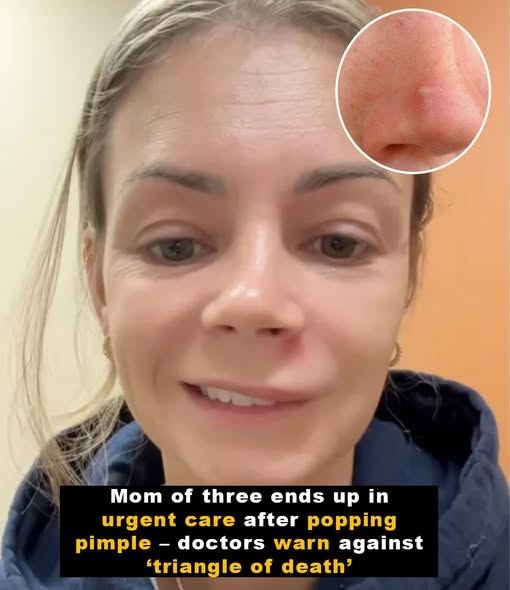
What looks like a harmless pimple is often treated without much thought. Many people instinctively try to pop it, especially when it appears on the face. It feels routine, almost automatic. However, doctors warn that not all areas of the face are equally safe when it comes to this habit. There is a specific region, often referred to as the “triangle of death,” where even small actions can carry unexpected risks.
This area stretches from the bridge of the nose down to the corners of the mouth. What makes it different is not what you see on the surface, but what lies beneath. The veins in this part of the face are closely connected to deeper structures, including pathways that lead toward the brain. Because of this direct connection, infections that begin in this area have a rare but real possibility of spreading beyond the skin.
In most cases, popping a pimple may only lead to temporary redness or mild irritation. However, within this zone, the risk increases. If bacteria enter the skin and cause an infection, it can potentially travel through these veins. While such complications are uncommon, they can become serious if they occur. Symptoms may include increased swelling, pain, fever, or signs of a deeper infection that require immediate medical attention.
Doctors emphasize that the danger is not in the pimple itself, but in how it is handled. Squeezing or picking at the skin can introduce bacteria, worsen inflammation, and create an opening for infection to spread. This is especially concerning in the triangle of death because of the unique vascular connections in that area. What seems like a small, harmless act can, in rare situations, lead to complications that are far more severe than expected.
The safest approach is to avoid touching or popping pimples in this region altogether. Keeping the skin clean, using gentle treatments, and allowing the pimple to heal naturally are the best ways to reduce risk. If a blemish becomes painful, swollen, or does not improve, seeking medical advice is a safer option than attempting to treat it aggressively at home.
Ultimately, the message is simple but important. Small habits, especially those done without thinking, can sometimes carry hidden risks. While serious complications are rare, awareness is key. Taking a cautious approach with even minor skin issues—particularly in sensitive areas—can help prevent problems before they begin.
Website Disclaimer
The information provided on this website is for general informational and educational purposes only. While we strive to ensure that all content is accurate and up to date, we make no guarantees regarding the completeness, reliability, or accuracy of any information published.
The views and opinions expressed in articles belong to their respective authors and do not necessarily reflect the views of this website. Any action you take based on the information found on this website is strictly at your own risk. We will not be liable for any losses, damages, or inconveniences arising from the use of our content.
Some articles may contain opinions, third-party information, or external links. We do not endorse or guarantee the accuracy of content on external websites and are not responsible for their practices or policies.
All content on this website is provided in good faith and is intended for informational purposes only. Readers are encouraged to verify information independently and seek professional advice where appropriate.