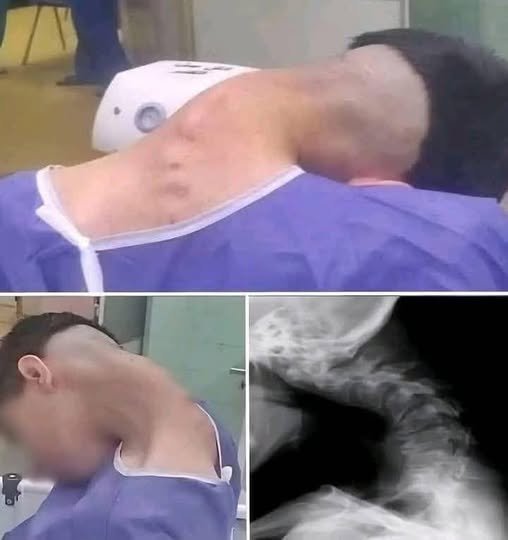
A recent medical case in Isfahan has brought new attention to Dropped Head Syndrome (DHS) — a rare and often misunderstood neuromuscular disorder. The case involved a 23-year-old man who developed severe weakness in his neck muscles, leaving him unable to hold his head upright. Doctors described his condition as a “fixed forward-bending posture,” a symptom that can drastically affect mobility, communication, and even breathing.
Dropped Head Syndrome occurs when the neck extensor muscles lose strength, often due to underlying neurological or muscular diseases such as myasthenia gravis, ALS, or Parkinson’s disease. However, doctors also note that lifestyle factors — including long hours of poor posture, stress, or muscle strain — may contribute. In this case, no spinal injury was found, leading experts to link the cause to neuromuscular dysfunction.
Treatment for DHS focuses on restoring mobility and quality of life through physical therapy, posture correction, and nutritional support. In severe cases, surgery may be considered, but early intervention is key. Physicians emphasize that even young people should not ignore symptoms like neck fatigue, stiffness, or a gradual forward tilt, as early diagnosis greatly improves recovery prospects.
Doctors hope this case will raise awareness about neck and spinal health — especially among students and office workers who spend long hours on screens. Maintaining good posture, exercising regularly, and seeking prompt medical advice can make a significant difference. The Isfahan case serves as a reminder that muscular health, emotional balance, and preventive care are all vital for long-term well-being.
Website Disclaimer
The information provided on this website is for general informational and educational purposes only. While we strive to ensure that all content is accurate and up to date, we make no guarantees regarding the completeness, reliability, or accuracy of any information published.
The views and opinions expressed in articles belong to their respective authors and do not necessarily reflect the views of this website. Any action you take based on the information found on this website is strictly at your own risk. We will not be liable for any losses, damages, or inconveniences arising from the use of our content.
Some articles may contain opinions, third-party information, or external links. We do not endorse or guarantee the accuracy of content on external websites and are not responsible for their practices or policies.
All content on this website is provided in good faith and is intended for informational purposes only. Readers are encouraged to verify information independently and seek professional advice where appropriate.