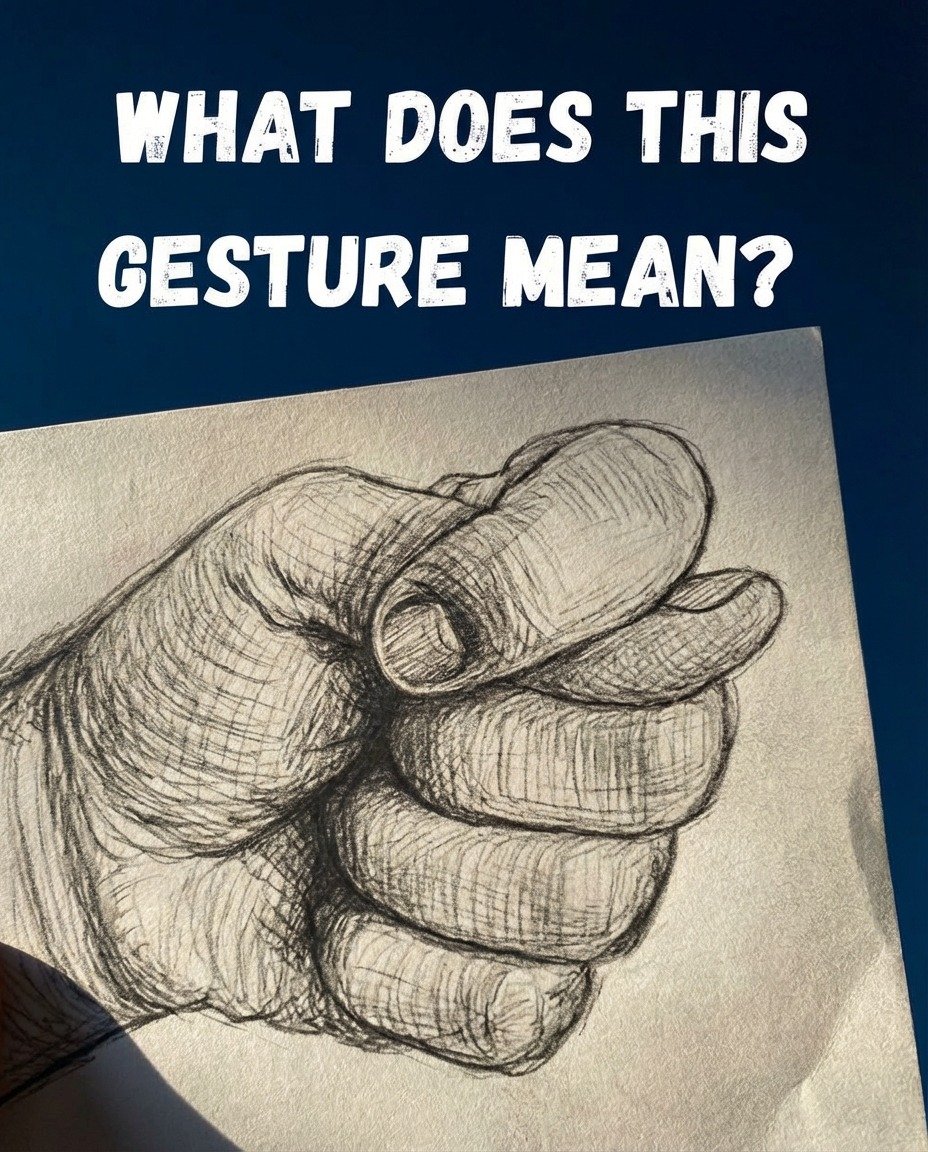
At first glance, it looks like a simple clenched fist. Look closer, and the thumb is tucked tightly between the fingers. This small detail turns an ordinary hand into a gesture known in many cultures as “making a fig.”
Long before instant messages or emojis, this quiet sign carried clear meaning. With one motion, people could refuse a demand, signal defiance, or say “not happening” without speaking.
In 19th-century European villages, the gesture offered a way to express resistance without open conflict. It allowed people to push back against authority or unfair requests while keeping humor and subtlety intact.
The fig gesture also held symbolic value. In folk traditions, the closed fist represented hidden strength, while the tucked thumb acted as a protective charm believed to ward off bad luck or the evil eye.
Over time, it became part of everyday family life. Elders passed it down as a playful response to teasing or a lighthearted way to stand one’s ground.
For some, it carried deeper emotional meaning. It appeared in moments of uncertainty or courage, offering comfort or quiet resolve during difficult separations or challenges.
Today, the gesture is rarely seen. Digital communication has replaced much of this unspoken language with texts, reactions, and symbols on screens.
Still, its meaning hasn’t disappeared. The fig gesture remains a reminder that powerful messages don’t always need words—sometimes subtlety, humor, and wit speak just as loudly.
Website Disclaimer
The information provided on this website is for general informational and educational purposes only. While we strive to ensure that all content is accurate and up to date, we make no guarantees regarding the completeness, reliability, or accuracy of any information published.
The views and opinions expressed in articles belong to their respective authors and do not necessarily reflect the views of this website. Any action you take based on the information found on this website is strictly at your own risk. We will not be liable for any losses, damages, or inconveniences arising from the use of our content.
Some articles may contain opinions, third-party information, or external links. We do not endorse or guarantee the accuracy of content on external websites and are not responsible for their practices or policies.
All content on this website is provided in good faith and is intended for informational purposes only. Readers are encouraged to verify information independently and seek professional advice where appropriate.