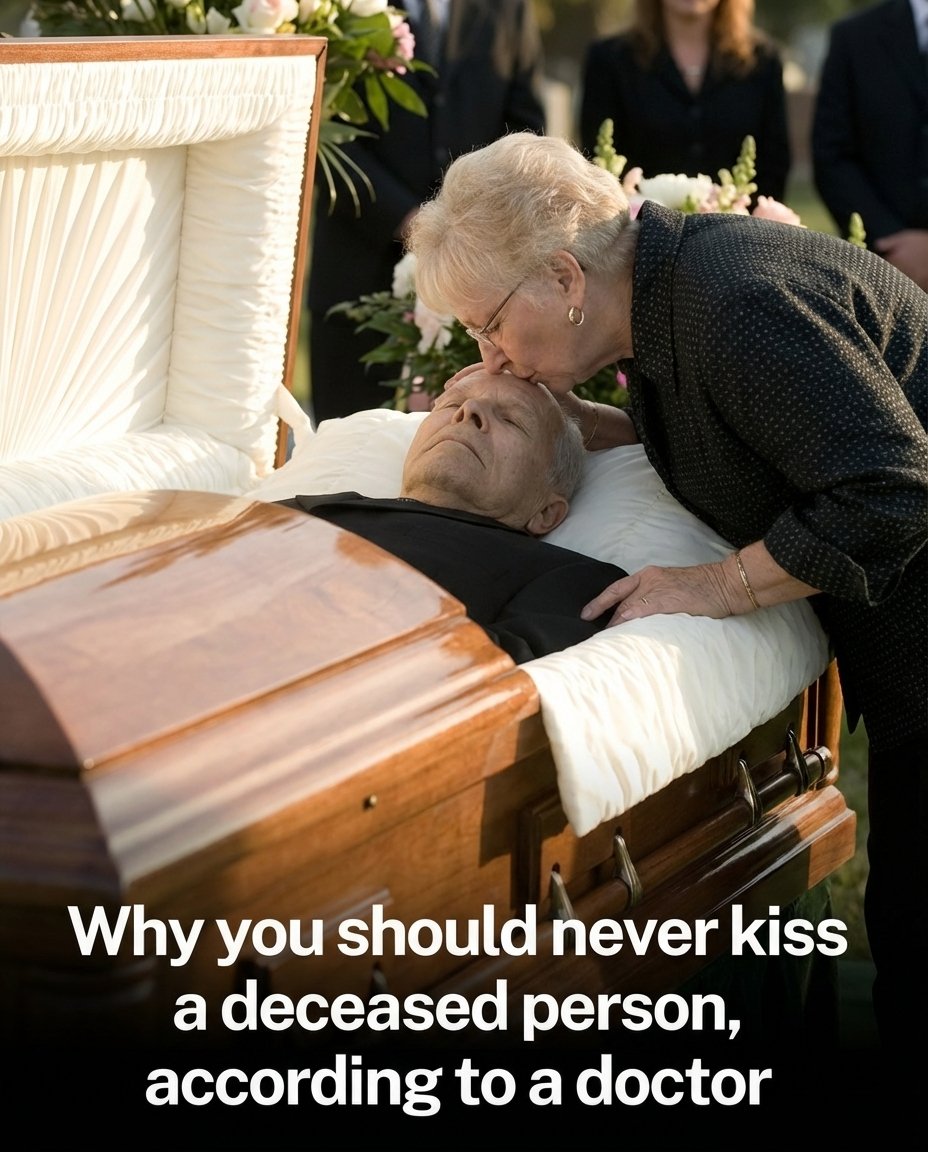
In moments of grief, instinct often takes over. For many people, the final goodbye includes a gentle kiss on the forehead or a lingering touch of the hand—a deeply human way to say farewell. Yet in recent years, medical professionals have begun raising a difficult question: can this intimate gesture carry health risks? What sounds like a cold interruption into a sacred moment has sparked widespread discussion, forcing families to balance emotional closure with practical safety at one of the most vulnerable times of their lives.
Doctors who speak on this issue emphasize that death does not instantly stop all biological activity. While life has ended, microorganisms can remain on the body for a short period afterward, particularly if the person passed away from an infectious illness. In the hours following death, the immune system is no longer active, which may allow certain bacteria or viruses to persist on the skin or around the mouth and nose. Medical experts stress that the risk is generally low, but it is not zero—especially in cases involving contagious diseases or when contact happens before the body has been professionally prepared.
This guidance has stirred strong emotional reactions. For many families and cultures, physical contact with the deceased is an essential part of mourning, offering comfort and a sense of completion. Being told to avoid that final touch can feel deeply distressing, even harmful to the grieving process. Mental health professionals note that denying traditional rituals may intensify feelings of loss, leaving loved ones struggling with unresolved grief. This emotional impact became especially visible during global health crises, when strict safety measures prevented families from being near those they lost.
Today, many professionals encourage a balanced approach. Rather than blanket warnings, families are advised to speak with healthcare or funeral staff about the specific circumstances of the death. In some cases, safer alternatives—such as touching a hand instead of the face, or waiting until the body has been prepared—can preserve both dignity and safety. Ultimately, the goal is not to take comfort away from grieving families, but to offer awareness. By understanding both the emotional importance of farewell rituals and the realities of health precautions, families can make informed choices that honor their loved ones while protecting themselves.
Website Disclaimer
The information provided on this website is for general informational and educational purposes only. While we strive to ensure that all content is accurate and up to date, we make no guarantees regarding the completeness, reliability, or accuracy of any information published.
The views and opinions expressed in articles belong to their respective authors and do not necessarily reflect the views of this website. Any action you take based on the information found on this website is strictly at your own risk. We will not be liable for any losses, damages, or inconveniences arising from the use of our content.
Some articles may contain opinions, third-party information, or external links. We do not endorse or guarantee the accuracy of content on external websites and are not responsible for their practices or policies.
All content on this website is provided in good faith and is intended for informational purposes only. Readers are encouraged to verify information independently and seek professional advice where appropriate.