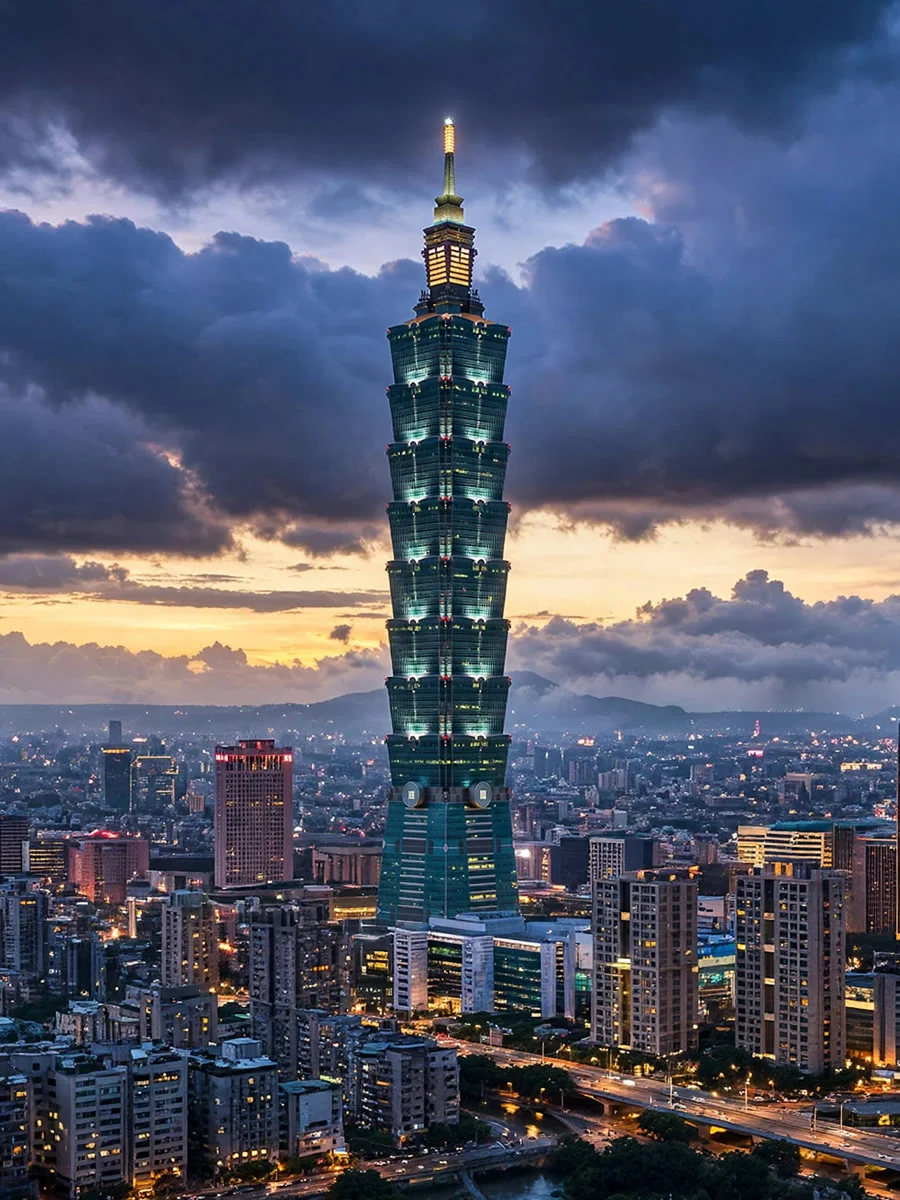
Taiwanese voters went to the polls on Saturday, 28 November 2026, in local elections widely seen as a test of public support for President Lai Ching-te and his Democratic Progressive Party (DPP) government. Alongside the local races, around 20 million eligible voters are also deciding in a nationwide referendum whether Taiwan should abandon its nuclear-free homeland policy and return to nuclear power. Polling stations were open until 4pm local time, with results expected on Saturday night.
The nine-in-one vote
The elections are known as the “nine-in-one” because nine types of election are held at the same time. About 19.6 million people are eligible to vote, choosing mayors and county heads in 22 cities and counties as well as more than 11,000 other local officials. A total of 19,695 candidates are contesting 11,051 local public offices, including 81 candidates for leadership posts in the 22 cities and counties. Voting is not compulsory, and the poll is held every four years, between presidential elections.
The most closely watched contest is in the capital, Taipei, where incumbent Mayor Chiang Wan-an of the opposition Kuomintang (KMT) faces DPP challenger Puma Shen in a closely fought race. Both candidates cast their ballots on Saturday morning. President Lai, who took office in 2024, has campaigned for DPP candidates, including Shen and New Taipei mayoral candidate Su Chiao-hui. After voting in the morning, KMT Chairperson Cheng Li-wun said she was confident in the results and urged voters to head out and collect their referendum ballot.
A referendum on nuclear power
The referendum asks voters whether the government should scrap its “nuclear-free homeland” policy and restore nuclear power. It is Taiwan’s fourth vote on nuclear power in eight years. The opposition KMT proposed the referendum and the Taiwan People’s Party (TPP) backs it, while the ruling DPP is urging a “no” vote. For the referendum to pass, “yes” votes must exceed “no” votes and amount to more than a quarter of all eligible voters.
The energy question has become urgent because of Taiwan’s booming artificial intelligence industry. Chip manufacturing needs enormous amounts of electricity, and concerns are growing about reliance on imported fuel and the vulnerability of energy supplies to overseas conflicts. Taiwan’s last operating reactor, at Maanshan, closed in May 2025. In March 2026, President Lai said the government would start a process to restart the Maanshan and Kuosheng plants, pointing to AI-related electricity demand — work that is proceeding separately from the referendum. A successful referendum would not immediately bring reactors back online.
A midterm test for Lai
The DPP is seeking to strengthen its local position, the KMT aims to defend its extensive local networks, and the TPP faces a test of its ability to build a durable grassroots presence. The results will be read as a midterm verdict on Lai’s government and could shape the political landscape before the presidential and parliamentary elections in 2028. A stronger DPP showing could bolster Lai’s position as party chairman and build momentum towards 2028; a poor result could bring calls within the party for accountability and changes in policy or personnel.
Analysts caution, however, that local election results should not be read as a direct referendum on Taiwan’s relationship with China, since municipal issues and candidate popularity often decide voting patterns. The campaigns have largely focused on local concerns such as transport, housing and urban development, even as the vote takes place against a backdrop of growing military and political pressure from Beijing, with Chinese warplanes reported near the island and warnings of interference and disinformation campaigns.
Counting under way
With voting and counting now under way, Taiwan’s political parties are waiting for a verdict that will be measured in town halls and county councils as much as in national headlines. For Lai, for the KMT and for the TPP, Saturday’s results will set the starting positions for the long run to 2028 — and for the island’s energy future, the referendum will say whether voters want the nuclear-free era to end.
Website Disclaimer
The information provided on this website is for general informational and educational purposes only. While we strive to ensure that all content is accurate and up to date, we make no guarantees regarding the completeness, reliability, or accuracy of any information published.
The views and opinions expressed in articles belong to their respective authors and do not necessarily reflect the views of this website. Any action you take based on the information found on this website is strictly at your own risk. We will not be liable for any losses, damages, or inconveniences arising from the use of our content.
Some articles may contain opinions, third-party information, or external links. We do not endorse or guarantee the accuracy of content on external websites and are not responsible for their practices or policies.
All content on this website is provided in good faith and is intended for informational purposes only. Readers are encouraged to verify information independently and seek professional advice where appropriate.