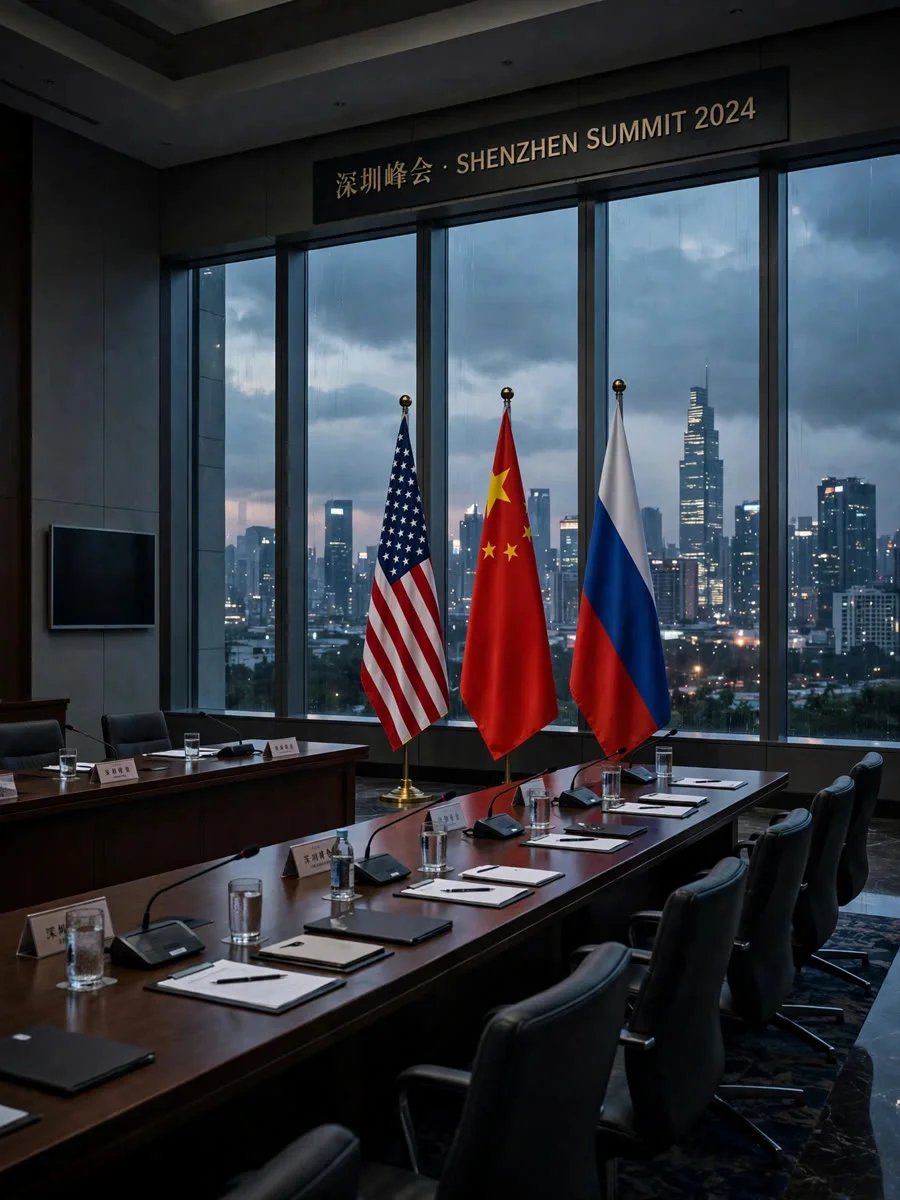
Moscow has put one of its oldest and most sweeping demands back at the centre of diplomacy: NATO should pull its forces back to where they stood before 1997. The demand surfaced again during peace discussions in Abu Dhabi and in the run-up to a trilateral summit in Shenzhen, China, bringing together United States President Donald Trump, Chinese President Xi Jinping and Russian President Vladimir Putin. For the countries of Central and Eastern Europe, the message is stark — Russia is not only arguing about Ukraine, but about the entire security order that has governed Europe since the Cold War ended.
A demand first made in 2021 returns
The call for a rollback is not new. In December 2021, two months before the full-scale invasion of Ukraine, Russia presented draft treaties to the United States and NATO that would have barred any further expansion of the alliance and required NATO to withdraw military deployments to the borders of the countries that were members in 1997. That was before Poland, Hungary and the Czech Republic joined, and long before the Baltic states, Romania, Bulgaria and others followed. Washington and NATO rejected parts of the package at the time and offered to discuss others, but Moscow insisted it was all or nothing — and the invasion began in February 2022.
Nearly five years later, the same demand has reappeared as a condition for even a ceasefire. According to Western analysis cited in German media, Moscow’s conditions include a new European security order that would see NATO revert to its 1997 footprint — a move that would affect 16 member states — along with a permanent ban on further enlargement. NATO Secretary General Mark Rutte has explicitly rejected the idea, insisting the alliance will not be dictated to about where it can deploy its own forces.
The Shenzhen summit and a crowded table
The demand has been raised as leaders prepared for the Shenzhen meeting on 19 November, where Trump sat down with Putin and Xi Jinping. Trump later said he delivered a direct message to Putin during the summit, urging him to end military aggression across Europe, and described the war as a “complete bloodbath” in which thousands are killed every month. The three leaders also issued a joint peace declaration, though its substance remains unclear.
After the summit, European leaders gathered in Berlin and insisted they must have a seat at the table in any deal affecting Ukraine. Trump called into that meeting from Air Force One and told allies that Moscow was serious about negotiations, though accounts differed over whether he reassured them or pressed them on military spending for Kyiv. His envoy Jared Kushner has since acknowledged that talks are stuck, telling a podcast that after many hours with Putin, he and fellow negotiator Steve Witkoff found the territorial question “stuck in a bit of a dead end”. Kushner suggested negotiating the post-war security architecture first, before tackling the question of Ukrainian territory.
Bulgaria breaks ranks on aid
At the same time, unity among NATO members is under strain. Bulgaria has officially confirmed it will end all military and financial aid to Ukraine, a decision announced ahead of the Shenzhen talks and reported widely in the days that followed. The halt highlights growing divisions among European partners just as leaders are being asked to hold a common line on both support for Kyiv and the terms of any settlement.
Moscow’s other central demands remain unchanged: Ukraine should cede the territory Russia claims — including parts of the Donetsk region it has failed to capture in nearly five years of costly fighting — and accept a permanent bar on joining NATO. Ukrainian President Volodymyr Zelenskyy has condemned Trump’s description of Putin as a “friend” during the Shenzhen summit, and Kyiv’s battlefield gains, along with its strikes on Russian energy and military infrastructure, have undercut the picture of a Russia on the verge of victory.
What happens next
For now, the diplomatic track continues even as the fighting does not stop. Russian negotiator Vladimir Medinsky reaffirmed after the Abu Dhabi talks that Moscow intends to capture all the Ukrainian land it claims, while strikes on Ukraine’s energy grid continue. The United States maintains dialogue with Moscow, and further talks are expected — but with Russia demanding a rewrite of Europe’s security map, Bulgaria stepping back from aid, and the territorial question deadlocked, the road to any agreement looks longer than the summit’s optimistic language suggested.
Website Disclaimer
The information provided on this website is for general informational and educational purposes only. While we strive to ensure that all content is accurate and up to date, we make no guarantees regarding the completeness, reliability, or accuracy of any information published.
The views and opinions expressed in articles belong to their respective authors and do not necessarily reflect the views of this website. Any action you take based on the information found on this website is strictly at your own risk. We will not be liable for any losses, damages, or inconveniences arising from the use of our content.
Some articles may contain opinions, third-party information, or external links. We do not endorse or guarantee the accuracy of content on external websites and are not responsible for their practices or policies.
All content on this website is provided in good faith and is intended for informational purposes only. Readers are encouraged to verify information independently and seek professional advice where appropriate.