Nvidia has told the companies that build its servers to stop shipping them to four Southeast Asian countries, in a move that shows just how far Washington is willing to go to keep its most advanced artificial intelligence chips out of China’s hands.

The Financial Times reported on November 26 that Nvidia instructed manufacturing partners including Dell and Supermicro to halt deliveries of servers containing its chips to Malaysia, Singapore, Thailand and Indonesia. The partners have already passed the message on to buyers in those countries, telling them their orders cannot be shipped for now.
The new rules behind the halt
The shipment freeze follows a sweeping new export control rule from the US Commerce Department’s Bureau of Industry and Security. The rule was published on November 16 and took effect on November 19. Under it, sending advanced computing chips to Malaysia, Singapore, Thailand, Indonesia and Brazil now requires a US export licence, because Washington considers those destinations to carry a higher-than-normal risk of chips being diverted to restricted buyers.
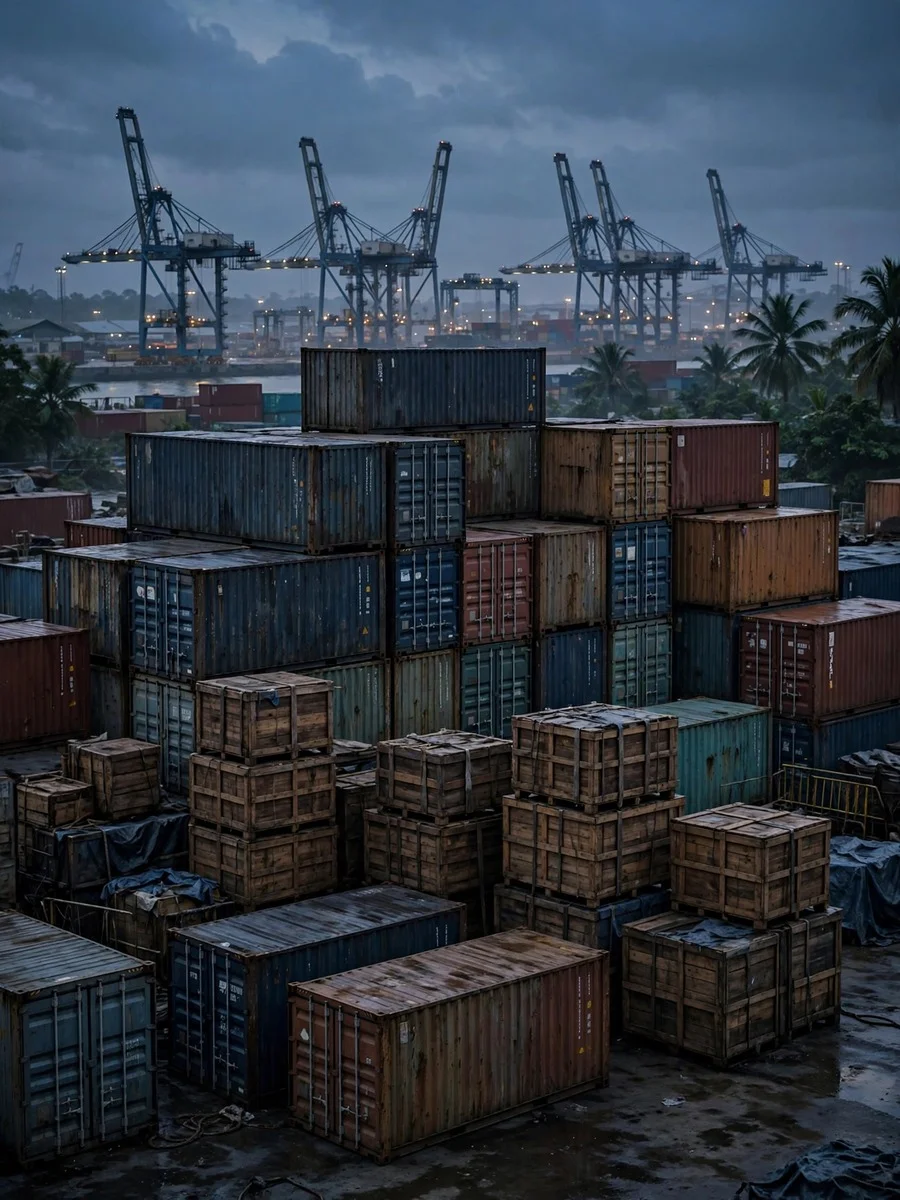
It is not yet clear whether the halt is temporary, and Nvidia declined to comment.
Closing the cloud loophole
The most striking part of the new rule is that it does not only cover physical chips. It also targets a workaround that has frustrated US officials for years: Chinese companies renting computing power from data centres abroad instead of buying the chips themselves.
Under current US law, cloud computing is not classed as an export, so regulators cannot directly licence a cloud login. The new rule gets around that problem by attaching conditions to the chips themselves. Any overseas data centre that gives companies linked to China, Macau or other embargoed destinations access to more than 12 million in aggregate Total Processing Performance — roughly the power of about 750 Nvidia H100 or H200 chips — now needs a licence. The threshold applies to linked data centres too, so operators cannot dodge scrutiny by spreading their hardware across several sites.

Cloud providers that already serve restricted customers have 90 days, until about February 17, to obtain a licence by showing they do not serve those entities.
Why Southeast Asia matters
Southeast Asia has become one of the hottest spots in the global AI infrastructure boom, with data centre construction accelerating fast across the region. Singapore in particular has become a major hub, and Nvidia booked 104 billion dollars in revenue through its Singapore subsidiary in 2025, a 72 percent increase in twelve months.
The immediate trigger appears to have been Singapore-based data centre operator Megaspeed International, which Nvidia placed on its no-sell list in June 2025. A CBS News investigation found that Nvidia sells its most advanced chips to at least two US-based companies controlled by Chinese firms, which then leased or sold some of the processors to businesses in Southeast Asia.

What happens next
For buyers in the four countries, the practical problem is simple: purchase orders that were expected to become working computing capacity now have no reliable delivery date. At least two Nvidia server partners had already stopped shipments for new orders on November 20, citing legal caution and uncertainty over how the licensing process would work.
Attention now turns to December 1, when Nvidia chief executive Jensen Huang is scheduled to appear before three House committees in Congress, where lawmakers are expected to question him about the company’s chip exports. The rule also formally scraps the previous administration’s AI Diffusion Rule from January 2025, replacing country-tier caps with destination-based licensing focused on remote access.
Website Disclaimer
The information provided on this website is for general informational and educational purposes only. While we strive to ensure that all content is accurate and up to date, we make no guarantees regarding the completeness, reliability, or accuracy of any information published.
The views and opinions expressed in articles belong to their respective authors and do not necessarily reflect the views of this website. Any action you take based on the information found on this website is strictly at your own risk. We will not be liable for any losses, damages, or inconveniences arising from the use of our content.
Some articles may contain opinions, third-party information, or external links. We do not endorse or guarantee the accuracy of content on external websites and are not responsible for their practices or policies.
All content on this website is provided in good faith and is intended for informational purposes only. Readers are encouraged to verify information independently and seek professional advice where appropriate.