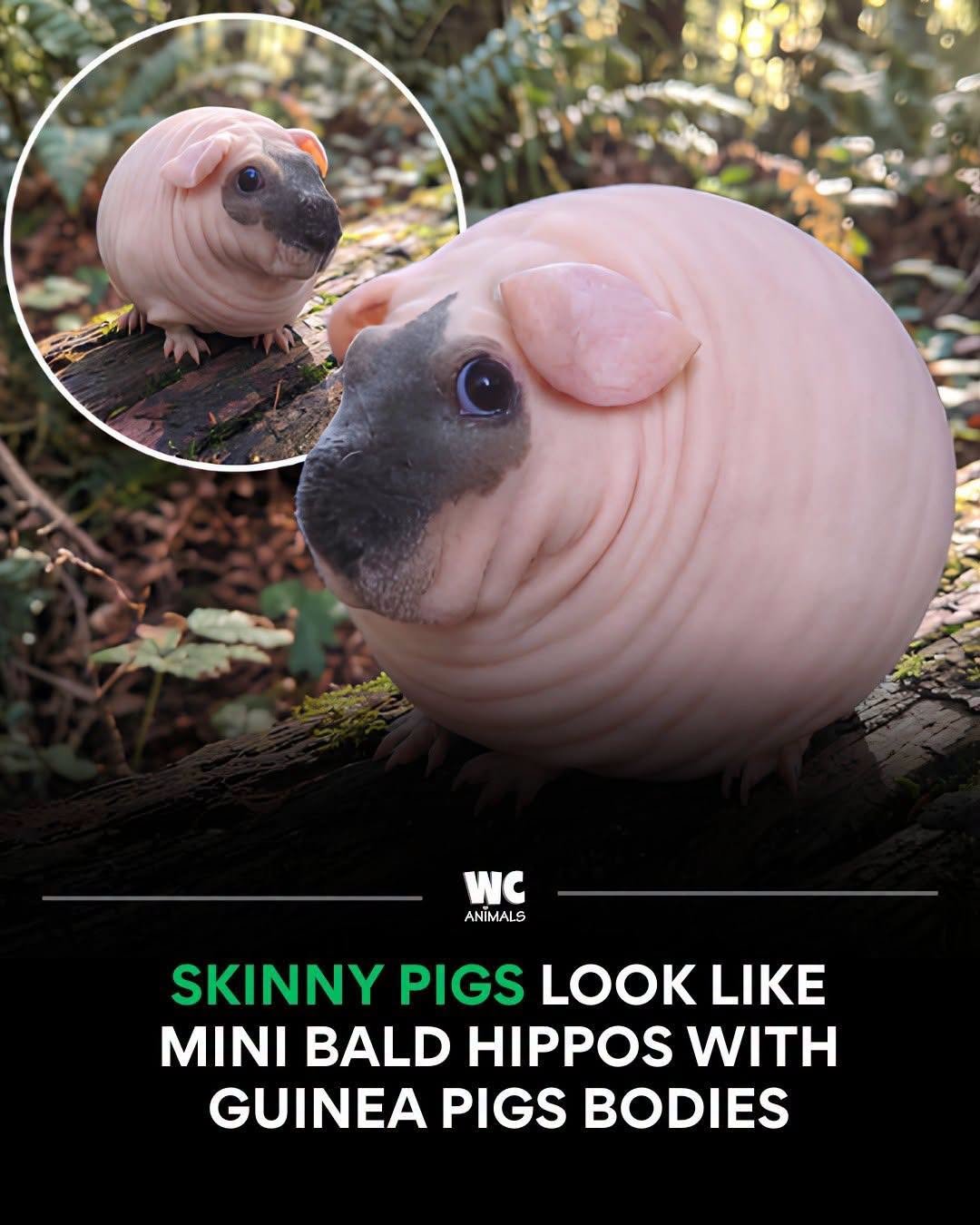
At first sight it could be mistaken for a miniature hippopotamus, with its round belly, short legs, oversized ears and wrinkled face, but the tiny animal waddling towards the reader is in fact a guinea pig called the Skinny Pig. Unlike ordinary guinea pigs, which have soft, fluffy coats, Skinny Pigs have very little body hair: their bare skin may be pink, dark, mottled, or a mixture of colours, and some have small patches of fur around the nose and feet, which makes them look still more unusual.
Their likeness to baby hippos has made them popular online, and with rounded bodies, tiny feet and expressive eyes they look almost like characters from a children’s film. Despite the unusual appearance, they behave like familiar guinea pigs, including squeaking, exploring and interacting with their owners. The hairless appearance comes from a genetic mutation affecting normal hair development, and the variety’s history goes back to 1978, when hairless guinea pigs were identified in Canada, and through breeding they became a recognised variety of domestic guinea pig.
Having almost no fur means they need special attention. Their skin is more exposed to environmental conditions, so temperature control is particularly important: they become cold more easily than furry guinea pigs and need protection from direct sunlight, which can damage their delicate skin. Skinny Pigs generally need more food than their furry relatives, because without a thick coat for insulation their bodies use extra energy to stay warm, and a balanced diet, constant access to hay, fresh water and vitamin C are described as essential for their well-being.
They also need a clean, comfortable living environment, with their skin protected from rough surfaces, excessive moisture and extreme temperatures, and regular veterinary check-ups help owners spot possible skin problems and other health concerns. Although they may look unusual, Skinny Pigs are affectionate, curious animals with distinctive personalities, and their miniature-hippo appearance makes them unforgettable, but their special care requirements are equally important. One thing should be said plainly, though: the article gives no weights, lifespans, prices or care measurements for the animal, and it shows no publication date.
Website Disclaimer
The information provided on this website is for general informational and educational purposes only. While we strive to ensure that all content is accurate and up to date, we make no guarantees regarding the completeness, reliability, or accuracy of any information published.
The views and opinions expressed in articles belong to their respective authors and do not necessarily reflect the views of this website. Any action you take based on the information found on this website is strictly at your own risk. We will not be liable for any losses, damages, or inconveniences arising from the use of our content.
Some articles may contain opinions, third-party information, or external links. We do not endorse or guarantee the accuracy of content on external websites and are not responsible for their practices or policies.
All content on this website is provided in good faith and is intended for informational purposes only. Readers are encouraged to verify information independently and seek professional advice where appropriate.