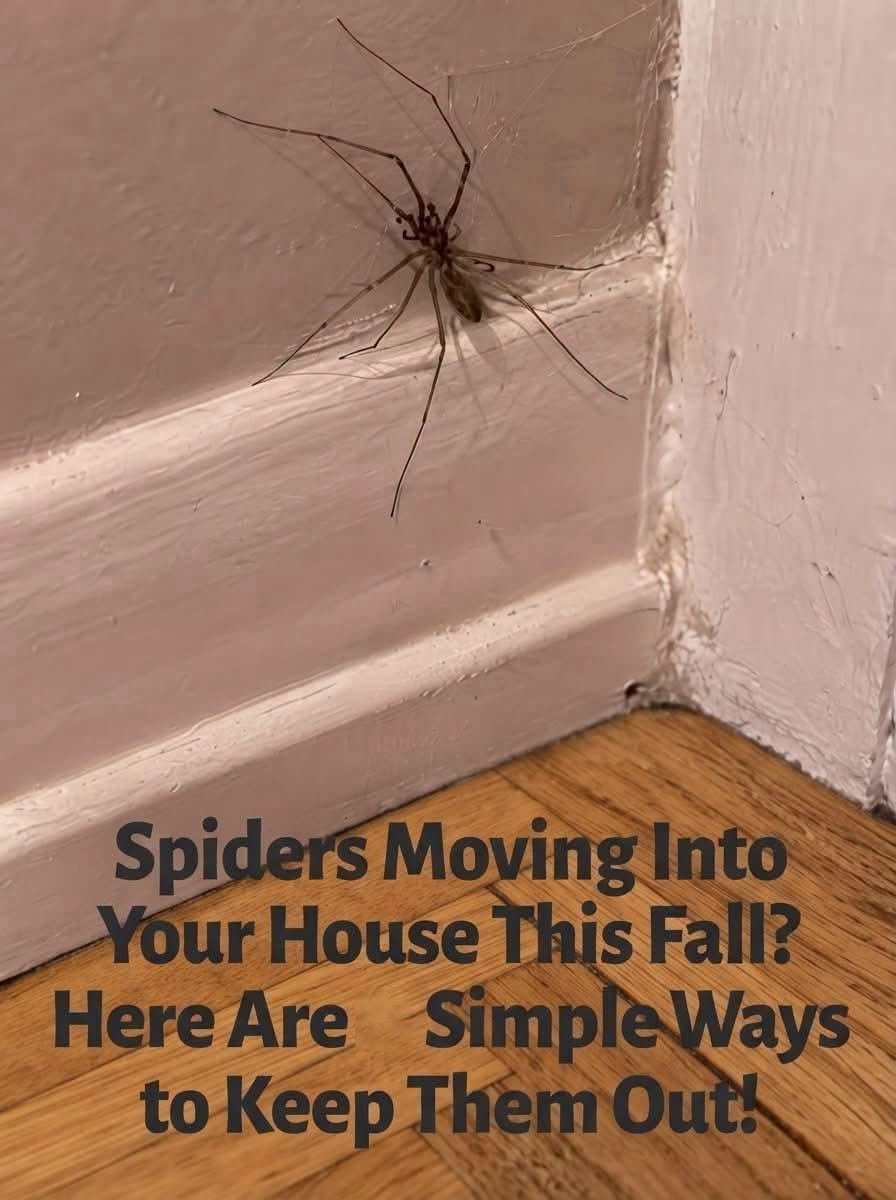
Natural Ways to Keep Spiders Out of Your Home as Cold Weather Arrives
When temperatures drop, keeping spiders out can feel like a seasonal battle. Peppermint oil, citrus rinds, vinegar sprays, and cedar wood are often recommended as natural deterrents, but evidence that these household treatments reliably prevent spiders is limited. A strong fragrance does not guarantee protection, and many house spiders already live indoors rather than arriving with the cold. If you try scented remedies, treat them as optional experiments—not a dependable barrier against unwanted visitors.
The good news is that keeping spiders out of your living spaces does not necessarily require harsh chemical sprays. A few practical changes around the home can make a meaningful difference by reducing the tiny openings spiders use to enter and the insects that attract them.
Start by sealing the gaps. Inspect window frames, doorways, basement openings, and areas where pipes or cables pass through walls. Even small cracks can provide access for spiders and other insects. Weatherstripping around doors, repairing damaged window screens, and sealing gaps with suitable caulk can help limit unwanted visitors.
Next, pay attention to clutter. Spiders often settle in quiet, undisturbed places such as storage boxes, garages, basements, closets, and corners behind furniture. Cardboard piles, unused clothing, and stacks of stored items can provide convenient hiding spots. Regularly cleaning these areas, vacuuming corners, and keeping belongings organized can make your home less inviting.
Outdoor maintenance matters, too. Trim vegetation away from exterior walls, move firewood away from the house, and remove piles of leaves or other debris near entrances. Outdoor lights can attract flying insects, which may then attract spiders looking for food. Where practical, use warm-colored outdoor lighting and keep unnecessary lights switched off.
What about peppermint oil?
Peppermint and other essential oils are popular because their strong scents seem like a simple alternative to conventional pesticides. Some laboratory research suggests that certain essential oils may repel particular spider species under specific conditions. However, that does not establish that a homemade peppermint spray will keep spiders out of an entire house. Its effects may be short-lived, and results can vary depending on the species, concentration, and application.
Citrus peels, vinegar, and cedar are similarly unreliable as stand-alone solutions. They may produce noticeable odors, but there is insufficient evidence that placing them around windows or doorways creates a lasting spider barrier. Rather than relying on these remedies, concentrate on blocking entry points and reducing suitable hiding places.
Safety is important when experimenting with scented products. Essential oils can irritate skin and eyes, and some are toxic to cats, dogs, and other pets. Never apply concentrated oils directly to animals, and keep homemade mixtures away from children, pets, food, and surfaces that could be damaged. Never mix cleaning products, particularly vinegar with bleach.
It is also worth remembering that most house spiders are not aggressive and generally avoid people. Many help control flies, mosquitoes, and other small insects. Finding a spider in a corner does not automatically mean your home has an infestation.
If you encounter one, you can often capture it carefully in a container and release it outdoors where appropriate. For repeated sightings, identify possible entry points and check whether other insects are present. If you notice large numbers of spiders, recurring egg sacs, or a persistent pest problem, a qualified pest-control professional can help identify the cause and recommend an appropriate solution.
As colder weather approaches, the most effective approach is a combination of prevention, cleanliness, and sensible maintenance. Seal gaps, repair screens, reduce clutter, and manage the insects that spiders feed on. Natural scents may seem appealing, but they should never replace these proven steps.
The bottom line: You do not need to fill your home with strong fragrances to discourage spiders. A well-sealed, tidy home with fewer entry points and fewer insects is a far more dependable starting point for keeping unwanted eight-legged visitors at bay throughout the colder months.
Website Disclaimer
The information provided on this website is for general informational and educational purposes only. While we strive to ensure that all content is accurate and up to date, we make no guarantees regarding the completeness, reliability, or accuracy of any information published.
The views and opinions expressed in articles belong to their respective authors and do not necessarily reflect the views of this website. Any action you take based on the information found on this website is strictly at your own risk. We will not be liable for any losses, damages, or inconveniences arising from the use of our content.
Some articles may contain opinions, third-party information, or external links. We do not endorse or guarantee the accuracy of content on external websites and are not responsible for their practices or policies.
All content on this website is provided in good faith and is intended for informational purposes only. Readers are encouraged to verify information independently and seek professional advice where appropriate.