The Water Looks Calm, but One Small Beach Flag Could Be Warning You About a Hidden Danger
The water looks harmless. The sun is shining, the waves are gentle, and families are stepping into the ocean without a second thought. Children splash near the shore while adults enjoy the refreshing water, believing the calm conditions mean it is safe to swim.
But sometimes, the biggest dangers at the beach are the ones you cannot see.
A small warning flag flying on the beach may be trying to tell you something important. While many people associate beach warnings with powerful waves, dangerous currents, or rough weather, certain warnings can also alert beachgoers to hazards that are difficult to spot beneath the surface.
One possible danger is the presence of jellyfish or other stinging marine organisms.
The Invisible Threat Beneath the Surface
Jellyfish can drift through the water with ocean currents, sometimes appearing close to shore when conditions seem perfectly peaceful. Their translucent bodies can be difficult to distinguish from the surrounding water, especially in bright sunlight or murky conditions.
Some jellyfish can deliver painful stings through their tentacles, even when the animals themselves are difficult to see. Depending on the species, a sting may cause burning pain, redness, swelling, itching, or more serious reactions.
In some regions, another concern is the Portuguese man o’ war. Although it resembles a jellyfish, it is a different type of marine organism. Its long tentacles can deliver painful stings, and it may be carried toward beaches by wind and currents.
Even an organism washed onto the sand may still have stinging tentacles capable of causing injury.
What Does the Beach Flag Actually Mean?
Beach flag systems vary by country, region, and beach authority. A particular color does not mean the same thing everywhere, so it is important to check the local flag legend rather than guessing.
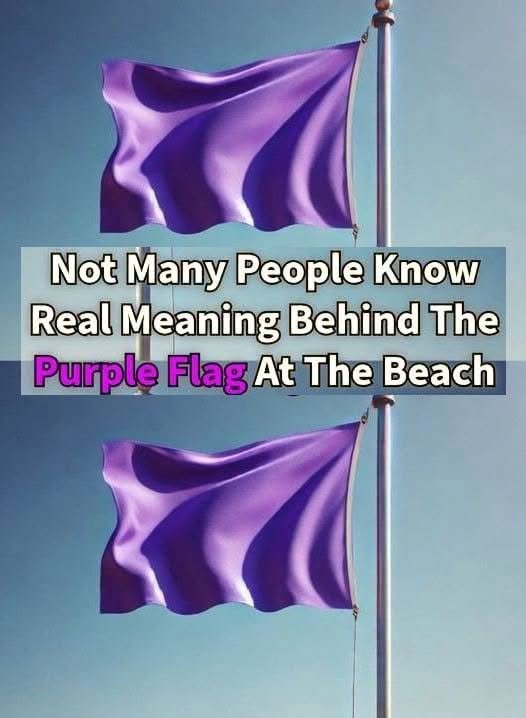
At many beaches, a purple flag warns of dangerous marine life, which may include jellyfish, stingrays, or other potentially hazardous sea creatures. However, the precise meaning depends on the local warning system.
A purple flag does not necessarily mean every part of the water is dangerous, but it signals that swimmers should take the warning seriously and follow the instructions of lifeguards.
Other flags may warn of strong currents, hazardous surf, or water conditions that make swimming unsafe. Always check the signs posted near the beach entrance.
What Should You Do If You See a Warning Flag?
Before entering the ocean, take a moment to look at the flags and read the posted safety information.
-
Ask a lifeguard what the flag means and whether marine life has recently been reported.
-
Avoid touching unfamiliar sea creatures, even if they appear dead or motionless on the sand.
-
Keep children close and prevent them from playing with jellyfish or other unfamiliar organisms.
-
Leave the water if lifeguards issue a warning or report dangerous marine life nearby.
-
Follow local emergency guidance if someone is stung.
If a sting occurs, get out of the water safely and seek help from a lifeguard. Do not rub the affected area or apply random home remedies. First aid depends on the species, so follow local medical guidance. Call emergency services immediately if the person has difficulty breathing, chest pain, collapses, or develops other severe symptoms.
Why Calm Water Can Still Be Dangerous
One of the most common mistakes beachgoers make is assuming that peaceful water must be safe water.
In reality, the ocean can hide hazards that have little to do with the size of the waves. Marine animals can drift close to shore, underwater conditions can change, and dangerous organisms may be difficult to identify until someone comes into contact with them.
That is why beach safety is not just about watching the weather or looking at the waves. It also means paying attention to warning flags, listening to lifeguards, and understanding the local environment.
The most important lesson is simple: never ignore a beach warning just because the water looks beautiful. A few seconds spent checking a flag could help you avoid a painful injury—or something far more serious.
The ocean is meant to be enjoyed, but respecting its warnings is part of staying safe.
Have you ever seen a purple flag at a beach? Did you know it could warn about dangerous marine life? Share your experience in the comments.
Website Disclaimer
The information provided on this website is for general informational and educational purposes only. While we strive to ensure that all content is accurate and up to date, we make no guarantees regarding the completeness, reliability, or accuracy of any information published.
The views and opinions expressed in articles belong to their respective authors and do not necessarily reflect the views of this website. Any action you take based on the information found on this website is strictly at your own risk. We will not be liable for any losses, damages, or inconveniences arising from the use of our content.
Some articles may contain opinions, third-party information, or external links. We do not endorse or guarantee the accuracy of content on external websites and are not responsible for their practices or policies.
All content on this website is provided in good faith and is intended for informational purposes only. Readers are encouraged to verify information independently and seek professional advice where appropriate.