Ear wax, or cerumen, is a natural substance produced in the ear canal that plays an important protective role. It traps dust, microorganisms, and other particles, helping prevent infections. It also has antibacterial properties and works as a lubricant to stop the ear canal skin from becoming dry or irritated.
Normally, ear wax is self-cleaning. Natural jaw movements like talking and chewing help slowly move it out of the ear canal. In most cases, no manual cleaning is needed because the body regulates wax naturally.
Problems can occur when ear wax builds up faster than it can be removed. This can lead to blockage and discomfort, especially if the wax becomes hard or impacted inside the ear canal.
Common symptoms of excessive ear wax include a feeling of fullness in the ear, reduced hearing, ear pain, ringing sounds (tinnitus), and sometimes dizziness or a mild cough. These signs may indicate a blockage that needs attention.
Using cotton swabs (Q-tips) is strongly discouraged. Instead of removing wax, they often push it deeper into the ear, making impaction worse. They can also scratch the ear canal or even damage the eardrum, increasing the risk of infection.
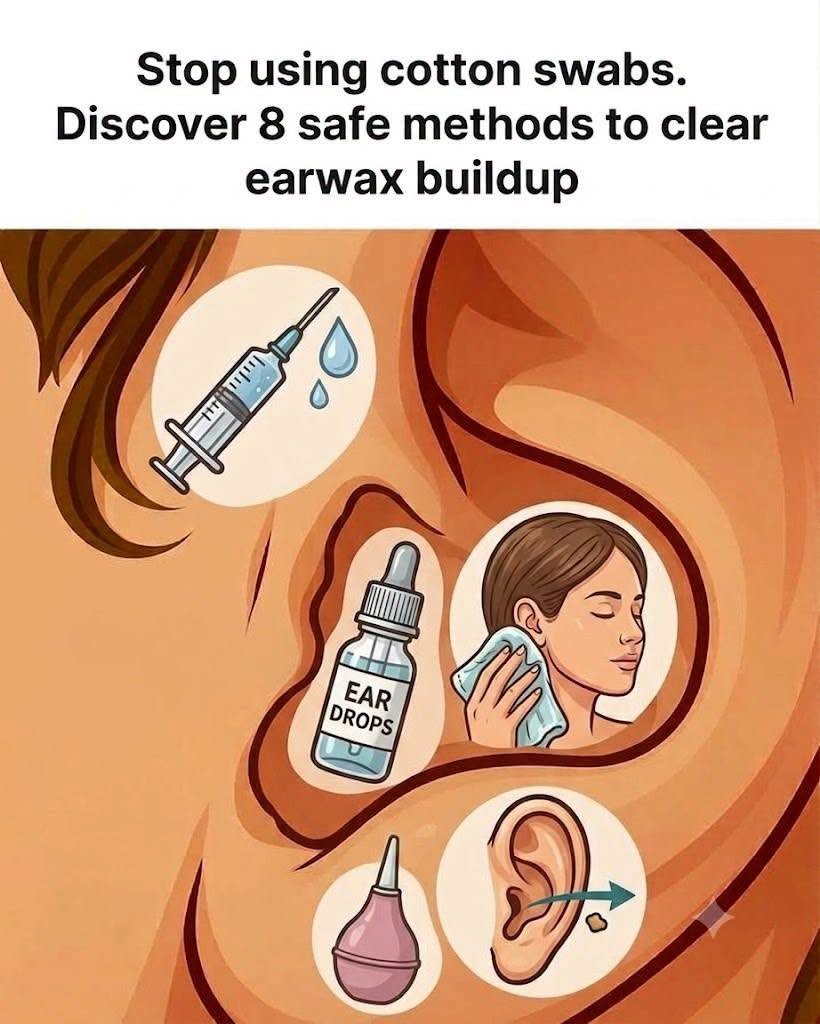
For mild buildup, softening the wax can help. Options include saline solution, warm olive oil, or glycerin drops, which loosen hardened wax so it can naturally come out or be gently flushed.
Some people use hydrogen peroxide, baking soda solutions, warm water irrigation, or over-the-counter ear drops designed to dissolve wax. These methods should be used carefully to avoid irritation or injury, and not too frequently.
If symptoms are severe or persistent—such as pain, significant hearing loss, or suspected infection—it is safest to seek medical help. Healthcare professionals can remove ear wax safely using specialized tools, especially for people with ear conditions or past ear surgeries.
Website Disclaimer
The information provided on this website is for general informational and educational purposes only. While we strive to ensure that all content is accurate and up to date, we make no guarantees regarding the completeness, reliability, or accuracy of any information published.
The views and opinions expressed in articles belong to their respective authors and do not necessarily reflect the views of this website. Any action you take based on the information found on this website is strictly at your own risk. We will not be liable for any losses, damages, or inconveniences arising from the use of our content.
Some articles may contain opinions, third-party information, or external links. We do not endorse or guarantee the accuracy of content on external websites and are not responsible for their practices or policies.
All content on this website is provided in good faith and is intended for informational purposes only. Readers are encouraged to verify information independently and seek professional advice where appropriate.