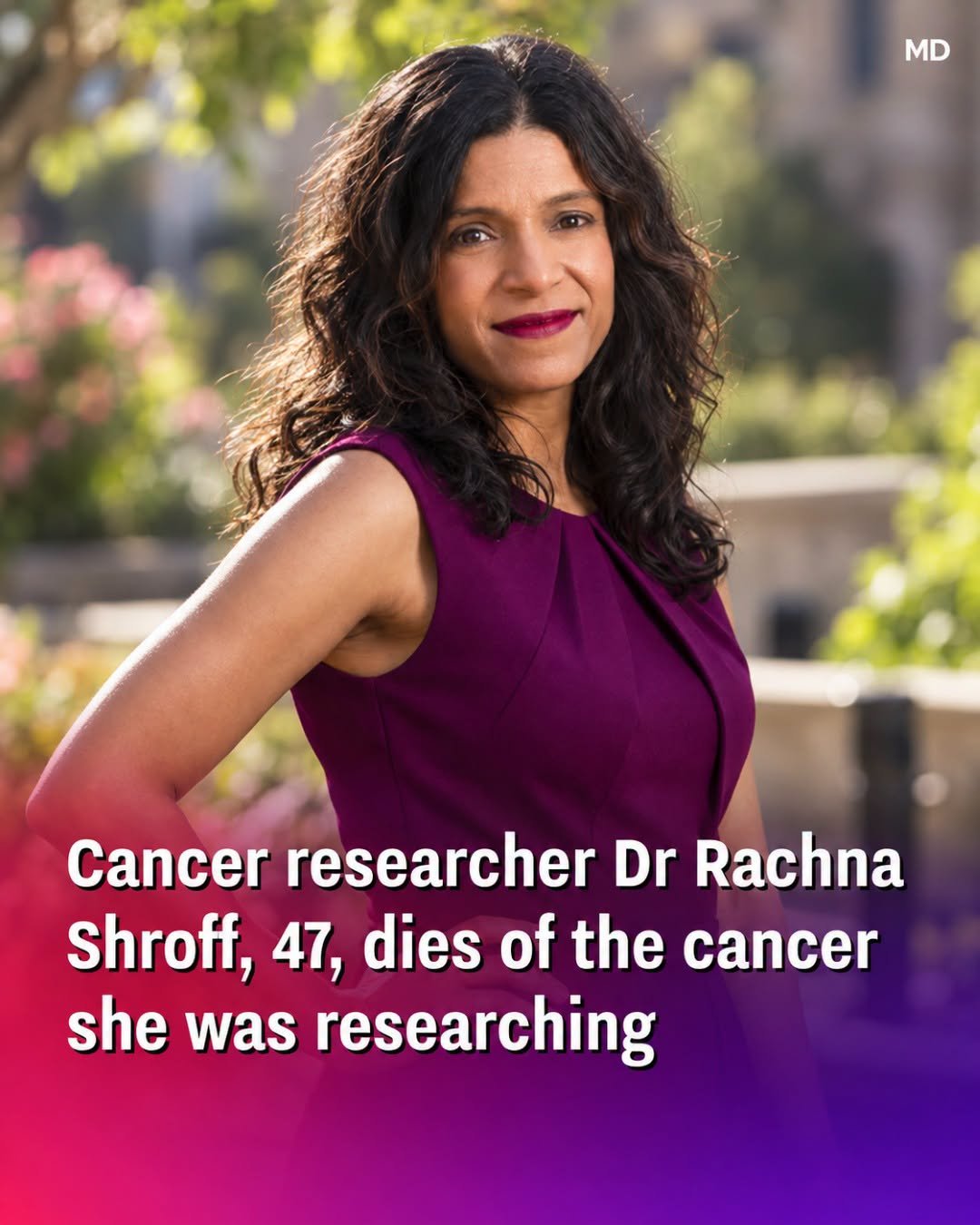
Dr. Rachna Shroff devoted her career to finding better treatments for cancer, but an unexpected diagnosis brought a deeply personal battle into her life. The University of Arizona physician and researcher died at 47 after battling an aggressive form of cancer, the university announced in October 2026. According to reports, Shroff learned of her diagnosis earlier this year and was subsequently told she had terminal adenocarcinoma, a disease that develops in glandular cells. Her work had focused on pancreatic and biliary tract cancers, particularly cholangiocarcinoma, a rare cancer affecting the bile ducts that has historically been difficult to treat. Even as she confronted her own illness, her professional legacy remained closely connected to the patients and families who depended on advances in cancer research.
Shroff was widely recognized for her dedication to gastrointestinal medical oncology and her efforts to improve treatment options for people facing some of the most challenging cancers. At the University of Arizona, she served as a physician, researcher, and academic leader, helping advance clinical research while caring for patients navigating complicated diagnoses and difficult treatment decisions.
Her work centered on cancers that often present significant medical challenges. Pancreatic cancer and biliary tract cancers can be particularly difficult to diagnose and treat, making research into new therapies essential. Cholangiocarcinoma, in particular, is relatively uncommon, and treatment options have historically been limited for many patients. Researchers like Shroff have worked to expand scientific understanding of these diseases and identify treatments that could improve outcomes.
For patients and their loved ones, that work represents far more than laboratory discoveries or clinical trial results. It offers the possibility of more time, better treatment options, and greater hope when facing an uncertain future. Shroff’s career reflected a commitment to pursuing those possibilities through research and patient care.
Her diagnosis brought a devastating personal dimension to the medical challenges she had spent years studying. Physicians who specialize in cancer routinely help patients process frightening news, understand treatment choices, and navigate the emotional uncertainty that follows a diagnosis. Experiencing a serious illness herself placed Shroff on the other side of that experience, facing questions that no amount of professional expertise could make easy.
Although details of her final months have not all been publicly disclosed, news of her death prompted reflection on the impact she had made in medicine. Colleagues and members of the medical community remembered the importance of her contributions to cancer research and the patients whose lives she touched through her work.
Her story also highlights the importance of continued investment in cancer research. Advances in molecular testing, targeted therapies, immunotherapy, and clinical trials have created new opportunities for some patients, but aggressive cancers remain difficult to treat. Researchers continue to investigate how tumors develop, why certain treatments stop working, and which therapies may offer better results for individual patients.
For those living with cancer, progress often comes through years of research conducted by physicians and scientists who are determined to find better answers. Every clinical study, new treatment approach, and improved understanding of a disease can help move that effort forward.
Shroff’s career was part of that larger mission. Her work focused on improving care for people confronting serious illnesses, and her professional legacy will be measured not only by scientific advances but also by the patients she treated, the colleagues she inspired, and the knowledge she helped build.
Her death at just 47 is a painful reminder that medical expertise cannot eliminate every uncertainty of illness. It also underscores why the search for more effective cancer treatments remains so urgent.
For the patients and families who continue to face pancreatic and biliary tract cancers, the work Shroff devoted her life to remains important. Her story is one of scientific commitment, compassion, and the determination to make difficult diagnoses less devastating for those who come next.
Website Disclaimer
The information provided on this website is for general informational and educational purposes only. While we strive to ensure that all content is accurate and up to date, we make no guarantees regarding the completeness, reliability, or accuracy of any information published.
The views and opinions expressed in articles belong to their respective authors and do not necessarily reflect the views of this website. Any action you take based on the information found on this website is strictly at your own risk. We will not be liable for any losses, damages, or inconveniences arising from the use of our content.
Some articles may contain opinions, third-party information, or external links. We do not endorse or guarantee the accuracy of content on external websites and are not responsible for their practices or policies.
All content on this website is provided in good faith and is intended for informational purposes only. Readers are encouraged to verify information independently and seek professional advice where appropriate.