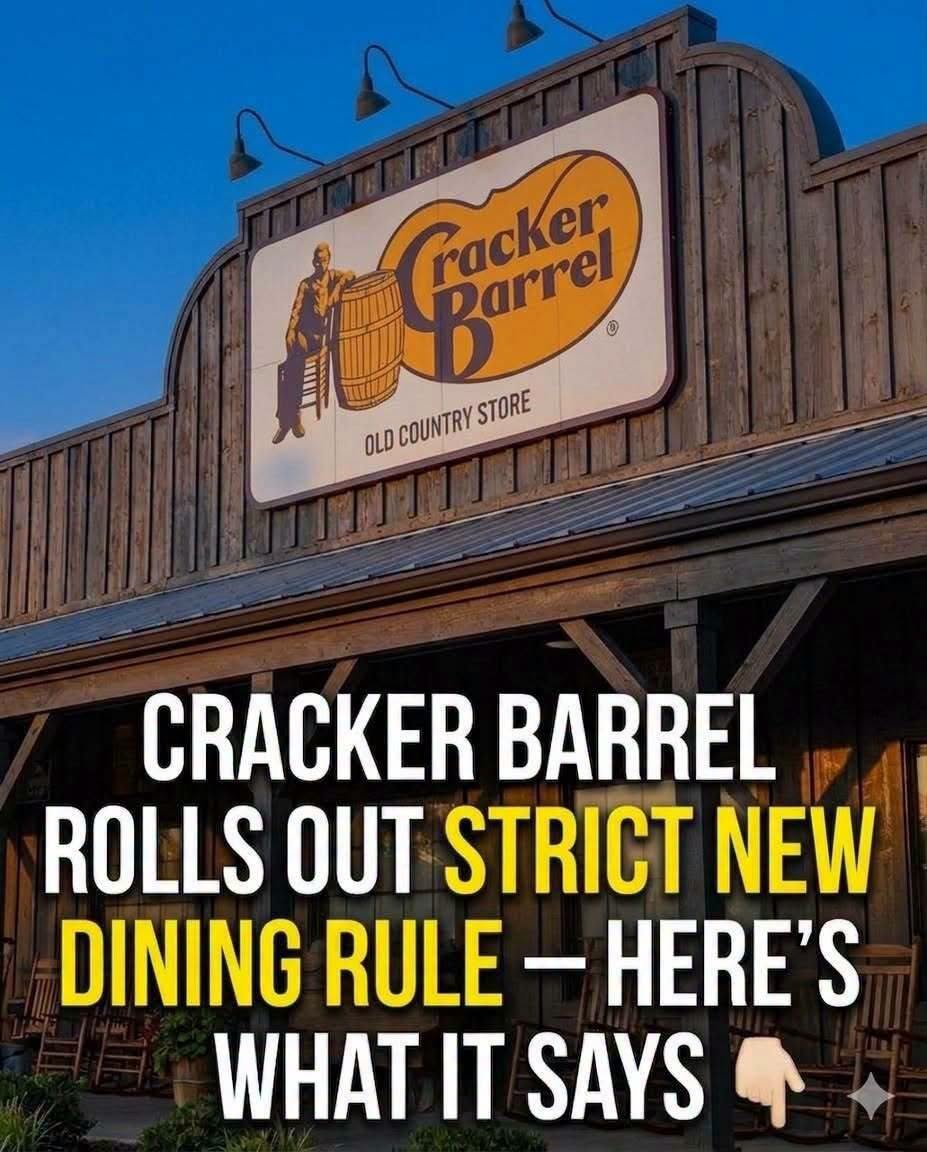
Cracker Barrel Is Changing, and Loyal Customers Fear the Restaurant They Love May Never Be the Same
For millions of road-weary travelers, Cracker Barrel was more than a pit stop. It was a promise of comfort, a place where rocking chairs lined the porch, country music filled the air, and a plate of biscuits, gravy, and homemade-style cooking felt like a taste of childhood. For families crossing state lines, couples taking weekend drives, and truckers looking for a familiar meal, the restaurant became part of the American road-trip tradition.
But behind the familiar biscuits and country-store charm, change has been quietly reshaping the brand. From logo discussions and interior updates to evolving workplace policies, Cracker Barrel has faced a difficult question: How do you modernize a business without losing the very things that made people fall in love with it?
For longtime customers, the concern goes far beyond decorations or branding. It is about identity, memory, and the feeling of stepping into a place that seems untouched by the rush of modern life.
When Familiarity Becomes Part of the Experience
Cracker Barrel built its reputation on an atmosphere that felt deliberately different from ordinary fast-food restaurants. Its wooden rocking chairs, antique-style decorations, old-fashioned country store, and hearty Southern-inspired meals created a setting that encouraged customers to slow down.
For many visitors, the experience began before they even reached their table. They might browse shelves filled with candy, toys, kitchen accessories, and nostalgic gifts before settling into a booth for breakfast or dinner.
Those details became part of the restaurant’s identity.
That is why even relatively small changes can provoke surprisingly strong reactions. Customers who have visited the same locations for decades may see a redesigned logo or a modernized dining room as more than a cosmetic adjustment. They may interpret it as a sign that the company is moving away from the traditions that made it special.
In a competitive restaurant industry, however, businesses cannot ignore changing customer expectations. They must consider younger diners, evolving tastes, operating costs, and the need to keep locations appealing to new generations.
The challenge is finding a balance between improvement and familiarity.
The Logo Debate Revealed a Deeper Problem
Few things demonstrate the power of nostalgia quite like a familiar logo.
When Cracker Barrel explored a cleaner, more modern visual identity, the reaction from many longtime fans showed how emotionally connected customers had become to the brand’s traditional image.
For critics, the older design represented something distinctive: a recognizable country-store atmosphere and a connection to an earlier version of American roadside dining. A simplified design, by contrast, risked making the company appear less distinctive.
The debate became a reminder that branding is not simply about choosing colors, fonts, or illustrations. It is also about the memories customers associate with those visual details.
Following the backlash surrounding its 2025 logo redesign, Cracker Barrel announced that it would retain its original logo. The decision demonstrated that customer feedback could influence the company’s direction.
Yet the larger challenge remained. Restoring a familiar logo could reassure loyal guests, but maintaining their trust would require more than bringing back a recognizable image. Customers also wanted the atmosphere, hospitality, and food experience they associated with the name.
Inside the Restaurants, Change Can Feel Personal
The debate over modernization extends beyond logos.
Interior design decisions can affect how customers experience a restaurant, especially when the original environment is a major reason they visit. A traditional dining room filled with vintage-style objects and rustic details communicates a different feeling from a space designed around a more contemporary aesthetic.
Some guests welcome refreshed facilities, improved lighting, and more comfortable seating. Others worry that removing too many familiar details could make Cracker Barrel feel like any other restaurant along the highway.
Neither reaction is surprising.
A restaurant must remain functional, accessible, and financially sustainable. At the same time, its distinctive atmosphere can be one of its strongest competitive advantages.
The key is understanding which elements are merely decorative and which have become central to the customer experience.
For Cracker Barrel, that distinction matters enormously. Its country-store concept is not an incidental feature added to the dining room. It is part of the reason many people choose to stop there in the first place.
Employee Policies Raise Questions About Company Culture
Changes in the workplace can also influence how customers perceive a brand.
Travel, dining, and employee-related guidelines may appear to be internal matters, but they can become public talking points when people believe they reveal something about a company’s values.
Cracker Barrel, like other national restaurant chains, must establish practical policies for employees while maintaining a consistent company culture across locations.
However, it is important to distinguish between encouraging employees to connect with a brand and requiring them to demonstrate loyalty through personal dining choices. A company’s identity is not necessarily strengthened by making workers feel obligated to spend their own money at its restaurants.
Clear policies, fair expectations, and respectful communication can help employees understand the company’s priorities without creating unnecessary resentment.
Ultimately, the customer experience depends heavily on the people who deliver it. Friendly service, reliable food, and a welcoming atmosphere are difficult to maintain if employees feel disconnected from the organization they represent.
Can Cracker Barrel Modernize Without Losing Its Soul?
This is the question at the heart of the company’s ongoing challenge.
Restaurants face pressure from rising costs, changing consumer habits, and competitors offering everything from inexpensive meals to premium dining experiences. Remaining relevant requires investment and adaptation.
But Cracker Barrel possesses something that cannot easily be manufactured through advertising: decades of accumulated memories.
A grandparent might remember stopping there during childhood vacations. Parents might recall bringing their own children for breakfast before a long drive. Those children may eventually return with families of their own.
For these customers, the restaurant represents continuity. The menu and surroundings become part of a personal history that extends beyond a single meal.
That emotional connection can be a powerful business advantage, but it also creates responsibility. When a company builds its reputation around tradition, customers naturally expect it to treat that tradition with care.
The solution does not necessarily mean freezing every restaurant in time. It means identifying the essential elements of the experience and protecting them while making thoughtful improvements elsewhere.
Better service, refreshed facilities, menu innovation, and operational efficiency can coexist with rocking chairs, country-store merchandise, and familiar comfort food.
Modernization does not have to mean abandoning the past.
The Real Test Will Happen One Visit at a Time
For Cracker Barrel, the future will not be decided by a logo alone or by a single policy announcement. It will be shaped by the everyday experiences of the people who walk through its doors.
Does the food still deliver the comfort customers expect? Does the restaurant feel welcoming? Are employees treated respectfully? Can longtime guests recognize the place they love while new visitors discover something worth returning to?
Those questions matter more than any individual design choice.
The company has an opportunity to demonstrate that listening to customers is not merely a response to public criticism but a long-term commitment to understanding its identity.
Its most loyal customers are not necessarily demanding that nothing ever change. Many simply want reassurance that the qualities they value will not disappear in the pursuit of a more contemporary image.
And that may be the most important lesson in Cracker Barrel’s story.
A brand can update its appearance, improve its operations, and adapt to a changing market. But when people associate a restaurant with family, comfort, and home, those feelings cannot be redesigned overnight.
For millions of travelers, Cracker Barrel has always been about more than what arrives on the plate. It is about the familiar chair, the country-store shelves, the warmth of a welcoming meal, and the small relief of finding something recognizable after hours on the road.
The challenge is not simply to make Cracker Barrel look modern. It is to make sure that, after all the changes, walking through its doors still feels like coming home.
Website Disclaimer
The information provided on this website is for general informational and educational purposes only. While we strive to ensure that all content is accurate and up to date, we make no guarantees regarding the completeness, reliability, or accuracy of any information published.
The views and opinions expressed in articles belong to their respective authors and do not necessarily reflect the views of this website. Any action you take based on the information found on this website is strictly at your own risk. We will not be liable for any losses, damages, or inconveniences arising from the use of our content.
Some articles may contain opinions, third-party information, or external links. We do not endorse or guarantee the accuracy of content on external websites and are not responsible for their practices or policies.
All content on this website is provided in good faith and is intended for informational purposes only. Readers are encouraged to verify information independently and seek professional advice where appropriate.