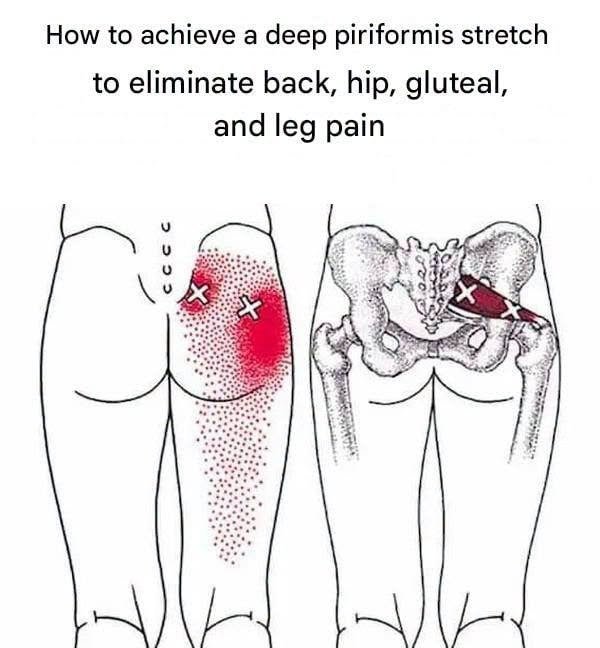
Achieving a deep piriformis stretch can be a game-changer if you struggle with lower back, hip, gluteal, or radiating leg pain. The piriformis is a small but powerful muscle located deep in the buttocks, running close to the sciatic nerve. When it becomes tight or inflamed—often from prolonged sitting, poor posture, or repetitive movement—it can compress the nerve and trigger pain that travels through the hips and down the leg. A properly executed stretch targets this muscle directly, helping relieve pressure, restore mobility, and reduce chronic discomfort over time.
One of the most effective ways to access a deep piriformis stretch is by starting slow and controlled, focusing on form rather than intensity. A classic method is the lying figure-four stretch: lie on your back, bend both knees, and cross one ankle over the opposite thigh. Gently pull the supporting leg toward your chest until you feel a deep stretch in the glute area—not sharp pain. Keep your lower back relaxed against the floor and breathe deeply, allowing the muscle to release gradually. Holding the stretch for 30–60 seconds and repeating on both sides helps the muscle lengthen safely.
For an even deeper stretch, seated or floor-based variations can be extremely effective, especially for people who sit most of the day. Sitting tall with one leg crossed over the other and gently hinging forward from the hips allows the piriformis to stretch without straining the spine. The key is alignment: keep your chest open, spine neutral, and shoulders relaxed. Avoid bouncing or forcing the stretch—deep piriformis release comes from sustained tension combined with calm breathing, not aggressive pushing.
Consistency is what ultimately eliminates pain and prevents it from returning. Stretching the piriformis daily—especially after workouts or long periods of sitting—can dramatically reduce stiffness in the hips and lower back while improving overall movement quality. Pairing these stretches with light glute strengthening and regular walking further supports hip stability and nerve health. When done correctly and consistently, a deep piriformis stretch can bring lasting relief, helping you move more freely, sit more comfortably, and live with far less pain 👍
Website Disclaimer
The information provided on this website is for general informational and educational purposes only. While we strive to ensure that all content is accurate and up to date, we make no guarantees regarding the completeness, reliability, or accuracy of any information published.
The views and opinions expressed in articles belong to their respective authors and do not necessarily reflect the views of this website. Any action you take based on the information found on this website is strictly at your own risk. We will not be liable for any losses, damages, or inconveniences arising from the use of our content.
Some articles may contain opinions, third-party information, or external links. We do not endorse or guarantee the accuracy of content on external websites and are not responsible for their practices or policies.
All content on this website is provided in good faith and is intended for informational purposes only. Readers are encouraged to verify information independently and seek professional advice where appropriate.