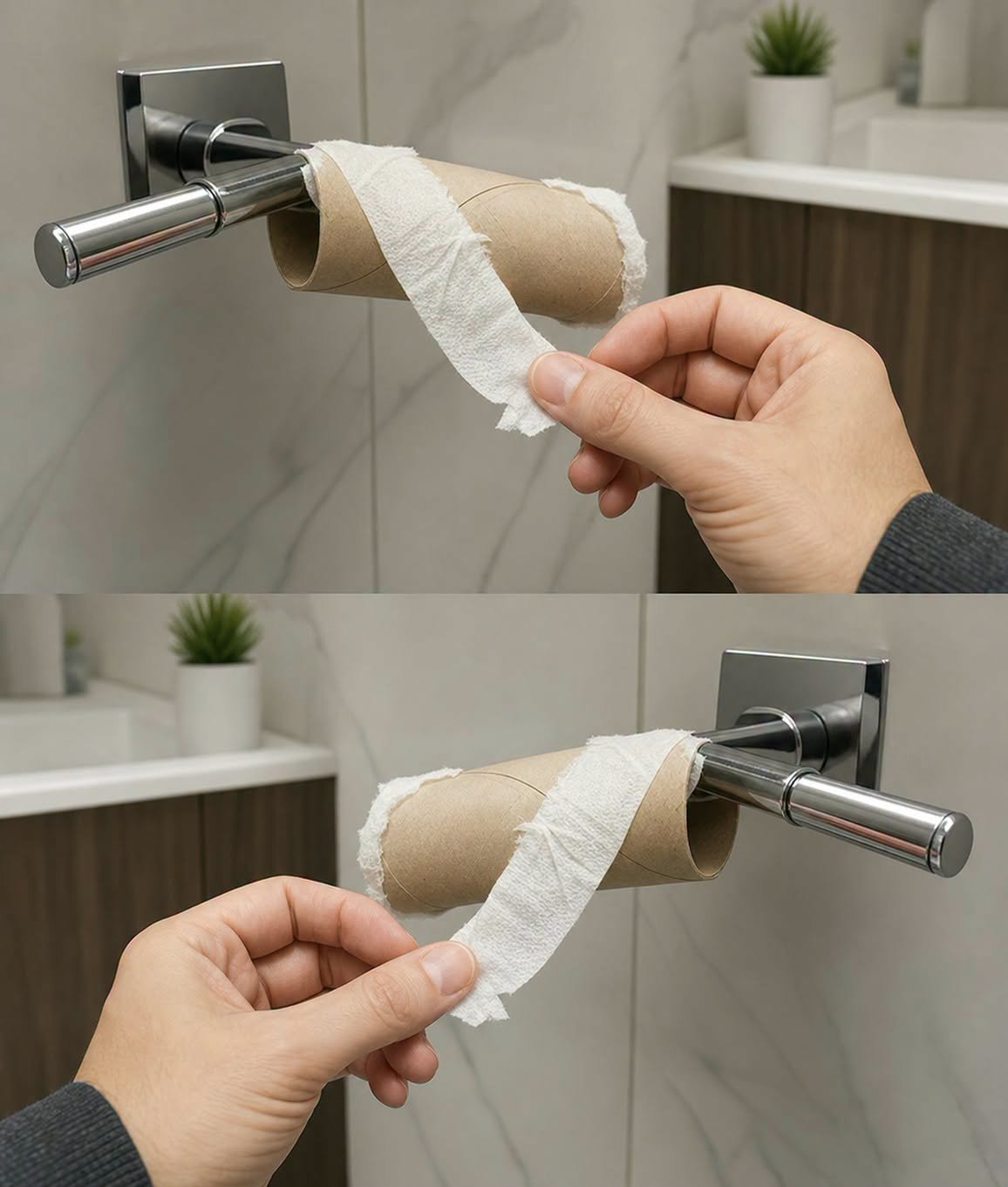
For decades, we never questioned it. We tore, wiped, flushed, and bought another pack. But the roll that ruled our bathrooms is suddenly on trial. Trees, water, energy—our “soft” convenience hides a hard truth. A quiet rebellion is spreading through homes, one bidet, one choice, and one routine at a time. The age of toilet paper as our unquestioned bathroom essential may be approaching a turning point.
What’s unfolding in bathrooms across the world is less a gadget trend and more a shift in everyday habits. People are discovering that personal hygiene doesn’t have to rely entirely on paper. Bidet attachments and water-based cleaning systems, once considered unusual in some countries, are becoming increasingly familiar to households looking for greater comfort, cleanliness, and less waste. With a simple installation, families can reduce their dependence on disposable paper products while potentially saving money over time.
The environmental argument, however, is more complicated than it first appears. Traditional toilet paper requires trees, water, energy, and transportation to produce. Bidets also consume water and electricity in some models, meaning their overall environmental impact depends on how they are manufactured, powered, and used. Still, replacing a significant portion of daily paper use with water can reduce the number of rolls a household purchases and throws away.
Beyond the environmental benefits, comfort is another reason people make the switch. Many users appreciate the gentle cleaning action of water, adjustable spray settings, and the convenience of modern bidet seats. Basic attachments can be affordable, while advanced models offer heated seats, warm-water washing, and air-drying functions. For people with limited mobility or certain personal-care needs, these features can make bathroom routines easier, although individual needs vary.
Of course, toilet paper isn’t disappearing overnight. It remains convenient, widely available, and useful for drying after washing. Some households may prefer a combination of water and paper, while others may continue using traditional products because of cost, plumbing limitations, or personal preference. The goal isn’t necessarily to eliminate toilet paper completely, but to reconsider whether using it for every part of the cleaning process is always necessary.
The real change begins when people stop treating everyday habits as things that can never be improved. A bidet installation may seem like a small decision, but multiplied across millions of homes, even modest reductions in disposable paper consumption can make a difference. Manufacturers are responding with more accessible designs, and consumers are increasingly weighing convenience against cost and environmental responsibility.
Perhaps the future of bathroom hygiene won’t be defined by the disappearance of the familiar white roll. Instead, it may be defined by having more choices, using fewer disposable resources, and finding a balance between cleanliness, comfort, and sustainability.
After all, progress doesn’t always arrive through a dramatic invention. Sometimes, it begins with a simple question asked in the most ordinary room in the house: What if there’s a better way to do something we’ve done the same way for generations?
Is this conversation helpful so far?
Website Disclaimer
The information provided on this website is for general informational and educational purposes only. While we strive to ensure that all content is accurate and up to date, we make no guarantees regarding the completeness, reliability, or accuracy of any information published.
The views and opinions expressed in articles belong to their respective authors and do not necessarily reflect the views of this website. Any action you take based on the information found on this website is strictly at your own risk. We will not be liable for any losses, damages, or inconveniences arising from the use of our content.
Some articles may contain opinions, third-party information, or external links. We do not endorse or guarantee the accuracy of content on external websites and are not responsible for their practices or policies.
All content on this website is provided in good faith and is intended for informational purposes only. Readers are encouraged to verify information independently and seek professional advice where appropriate.