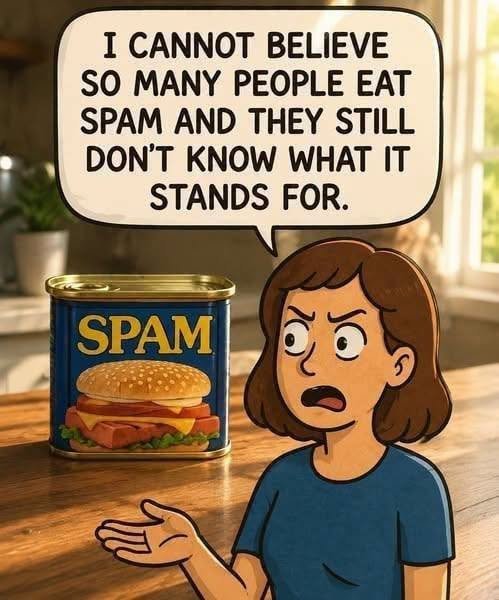
For decades, SPAM has been one of the most recognizable canned foods in the world. Millions of people eat it in sandwiches, breakfast dishes, and family recipes without ever stopping to wonder what the name actually means. The short, catchy brand name became so famous that many assumed it was simply a made-up word created for marketing.
The mystery surrounding the name has led to countless theories over the years. Some people believed it stood for “Special Processed American Meat,” while others insisted it meant “Spiced Ham.” The debate became part of the product’s legend, with different explanations being shared from generation to generation.
The most widely accepted explanation is that SPAM originally stood for “Spiced Ham.” The name was reportedly chosen during a naming contest before the product was introduced in the late 1930s. The simple combination of the two words created a memorable brand that quickly became a household name across America.
During World War II, SPAM became especially popular because it was affordable, easy to transport, and had a long shelf life. Soldiers carried it overseas, families relied on it during difficult times, and its reputation spread around the world. Long after the war ended, the product remained a staple in kitchens across many countries.
Today, whether people love it or hate it, SPAM continues to be one of the most recognizable canned foods ever created. And while many still argue about the exact origin of the name, the explanation most commonly associated with it remains surprisingly simple: Spiced Ham.
Website Disclaimer
The information provided on this website is for general informational and educational purposes only. While we strive to ensure that all content is accurate and up to date, we make no guarantees regarding the completeness, reliability, or accuracy of any information published.
The views and opinions expressed in articles belong to their respective authors and do not necessarily reflect the views of this website. Any action you take based on the information found on this website is strictly at your own risk. We will not be liable for any losses, damages, or inconveniences arising from the use of our content.
Some articles may contain opinions, third-party information, or external links. We do not endorse or guarantee the accuracy of content on external websites and are not responsible for their practices or policies.
All content on this website is provided in good faith and is intended for informational purposes only. Readers are encouraged to verify information independently and seek professional advice where appropriate.