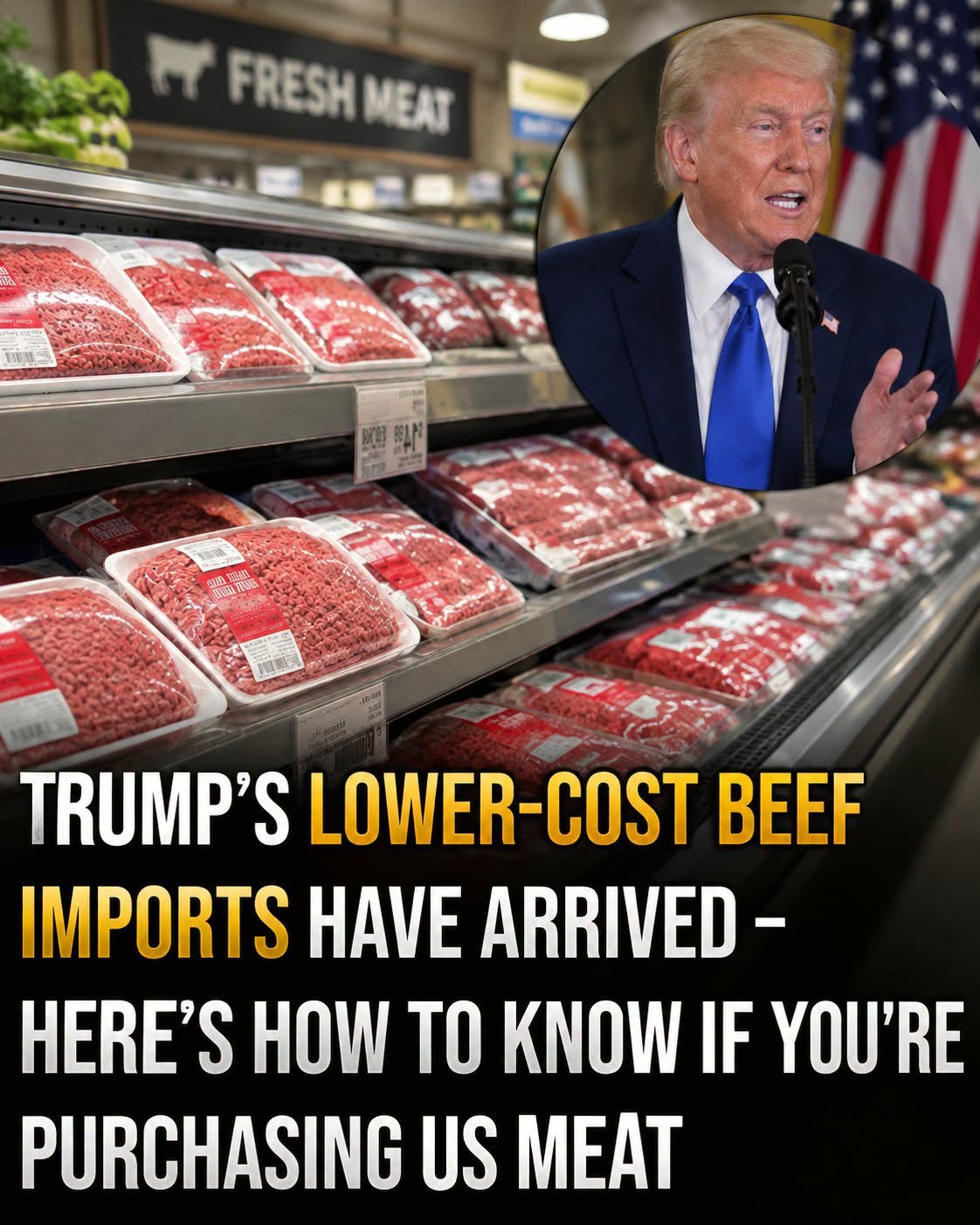
Trump’s lower-cost beef imports have arrived – here’s how to know if you’re purchasing US meat

But there is an important twist: the premise above is backwards. The federal rule did not loosen the “Product of USA” standard—it tightened it.

For decades, USDA policy allowed meat from animals raised and slaughtered abroad to receive a “Product of USA” claim if it underwent processing in the United States. USDA acknowledged that this could create an impression different from what many consumers understood the label to mean.

In March 2024, the USDA finalized a new rule changing that standard. Under the new requirements, which took effect January 1, 2026, a voluntary “Product of USA” or “Made in the USA” claim on a single-ingredient meat product can be used only when the animal was born, raised, slaughtered, and processed in the United States.

That means an imported animal cannot simply be slaughtered, cut, or packaged at a U.S. facility and then receive the “Product of USA” claim. Imported meat also remains subject to country-of-origin labeling requirements, including identification of the foreign country on the immediate container in applicable circumstances.

The distinction matters because “Product of USA” is voluntary. A package does not have to carry that phrase, and other qualified U.S.-origin statements can describe specific steps performed in America—for example, processing or packaging—without claiming that the entire product originated here.

So the quiet change in the meat aisle isn’t that imported beef can newly masquerade as American under “Product of USA.” It is almost the opposite: the USDA has raised the bar for that particular claim.

For shoppers, the lesson is simple: don’t treat every American flag, map, farm image, or phrase such as “processed in the USA” as identical to “Product of USA.” Read the exact wording. One label may describe where the animal came from; another may describe only where the final processing happened.

And for American ranchers, the debate goes beyond a package in the supermarket. Country-of-origin information can affect how consumers distinguish domestic beef from imported beef—and how much value they place on that distinction.

The next time you stand in front of the meat case, take a few extra seconds.

The most important words on the package may not be the biggest ones.

Website Disclaimer

The information provided on this website is for general informational and educational purposes only. While we strive to ensure that all content is accurate and up to date, we make no guarantees regarding the completeness, reliability, or accuracy of any information published.

The views and opinions expressed in articles belong to their respective authors and do not necessarily reflect the views of this website. Any action you take based on the information found on this website is strictly at your own risk. We will not be liable for any losses, damages, or inconveniences arising from the use of our content.

Some articles may contain opinions, third-party information, or external links. We do not endorse or guarantee the accuracy of content on external websites and are not responsible for their practices or policies.

All content on this website is provided in good faith and is intended for informational purposes only. Readers are encouraged to verify information independently and seek professional advice where appropriate.


Related Posts

Leave a Reply

Your email address will not be published. Required fields are marked *