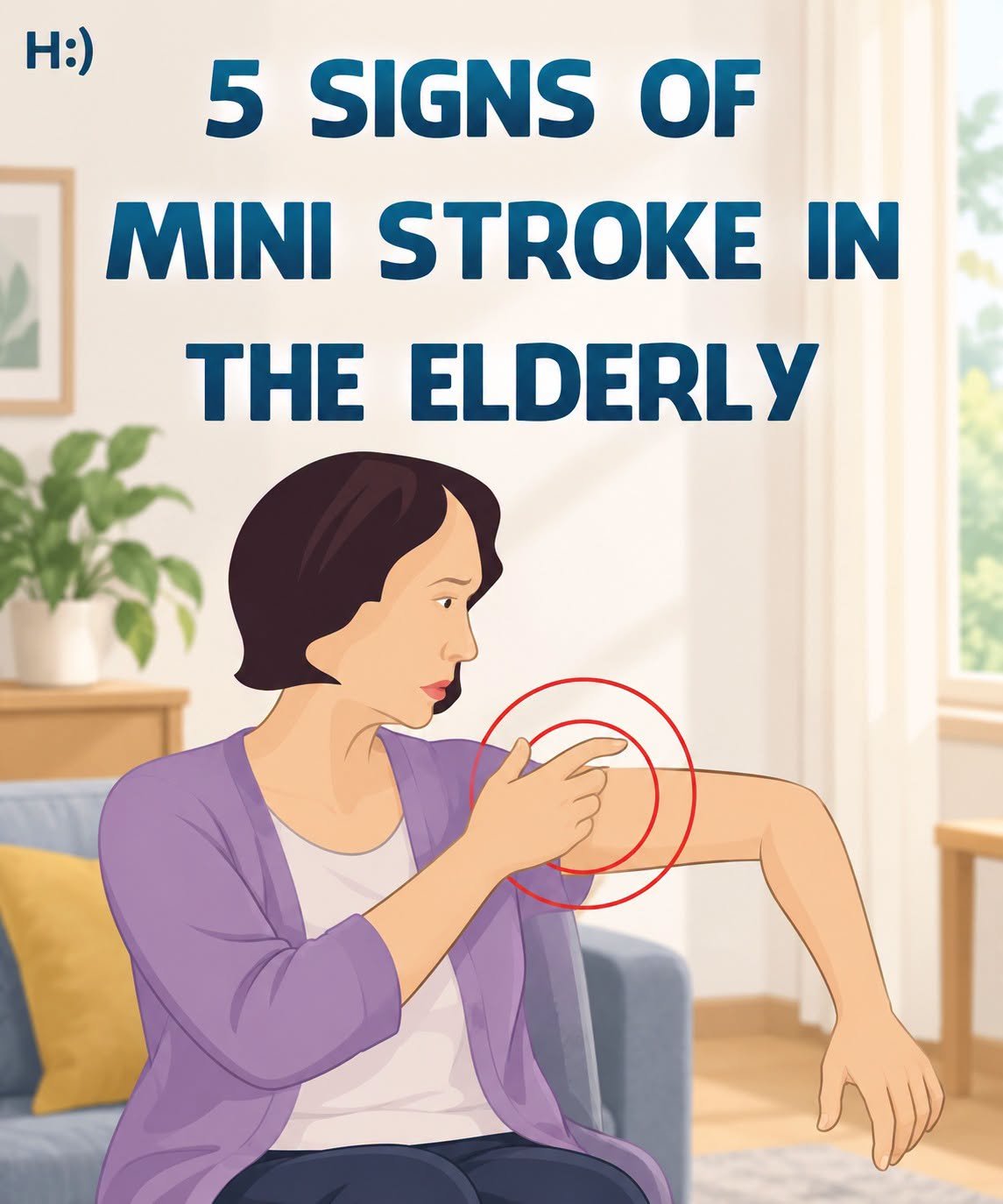
Margaret’s brief episode turned out to be a transient ischemic attack, a temporary blockage of blood flow to the brain that often precedes a full-blown stroke. Her normal appearance in the mirror had nearly cost her the chance to discover dangerously high blood pressure, narrowed arteries, and a potentially irregular heartbeat. What felt like a fleeting scare was, in reality, a blunt warning that her brain might not be so forgiving next time.
At the emergency department, doctors moved quickly. Margaret was asked to describe exactly what had happened: the sudden difficulty speaking, the strange weakness in her hand, and the brief distortion in her face. By the time she arrived, every symptom had disappeared. That was precisely what made the episode so dangerous. A TIA can resolve before a person reaches the hospital, but the underlying problem may still be present.
Her daughter kept replaying the moment in her mind. If she had listened when Margaret said she was fine, they might have gone home and treated the episode as nothing more than exhaustion or stress. Instead, the medical team arranged further testing and began addressing the risk factors that could increase Margaret’s chances of having a stroke.
Margaret left the hospital with instructions she had never expected to receive. Her blood pressure needed careful monitoring. Her heart rhythm needed evaluation. Her doctors also discussed medication, lifestyle changes, and follow-up appointments designed to reduce her future risk.
For the first time, Margaret understood why her daughter had refused to ignore those few frightening minutes.
She had always imagined a medical emergency as something dramatic—someone collapsing, unable to speak or move. She had never imagined that a person could look completely normal again just minutes later and still have experienced a serious warning.
The episode changed the way she listened to her body. She learned that sudden facial weakness, arm weakness, trouble speaking, confusion, vision changes, dizziness, or difficulty walking should never be dismissed simply because they disappear.
A TIA may be temporary, but the warning it carries is not.
Margaret’s story ended without the catastrophe everyone feared that day. But it left her with something far more valuable than reassurance: time. Time to investigate the cause, manage her risk factors, and recognize the warning signs if they ever returned.
And whenever someone told her, “It passed, so you’re probably fine,” Margaret would remember the lesson that nearly came too late:
Sometimes the most important emergency is the one that disappears before anyone realizes it happened.
Website Disclaimer
The information provided on this website is for general informational and educational purposes only. While we strive to ensure that all content is accurate and up to date, we make no guarantees regarding the completeness, reliability, or accuracy of any information published.
The views and opinions expressed in articles belong to their respective authors and do not necessarily reflect the views of this website. Any action you take based on the information found on this website is strictly at your own risk. We will not be liable for any losses, damages, or inconveniences arising from the use of our content.
Some articles may contain opinions, third-party information, or external links. We do not endorse or guarantee the accuracy of content on external websites and are not responsible for their practices or policies.
All content on this website is provided in good faith and is intended for informational purposes only. Readers are encouraged to verify information independently and seek professional advice where appropriate.