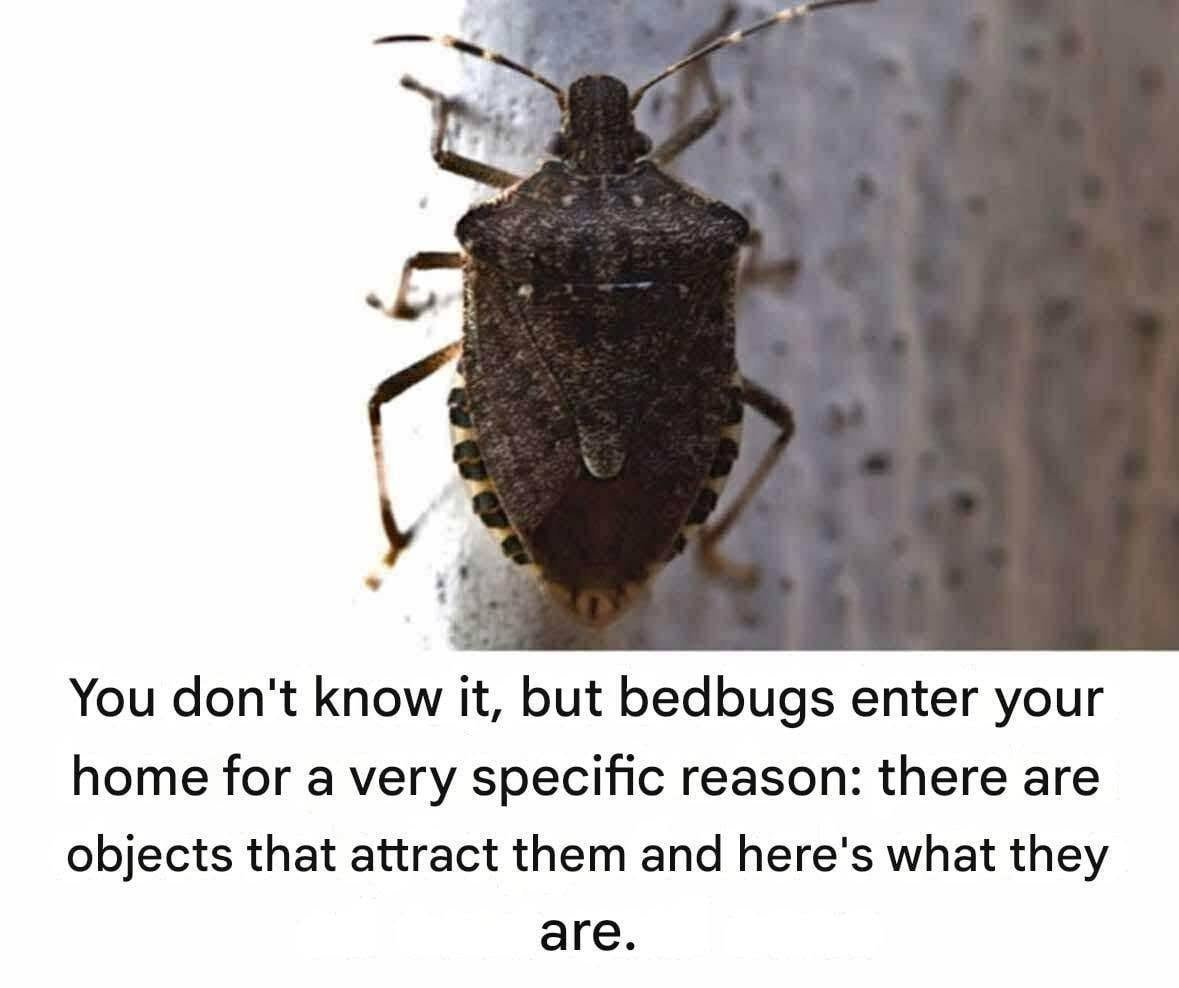
A widespread misconception has been quietly circulating online, and it needs a clear, factual correction. An article recently described an insect problem using the term “bedbugs,” but the description did not match bedbugs at all. This matters because confusing insects leads people to take the wrong preventive steps, waste time on ineffective remedies, and misunderstand what they are actually dealing with in their homes.
True bedbugs are a very specific pest with well-documented behavior. They do not live outdoors, they are not seasonal garden insects, and they are not casually wandering into homes from plants or windows. When people mistake other insects for bedbugs, panic often follows, even though the real situation may be far less serious and much easier to manage.
The insect described in the article was not a bedbug in any biological or behavioral sense. It was most likely a green stink bug from the Palomena group, an entirely different insect with different habits, risks, and solutions. Mixing these up creates unnecessary fear and spreads misinformation that benefits no one.
Another key distinction is how bedbugs spread. They do not migrate from gardens or outdoor plants. They are transported almost exclusively through human activity. Luggage, used furniture, bedding, clothing, and shared living spaces are the main sources of infestation. Hotels, public transport, dormitories, and apartments with shared walls are common transfer points.
They are not attracted to humidity, houseplants, or radiators. Warmth alone does not lure them in from outside. They remain where humans sleep and rest because that is where their food source is. If no humans are present, bedbugs cannot survive long-term.
This is where the confusion becomes obvious. The insect described in the article behaves in the opposite way. Green stink bugs are outdoor insects. They live on plants, feed on vegetation, and are commonly found in gardens, fields, and wooded areas. They have nothing to do with mattresses or blood.
Bedbugs, scientifically known as Cimex lectularius, have one primary purpose: feeding on human blood. They are parasites, not general insects. They do not eat plants, do not live in soil, and do not survive outdoors in gardens. Their entire life cycle is tied to human environments, especially sleeping areas.
They hide in mattresses, box springs, bed frames, furniture seams, baseboards, and tiny cracks in walls. They avoid light and only come out when people are resting. If an insect is visible crawling on walls or windows during the daytime, it is almost certainly not a bedbug.
Bedbugs are also not green. They are small, flat, oval-shaped, and reddish-brown, becoming darker and more swollen after feeding. Any description involving green coloring immediately rules them out. Color alone is often the fastest way to identify that you are dealing with something else entirely.
Website Disclaimer
The information provided on this website is for general informational and educational purposes only. While we strive to ensure that all content is accurate and up to date, we make no guarantees regarding the completeness, reliability, or accuracy of any information published.
The views and opinions expressed in articles belong to their respective authors and do not necessarily reflect the views of this website. Any action you take based on the information found on this website is strictly at your own risk. We will not be liable for any losses, damages, or inconveniences arising from the use of our content.
Some articles may contain opinions, third-party information, or external links. We do not endorse or guarantee the accuracy of content on external websites and are not responsible for their practices or policies.
All content on this website is provided in good faith and is intended for informational purposes only. Readers are encouraged to verify information independently and seek professional advice where appropriate.