Silas Granger did not go to the yellow school bus when the final bell rang at three o’clock. Instead, he stood by the chain-link fence and rolled the hem of his blue t-shirt between his thumb and forefinger until the cotton was twisted tight.
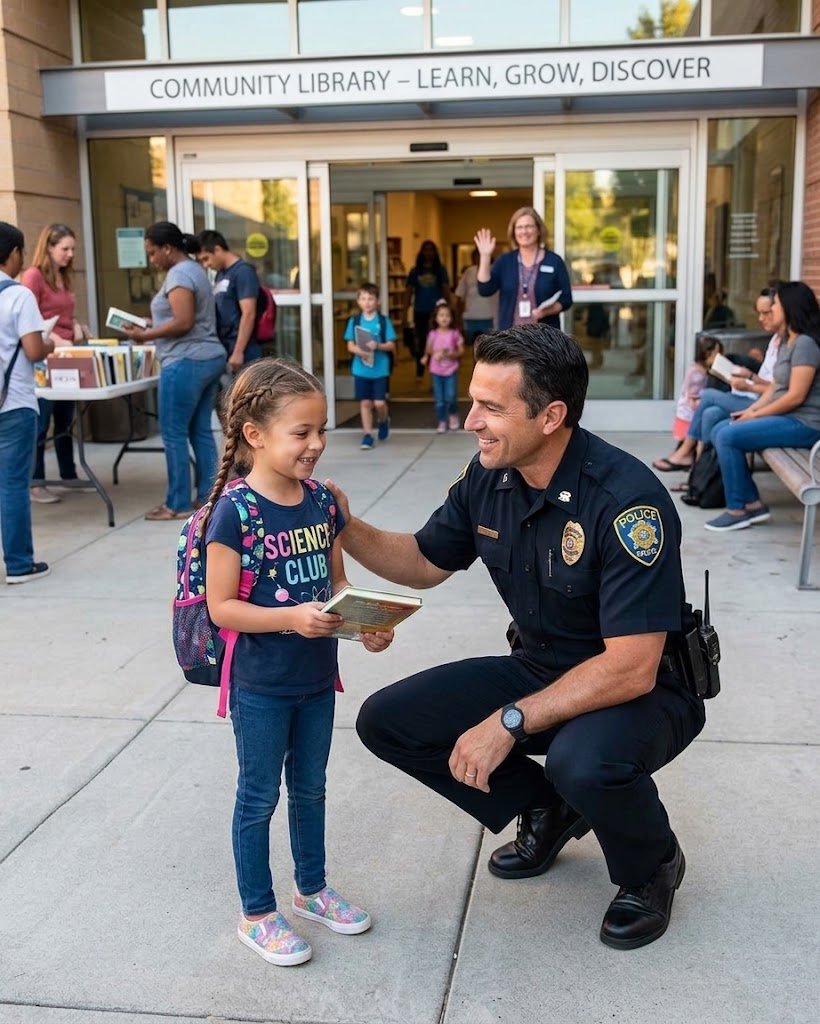
The schoolyard was nearly empty, the last of the yellow buses pulling away into the late autumn haze. As the school resource officer for Oakhaven Elementary, I usually watched the kids clear out from the gravel driveway before I headed back to my desk to finish my daily logs.
But Silas kept his eyes on my silver watch, his small face unusually quiet and deliberate for a seven-year-old. He did not have a backpack, only a small plastic folder held tightly under his left arm.
“My grandmother is not at the house,” Silas said, his voice barely louder than the idling bus engines in the distance.
I double-tapped the silver casing of my watch with my index finger, a habit I only noticed when the afternoon got heavy and my neck started to ache. “Did she call the main office, Silas?”
“No,” he said, looking down at his scuffed sneakers. “But the side door is open.”
I looked toward the main office windows, where the school staff were already packing their bags for the evening. If I called the county family services line now, Silas would end up sitting in a vinyl chair in a drafty hallway for three hours while some night-shift worker tried to locate his father.
“Let us take a drive,” I said, keeping my voice level and professional, though my chest felt tight with the familiar worry. “We will see if her car is in the driveway.”
Silas did not speak during the five-minute drive. He sat entirely still in the passenger seat, his eyes fixed on the glove compartment as we turned onto the gravel road that led to the edge of town, past the abandoned brick kilns.
I parked my patrol car on the gravel shoulder outside Evelyn Granger’s house. The front yard was a tangle of overgrown lilac bushes, their damp, purple leaves drooping in the late autumn chill and blocking most of the natural light.
The dry scrape of autumn leaves against the passenger side window sounded like fingernails as Silas opened his door. He did not run toward the porch, but waited for me to step out onto the gravel and lock the car.
The house was a small, green-sided cottage with peeling trim and a porch that sagged slightly on the left. No lights were on inside, and the driveway was empty of Evelyn’s rusted blue sedan.
Old newsprint was piled three feet high in the drafty side hallway, smelling of dust, vinegar, and old coal smoke. In the kitchen, the yellow refrigerator hummed with a low, vibrating rattle that seemed to shake the grease-stained wallpaper near the stove.
“She is usually back from the grocery store by now,” Silas whispered, his fingers still working the hem of his shirt.
A thrift-store teacup sat on the laminate counter, three dollars still written on the bottom in faded black marker. Next to it lay a calendar with every single day in October crossed out with thick black ink, except for one date in the middle of the month.
I walked over to the counter and looked at the calendar, noticing the heavy black lines that ran through each square. The fourteenth of October was completely untouched, the white paper gleaming under the kitchen light.
“Why did she leave this one open, Silas?” I asked, pointing to the square.
“That is the day the letters stopped coming,” Silas said, his voice flat.
“What letters?” I asked, looking down at him.
“The ones she does not want me to see,” Silas said.
I looked at the empty sink where a single fork lay dry on the metal drainboard. The silence in the house was heavy, the kind of quiet that makes you listen to your own breathing and the creak of the floorboards.
“Let us wait on the porch, Silas,” I said, my professional tone slipping back into place. “We should not be wandering around inside without your grandmother here.”
“The key is not where she thinks it is,” Silas said.
He did not look at me as he spoke, his voice carrying that strange, flat weight that belonged to someone much older. He walked past the laminate table toward the small pantry at the back of the kitchen.
The pantry smelled of dried dill, lard, and old linoleum that had started to peel at the corners. A floral apron hung from a brass hook on the pantry wall, stiff with flour stains and decades of kitchen grease.
Silas reached behind the heavy fabric of the apron, his small arm disappearing into the dark shadow between the wall and the shelves. When he pulled his hand back, a small brass key glinted in his palm, cold and bright.
“She keeps it behind the pocket,” Silas said, his voice dropping to a whisper that barely carried over the hum of the yellow refrigerator.
Website Disclaimer
The information provided on this website is for general informational and educational purposes only. While we strive to ensure that all content is accurate and up to date, we make no guarantees regarding the completeness, reliability, or accuracy of any information published.
The views and opinions expressed in articles belong to their respective authors and do not necessarily reflect the views of this website. Any action you take based on the information found on this website is strictly at your own risk. We will not be liable for any losses, damages, or inconveniences arising from the use of our content.
Some articles may contain opinions, third-party information, or external links. We do not endorse or guarantee the accuracy of content on external websites and are not responsible for their practices or policies.
All content on this website is provided in good faith and is intended for informational purposes only. Readers are encouraged to verify information independently and seek professional advice where appropriate.