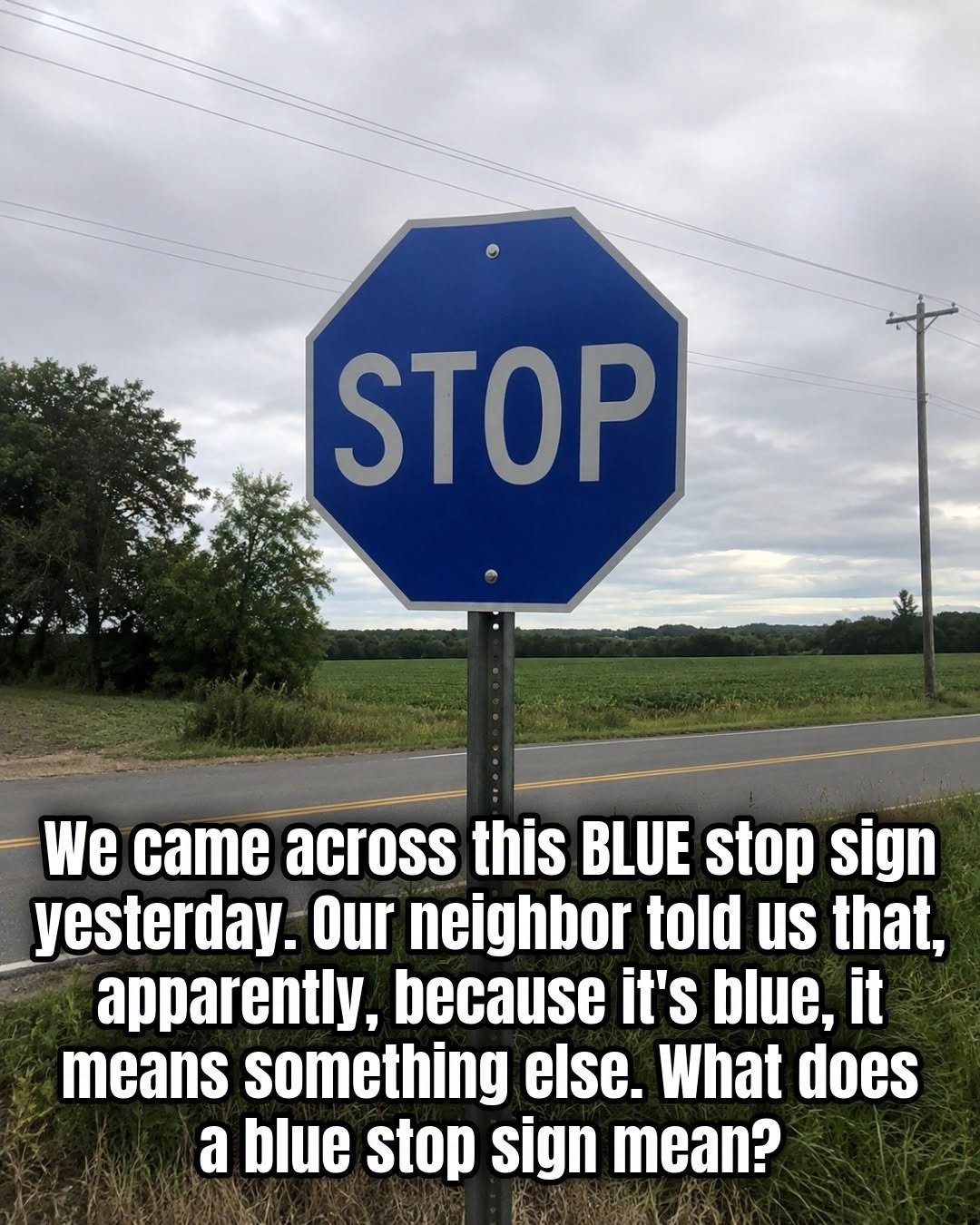
A blue stop sign can feel like a glitch in reality. Your brain screams “wrong,” yet your eyes insist it’s there, commanding you to hit the brakes. Is it legal? Is it a prank? Or a clue that you’ve just left the safety of normal road rules behind? The truth about these signs is stranger, and riskier, than most driv…
That jolt of confusion you feel when you see a blue stop sign is exactly why it fascinates people. We’re trained from childhood to trust red octagons with white letters; they’re woven into our instincts. A blue version looks official enough to matter, but unfamiliar enough to make you hesitate—and on the road, even a second of hesitation can be dangerous.
Behind the scenes, though, the story is simple. Blue stop signs are almost never part of government-regulated traffic control. They’re usually installed on private property—gated communities, corporate campuses, parking lots—where owners want order without strictly following federal standards. Legally, they don’t carry the same weight as a true stop sign, but practically, they still mark a conflict point where vehicles cross. That’s why the safest response is to treat them as real: come to a full stop, look carefully, and move on knowing you trusted caution over confusion.
Website Disclaimer
The information provided on this website is for general informational and educational purposes only. While we strive to ensure that all content is accurate and up to date, we make no guarantees regarding the completeness, reliability, or accuracy of any information published.
The views and opinions expressed in articles belong to their respective authors and do not necessarily reflect the views of this website. Any action you take based on the information found on this website is strictly at your own risk. We will not be liable for any losses, damages, or inconveniences arising from the use of our content.
Some articles may contain opinions, third-party information, or external links. We do not endorse or guarantee the accuracy of content on external websites and are not responsible for their practices or policies.
All content on this website is provided in good faith and is intended for informational purposes only. Readers are encouraged to verify information independently and seek professional advice where appropriate.