When my best friend Mia insisted on setting me up with her boyfriend’s friend, I hesitated. Blind dates weren’t really my thing. But Mia promised he was polite, thoughtful, and dependable. His name was Eric. From our first messages, Eric seemed genuinely interested. He wrote in full sentences, asked thoughtful questions, and didn’t act pushy. After a week of chatting, he suggested dinner at a well-known Italian restaurant downtown.
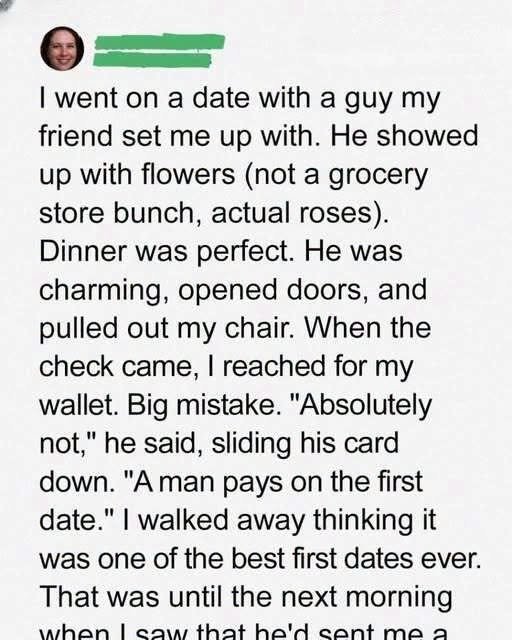
The night started well. Eric arrived early with a bouquet of roses and a crisp button-down shirt. He pulled out my chair, complimented my dress, and even gave me a small keychain engraved with my initial. Conversation flowed easily over dinner—travel, work, and funny past dating experiences. When the bill arrived, he waved me off. “A man pays on the first date,” he said. Old-fashioned, but harmless. He even walked me to my car and waited until I drove off.
The next morning, I expected a sweet follow-up text. Instead, I found an email titled “Invoice for Last Night.” At first, I thought it was a joke. But it wasn’t. The document listed charges for dinner, flowers, the keychain, and even “emotional labor,” each with ridiculous repayment conditions. At the bottom, it warned: “Failure to comply may result in Chris hearing about it”—Chris being Mia’s boyfriend. I immediately texted Mia. Her reaction was swift: “Oh my god. He’s insane. Don’t respond.” She then involved Chris, and together they sent Eric a mock “invoice” of his own, listing playful penalties for making someone uncomfortable and acting entitled.
Eric’s messages quickly turned from defensive to angry, then self-pitying. I ignored him. The situation ended with Mia and Chris cutting him off completely. Looking back, the night started like a romantic comedy but ended as a lesson in red flags. What seemed charming at first revealed entitlement and control. Kindness or generosity isn’t a debt to be collected. I didn’t pay him back the way he expected—but I did pay attention. And that was worth more than any dinner bill.
Website Disclaimer
The information provided on this website is for general informational and educational purposes only. While we strive to ensure that all content is accurate and up to date, we make no guarantees regarding the completeness, reliability, or accuracy of any information published.
The views and opinions expressed in articles belong to their respective authors and do not necessarily reflect the views of this website. Any action you take based on the information found on this website is strictly at your own risk. We will not be liable for any losses, damages, or inconveniences arising from the use of our content.
Some articles may contain opinions, third-party information, or external links. We do not endorse or guarantee the accuracy of content on external websites and are not responsible for their practices or policies.
All content on this website is provided in good faith and is intended for informational purposes only. Readers are encouraged to verify information independently and seek professional advice where appropriate.