At 9:14 on a rainy Saturday morning, Olivia stood outside her parents’ front door listening for the bark that had greeted her every day for three years. There was no scratching against the wood, no thump of Milo’s tail against the hallway table, and no brown face appearing behind the glass. Her mother opened the door with her arms folded and announced that Marissa had found the dog “a better home.” Olivia stared at her, still holding the empty leash she had brought for the drive home. Only two days earlier, she had trusted her parents to watch Milo while she traveled for work, believing their offer was an awkward attempt at peace after they had excluded her from her mother’s retirement party. Then she noticed Milo’s stuffed duck wedged beneath a kitchen chair while his food, medicine, and registration tag were gone. In that instant, the ruined party became irrelevant, because her family had taken a living creature she loved and sold him as punishment.
Olivia had spent most of her adult life financing and organizing the family moments for which Marissa later received the applause. She had booked the banquet room for their mother’s retirement, paid the deposit, hired the caterer, ordered flowers, arranged the cake, and persuaded reluctant relatives to attend. Nine days before the event, Marissa texted, “Don’t come. You’re not family tonight,” and their father responded with a thumbs-up. Olivia did not argue; she simply canceled the services she had personally funded, leaving the family to hold the celebration in a cluttered garage with folding chairs and a supermarket cake. Rather than apologize, they accused Olivia of ruining the occasion. When her mother later offered to watch Milo, Olivia mistook exhaustion for forgiveness and allowed herself to believe the family might still be capable of a truce.
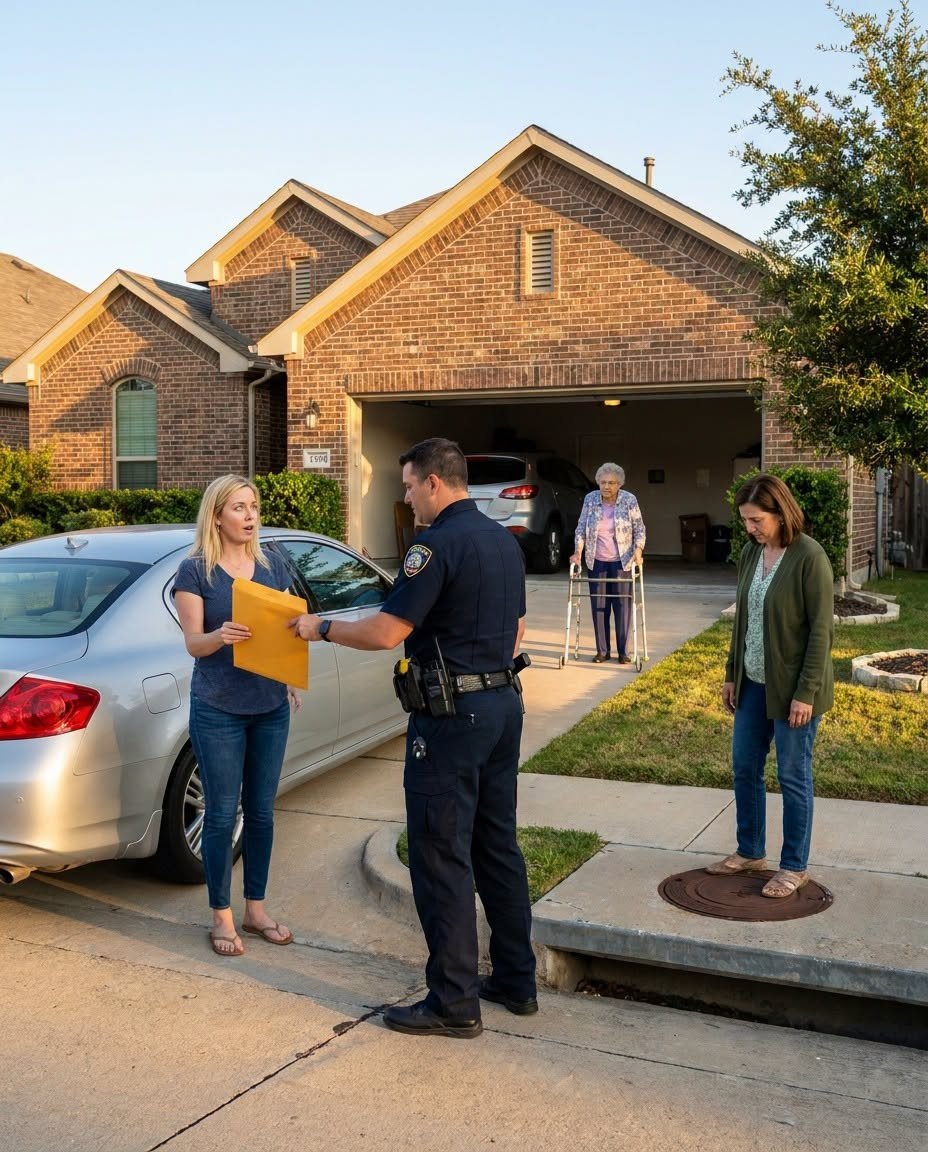
Her parents refused to say where Milo had been taken, and Marissa would not admit whether money had changed hands. Olivia returned home with the stuffed duck and spread every ownership record across her kitchen table: the shelter adoption contract, county registration, veterinary bills, microchip account, insurance information, and licensing documents, all bearing her name alone. The following morning, she contacted the non-emergency police line, expecting to be told it was merely a family dispute. Instead, Officer Hayes reviewed the documents and asked Olivia’s mother one direct question: who legally owned the dog? When Marissa arrived and described the sale as “rehoming,” she admitted that Olivia had never granted permission and that she had accepted cash from a stranger she found through a community page. Then Olivia received a call from the buyer, who said Milo had refused food, hidden beneath her dining table, and spent the morning running to the window—and for the first time since returning home, Olivia knew exactly where to find him.
Officer Hayes drove Olivia to the buyer’s duplex, where Milo burst through the blue front door and struck her knees with such force that she nearly fell. He climbed against her chest trembling, making a broken sound Olivia had never heard from him before, while the woman who had purchased him cried and explained that Marissa had claimed his owner was moving away. Screenshots revealed that Marissa had advertised Milo the morning after the failed retirement party, days before Olivia’s trip, describing him as unwanted and asking for someone “grateful” to take him. The arrangement had not been impulsive; the offer to care for him had been part of a deliberate plan. Olivia authorized charges, provided the ownership and microchip records, and cooperated with the legal process, which resulted in restitution, correction of the fraudulent transfer, and a lasting mark on Marissa’s record. She also changed her locks, replaced every emergency contact, revoked her family’s building access, and documented that nobody but Olivia had authority over Milo’s care, insurance, medical treatment, or future placement.
The family never offered a real apology, and Olivia eventually stopped expecting one. Her mother’s messages focused on the damage to Marissa’s life, while her father complained that the consequences had made everyone miserable, as though misery itself proved innocence. Milo recovered more quickly; within weeks he stopped fearing the leash, and after a month he again slept belly-up in the center of Olivia’s living room, completely certain that he was safe. A cousin later sent Olivia a photograph from another family gathering, but her absence no longer felt like rejection—it looked like evidence that she had finally chosen a different life. The photograph she kept showed Milo standing in her hallway with two stuffed ducks at his feet, looking toward the woman who had returned for him. Her family had taught Olivia that love meant paying, fixing, forgiving, and coming whenever they called; Milo taught her that real love also knows when to defend itself, watch the road, and find its way home.
Website Disclaimer
The information provided on this website is for general informational and educational purposes only. While we strive to ensure that all content is accurate and up to date, we make no guarantees regarding the completeness, reliability, or accuracy of any information published.
The views and opinions expressed in articles belong to their respective authors and do not necessarily reflect the views of this website. Any action you take based on the information found on this website is strictly at your own risk. We will not be liable for any losses, damages, or inconveniences arising from the use of our content.
Some articles may contain opinions, third-party information, or external links. We do not endorse or guarantee the accuracy of content on external websites and are not responsible for their practices or policies.
All content on this website is provided in good faith and is intended for informational purposes only. Readers are encouraged to verify information independently and seek professional advice where appropriate.