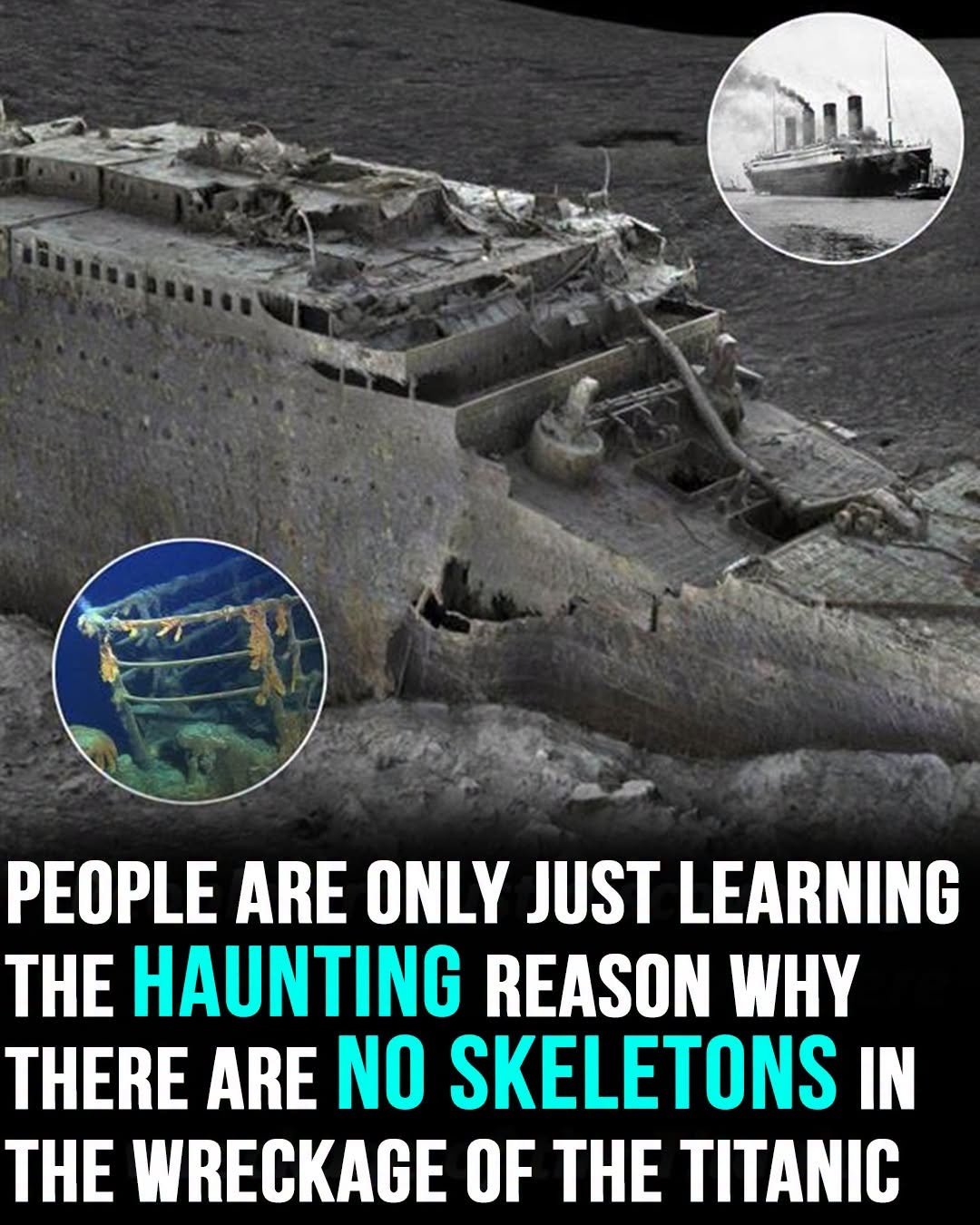
More than a century after that freezing April night, the Titanic still feels less like a shipwreck and more like a wound in human history. When Robert Ballard finally located the liner in 1985, the images were both breathtaking and unbearable: chandeliers, dishes, boots, and coats, scattered across a vast debris field. Everything spoke of people — yet the people themselves had vanished. At 12,000 feet down, the deep ocean’s cruelty is quiet but absolute. Flesh is stripped by scavengers. Bones, made of calcium carbonate, slowly dissolve in water that is chemically hostile to their survival. What remains are the outlines of lives: a pair of shoes side by side, a coat folded by pressure, a suitcase half open.
Some find that thought horrifying; others see a kind of rough mercy in it. Nature, indifferent yet thorough, claimed what the sea took. The ship is collapsing now, eaten by iron-loving bacteria, rusting into a ghostly stain on the seabed. Soon, even that will be gone. What endures is the story — and the invisible presence of those whose final resting place no one can truly touch, but everyone can feel.
Website Disclaimer
The information provided on this website is for general informational and educational purposes only. While we strive to ensure that all content is accurate and up to date, we make no guarantees regarding the completeness, reliability, or accuracy of any information published.
The views and opinions expressed in articles belong to their respective authors and do not necessarily reflect the views of this website. Any action you take based on the information found on this website is strictly at your own risk. We will not be liable for any losses, damages, or inconveniences arising from the use of our content.
Some articles may contain opinions, third-party information, or external links. We do not endorse or guarantee the accuracy of content on external websites and are not responsible for their practices or policies.
All content on this website is provided in good faith and is intended for informational purposes only. Readers are encouraged to verify information independently and seek professional advice where appropriate.