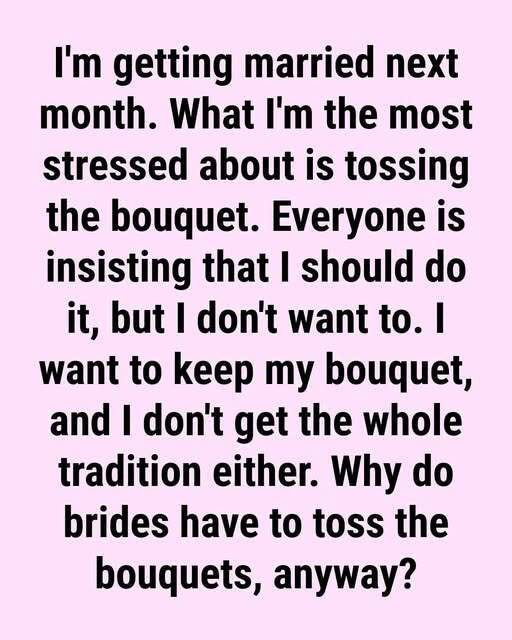
The bouquet toss has become a fun and lighthearted wedding tradition, but its origins are far more surprising. Centuries ago, wedding guests believed that touching the bride—or even tearing off a piece of her dress—would bring good luck, fertility, and prosperity. As a result, brides often found themselves surrounded by eager guests who grabbed at their clothing as the celebration came to an end.
To avoid this chaotic situation, brides began throwing their bouquets into the crowd as a distraction. While guests rushed to catch the flowers, the newlyweds could quietly leave the reception without being chased or jostled. This clever solution allowed the couple to make their escape while satisfying guests who believed they were receiving a symbol of good fortune.
The groom also played a role in this tradition by tossing the bride’s garter to the remaining guests. Like the bouquet, the garter was viewed as a lucky token that carried blessings for whoever caught it. Together, these customs transformed what had once been a frantic scramble into a more organized and celebratory part of the wedding.
As the centuries passed, the original beliefs faded, and the bouquet and garter toss evolved into symbolic traditions. Rather than representing a desperate escape from an overenthusiastic crowd, they came to symbolize love, romance, happiness, and the hope that the person who caught them would be the next to marry.
Modern weddings often adapt these traditions to suit the couple’s preferences. Some choose to skip the bouquet or
Website Disclaimer
The information provided on this website is for general informational and educational purposes only. While we strive to ensure that all content is accurate and up to date, we make no guarantees regarding the completeness, reliability, or accuracy of any information published.
The views and opinions expressed in articles belong to their respective authors and do not necessarily reflect the views of this website. Any action you take based on the information found on this website is strictly at your own risk. We will not be liable for any losses, damages, or inconveniences arising from the use of our content.
Some articles may contain opinions, third-party information, or external links. We do not endorse or guarantee the accuracy of content on external websites and are not responsible for their practices or policies.
All content on this website is provided in good faith and is intended for informational purposes only. Readers are encouraged to verify information independently and seek professional advice where appropriate.