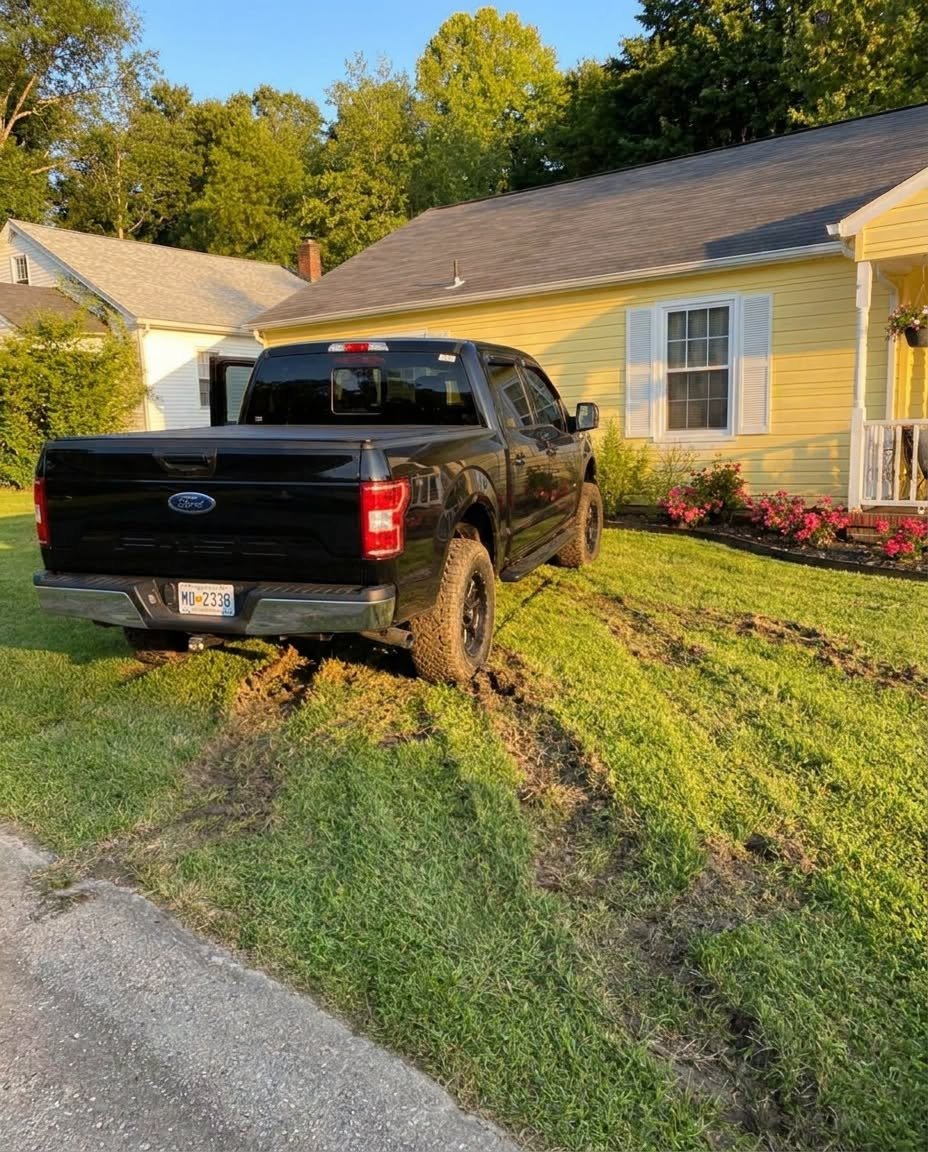
Edna Whitaker was standing at her front window with a cup of tea cooling in her hands when the big black pickup rolled over the curb and settled deep into her lawn again. The tires sank into the soft morning grass, crushing the neat green strip her late husband Harold had trimmed every Saturday for almost five decades. Mud pressed up around the wheels, leaving dark scars across the yard she still watered by hand because it made her feel close to him. Across the driveway, the new neighbor’s wife stepped out onto her porch, gave Edna one bored glance, and looked away as if the elderly widow were part of the scenery. Edna’s cane tapped against the floor as she moved toward the door, her heart beating harder than she wanted to admit. She had asked politely once. She had asked firmly twice. By the third time, watching Harold’s lawn become someone else’s convenience, something old and steady inside her finally stood up.
Edna had lived in that house for more than fifty years, long enough to know the sound of every pipe, every creak in the porch boards, every tree Harold had planted when their children were still small. Their son Tom came by when he could, mowing, cleaning gutters, and telling her she should not worry about such things anymore, but Edna knew a home was not only wood, brick, and grass. It was birthdays in the kitchen, children learning to ride bikes on the sidewalk, Harold whistling while trimming hedges, and the quiet dignity of keeping something loved after the person who helped build it was gone. The young couple next door had arrived with three cars, too much noise, and no interest in boundaries. When Edna first asked them to move the truck, the woman shrugged and said, “You don’t even have a car. What’s the harm?” Her husband was worse, telling Edna they would park where they needed to, because she was alone and the lawn did not matter.
That sentence stayed with her all night: because she was alone. They had mistaken solitude for weakness, age for surrender, and manners for permission. The next morning, Edna did not call Tom, because she knew her son would come angry and worried, and this was not a problem she wanted solved by someone else’s temper. Instead, she opened the old metal filing box Harold had kept in the garage, the one filled with property surveys, insurance papers, photographs of the yard, and receipts from every improvement they had made over the years. By noon she had spoken to the city code office, the police non-emergency line, her homeowner’s insurance agent, and a local fencing contractor. By evening, a temporary camera was recording the front yard from her porch window, and Edna had placed small survey flags along the legal property line. The next time that truck rolled onto her grass, it would not be a neighborhood disagreement anymore; it would be documented trespass and property damage.
The truck returned before breakfast, arrogant as ever, crushing the flagged line as if even the little orange markers were beneath them. Edna waited until the driver stepped out, then opened her door and told him calmly that police were already on their way. He laughed at first, until the officer arrived and Edna handed over the photos, time-stamped video, prior complaint notes, and a copy of the property survey showing exactly where his vehicle had crossed onto her land. The officer’s expression changed from routine patience to professional certainty as he inspected the tire ruts, the damaged sod, and the repeated pattern of parking despite prior warnings. The neighbor blustered, called it harmless, and insisted an old woman was making a fuss, but the words sounded thinner with each document Edna produced. By afternoon, a formal report had been filed for trespass and property damage, her insurance claim had been opened, and a civil notice required the neighbors to pay for lawn restoration, soil repair, and protective edging along the boundary. The following week, a low stone border went in, clean and permanent, just high enough to say what Edna no longer needed to repeat.
That evening, Edna sat on her porch while the sunset softened the damaged lawn into gold. The grass would take time to recover, but she understood recovery better than most people gave her credit for. She had survived widowhood, quiet rooms, children leaving, and the strange way the world begins speaking around older women as though they are furniture. The new neighbors kept their distance after that, their truck never touching her yard again, and Tom only learned the story when he noticed the fresh stone border and the satisfied tilt in his mother’s smile. Edna did not feel triumphant in a cruel way; she felt restored. Harold had protected that little piece of earth for half a lifetime, and now she had protected it too. Some people think age makes a person easier to push aside, but Edna knew better. Age had only taught her which battles were worth the paperwork.
Website Disclaimer
The information provided on this website is for general informational and educational purposes only. While we strive to ensure that all content is accurate and up to date, we make no guarantees regarding the completeness, reliability, or accuracy of any information published.
The views and opinions expressed in articles belong to their respective authors and do not necessarily reflect the views of this website. Any action you take based on the information found on this website is strictly at your own risk. We will not be liable for any losses, damages, or inconveniences arising from the use of our content.
Some articles may contain opinions, third-party information, or external links. We do not endorse or guarantee the accuracy of content on external websites and are not responsible for their practices or policies.
All content on this website is provided in good faith and is intended for informational purposes only. Readers are encouraged to verify information independently and seek professional advice where appropriate.