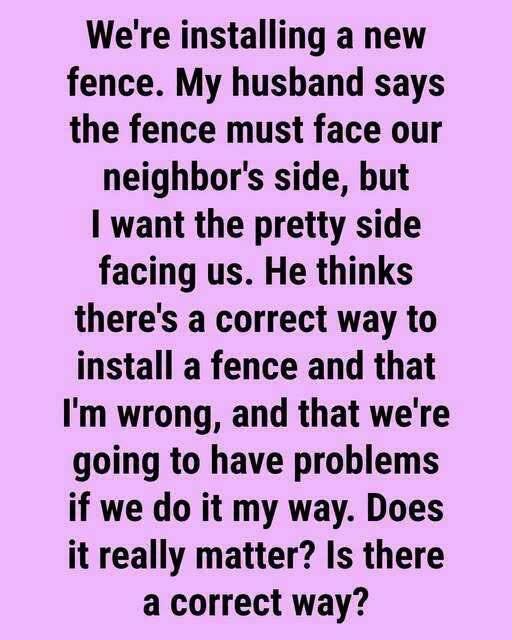
Building a fence is an important home improvement project that can provide privacy, security, and a clear property boundary.
While homeowners often focus on materials, height, and design, one detail that is just as important is which direction the finished side should face.
The finished side of a fence is the smooth, polished surface without exposed rails or support posts.
Many people choose to face this side toward neighbors or the street, as it creates a cleaner, more attractive appearance.
This simple decision is often seen as a gesture of courtesy, showing consideration for those living nearby.
It can also help maintain positive relationships by contributing to a more pleasant shared environment.
In many areas, fence orientation is not just preference but a requirement under local building codes, zoning rules, or homeowners association guidelines.
Checking these rules before construction can help avoid delays, costly changes, or compliance issues later.
Even where rules are not strict, discussing plans with neighbors beforehand can be helpful.
Clear communication allows concerns to be addressed early and helps set expectations for both sides.
Fence orientation also affects curb appeal, as a well-finished exterior contributes to a more attractive overall property appearance.
Over time, well-designed fencing can add to a home’s perceived value, especially when it blends well with surrounding properties.
Some homeowners choose double-sided fence designs, which provide a finished look on both sides.
Although more expensive, these options remove the issue of deciding which side faces outward.
Regular maintenance is also essential, including cleaning, repairs, and protective treatments to extend the fence’s lifespan.
Ultimately, choosing fence direction is about balancing appearance, practicality, and consideration for others in the community.
Website Disclaimer
The information provided on this website is for general informational and educational purposes only. While we strive to ensure that all content is accurate and up to date, we make no guarantees regarding the completeness, reliability, or accuracy of any information published.
The views and opinions expressed in articles belong to their respective authors and do not necessarily reflect the views of this website. Any action you take based on the information found on this website is strictly at your own risk. We will not be liable for any losses, damages, or inconveniences arising from the use of our content.
Some articles may contain opinions, third-party information, or external links. We do not endorse or guarantee the accuracy of content on external websites and are not responsible for their practices or policies.
All content on this website is provided in good faith and is intended for informational purposes only. Readers are encouraged to verify information independently and seek professional advice where appropriate.