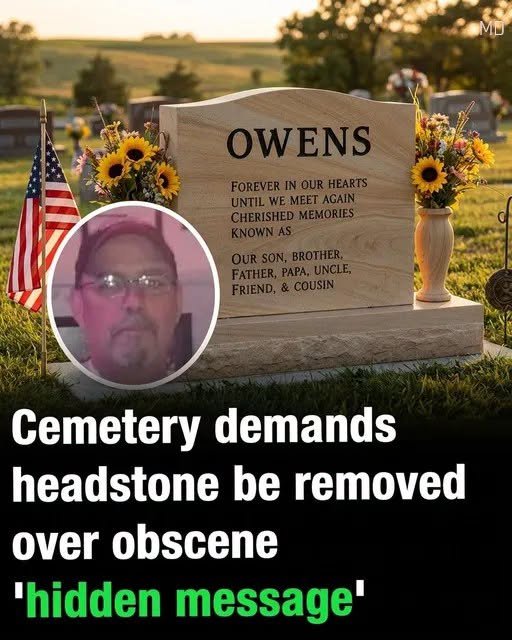
What began as a simple memorial for a beloved family member has grown into a debate that continues to capture attention far beyond a small Iowa community. A headstone placed in a quiet cemetery became the center of an unexpected controversy, drawing strong opinions from both supporters and critics. To some, it represents a heartfelt tribute filled with personality and humor. To others, it raises important questions about what is appropriate in a shared place of remembrance. As the disagreement unfolded, it transformed a peaceful setting into the focus of a larger conversation about memory, tradition, and personal expression.
For the family of Steven Paul Owens, the monument was designed to reflect the man they knew and loved. Friends and relatives described him as someone with a sharp sense of humor and a unique way of showing affection. They wanted his memorial to capture that spirit rather than present a polished version that did not feel authentic. What seemed like an ordinary headstone to most visitors carried a deeper meaning for those closest to him. Family members believed they had created a tribute that honored his personality while preserving a private connection that would continue long after his passing.
Cemetery officials, however, saw the situation differently. They argued that cemeteries are shared spaces intended to provide comfort and reflection for all visitors. Because families from many backgrounds visit the grounds, trustees felt they had a responsibility to maintain standards that would be acceptable to the broader community. Their concern was not only about one monument but also about the precedent it might set for future memorials. As discussions continued, both sides remained firm in their positions. The family viewed the criticism as a challenge to their loved one’s memory, while cemetery leaders believed they were protecting the character and purpose of the grounds.
The controversy centered on a hidden message carved into the headstone using an acrostic design. At first glance, the inscription appeared to be a traditional tribute. However, when the first letters of several lines were read vertically, they formed a phrase that cemetery trustees considered inappropriate for a public memorial. The family insisted the message was intended as a private joke and a reflection of Owens’ personality, not as an attempt to offend anyone. Years later, the headstone remains in place, and the debate continues. What started as a personal memorial has become a lasting discussion about who ultimately controls how a person’s life is remembered and how individual expression should coexist with community standards.
Website Disclaimer
The information provided on this website is for general informational and educational purposes only. While we strive to ensure that all content is accurate and up to date, we make no guarantees regarding the completeness, reliability, or accuracy of any information published.
The views and opinions expressed in articles belong to their respective authors and do not necessarily reflect the views of this website. Any action you take based on the information found on this website is strictly at your own risk. We will not be liable for any losses, damages, or inconveniences arising from the use of our content.
Some articles may contain opinions, third-party information, or external links. We do not endorse or guarantee the accuracy of content on external websites and are not responsible for their practices or policies.
All content on this website is provided in good faith and is intended for informational purposes only. Readers are encouraged to verify information independently and seek professional advice where appropriate.