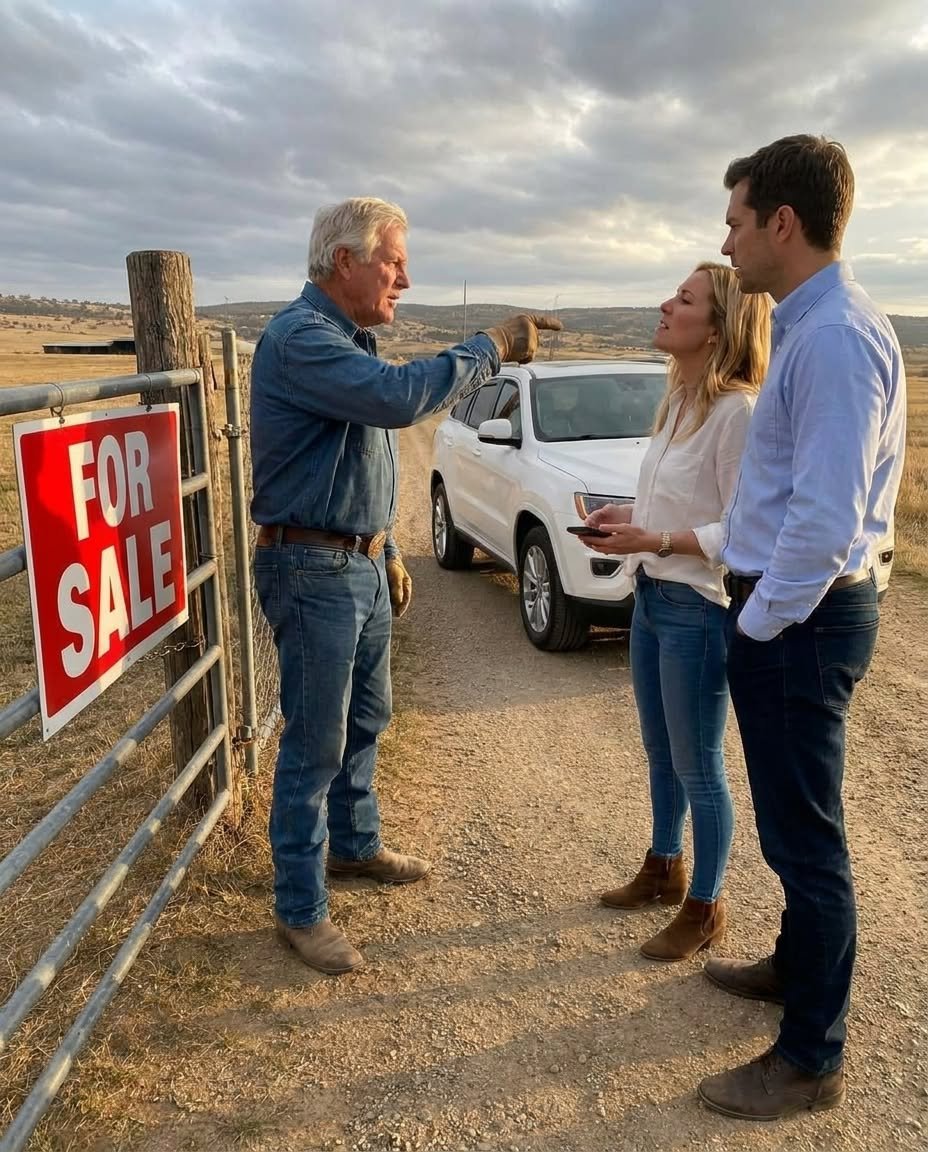
The morning my daughter-in-law planted a “For Sale” sign at the entrance of my ranch, she wore the smile of someone who thought the deal was already done. Standing in my worn work boots beside a broken fence post, I listened as she talked about developers, market value, and “being practical.” To her, the ranch was just land waiting to be turned into cash. To me, it was nearly four decades of memories, hard work, and the last place where I still felt close to my late wife, Ruth. What she didn’t realize was that Ruth had planned for a day like this long before either of us saw it coming.
The ranch had survived droughts, financial struggles, family celebrations, and heartbreaking losses. After Ruth passed away, I stayed because every corner of that land carried a piece of our life together. My son Evan understood that once, but over the years he had grown quieter whenever his wife, Lindsay, started talking about money. That morning, she arrived with a polished sales pitch and even a sign displaying her own phone number as the contact. Evan stood beside her saying very little, and his silence told me more than any words could. They had already discussed selling the property without ever asking me what I wanted.
Instead of arguing, I let Lindsay place the sign in the ground. She expected anger, resistance, maybe even desperation. What she didn’t expect was calm. After they left, I walked into my office and pulled out a blue folder labeled Mercer Heritage Trust. Years earlier, Ruth and I had worked with our attorney to protect the ranch from exactly this kind of situation. She believed family land should be preserved, not treated like a quick financial solution. The trust clearly stated that while I was alive, no one—not a child, spouse, or outside buyer—could sell, transfer, or negotiate the property without my approval.
The next day, reality arrived faster than Lindsay expected. A title company reviewing the property records immediately discovered the ranch was protected by the trust. Soon after, my son called, confused and worried. When he and Lindsay arrived at the ranch, I showed them the documents. The trust contained a provision that neither of them knew existed: any beneficiary who attempted to sell or represent ownership of the ranch without permission would lose future management rights. Even more surprising was the name listed as successor trustee. It wasn’t Evan. It was Tomas, a trusted ranch manager who had worked alongside our family for years and had proven his loyalty when it mattered most.
What followed wasn’t revenge—it was a lesson. Lindsay left angry, realizing her plans had failed. Evan stayed behind and, for the first time in years, admitted the financial pressures that had pushed him toward a decision he now regretted. Over the following months, he began rebuilding trust instead of chasing shortcuts. Eventually, I revised part of the trust to give him an opportunity to earn stewardship of the ranch one day—but only if he proved he could protect it rather than profit from it. As I stood by the gate months later, watching the sunset over the pastures Ruth loved, I realized something important: protecting a legacy isn’t about ownership. It’s about making sure the people who come after you understand its value before they inherit the responsibility.
Website Disclaimer
The information provided on this website is for general informational and educational purposes only. While we strive to ensure that all content is accurate and up to date, we make no guarantees regarding the completeness, reliability, or accuracy of any information published.
The views and opinions expressed in articles belong to their respective authors and do not necessarily reflect the views of this website. Any action you take based on the information found on this website is strictly at your own risk. We will not be liable for any losses, damages, or inconveniences arising from the use of our content.
Some articles may contain opinions, third-party information, or external links. We do not endorse or guarantee the accuracy of content on external websites and are not responsible for their practices or policies.
All content on this website is provided in good faith and is intended for informational purposes only. Readers are encouraged to verify information independently and seek professional advice where appropriate.