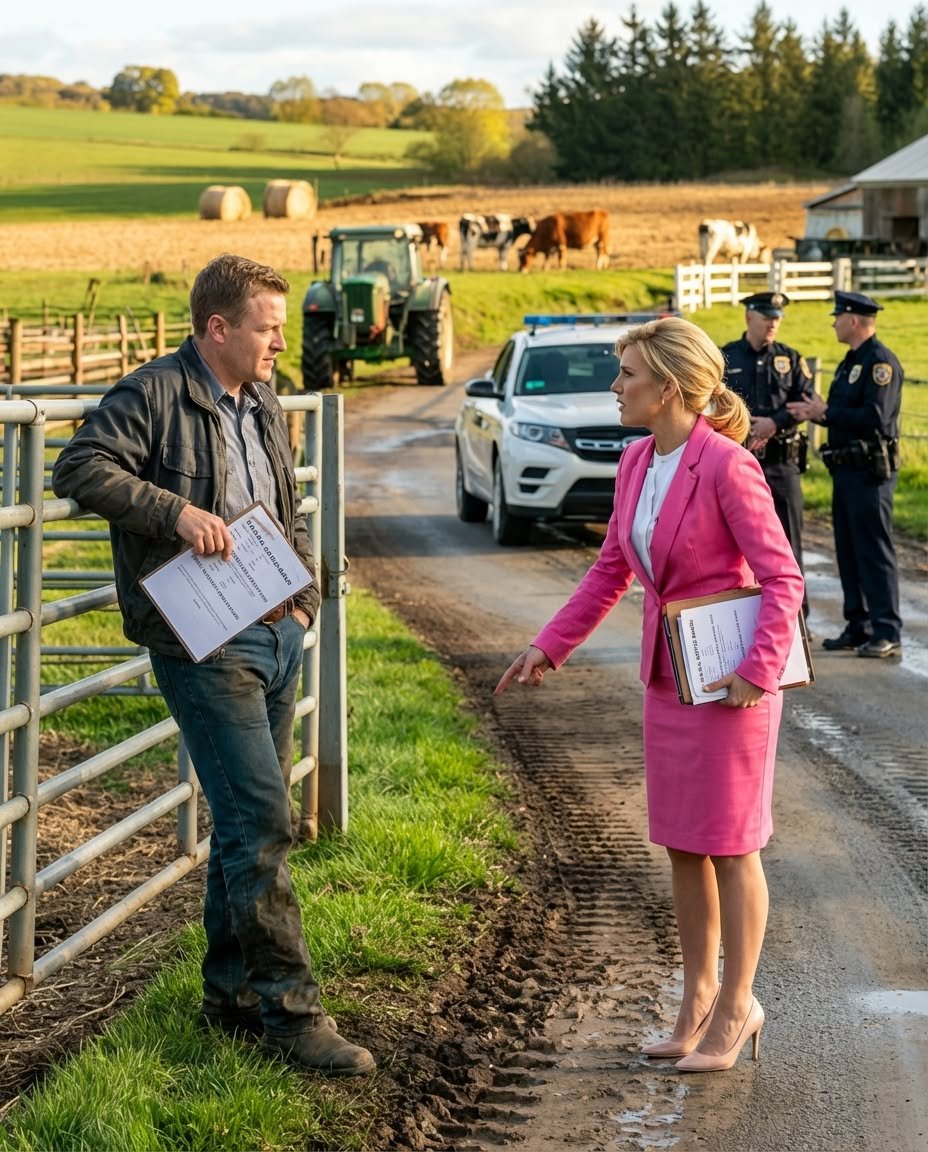
I thought I had pulled off the deal of a lifetime. Two hundred acres of open farmland for just two thousand dollars felt almost unreal — endless sky, rich soil, and the quiet promise of building something simple and honest. For forty-eight hours, I walked the property imagining rows of crops and peaceful mornings without traffic or deadlines. Then, on the third day, a sharply dressed woman crossed the field in high heels, introduced herself as the head of a local homeowners association, and calmly informed me that I owed $15,000 in fees. In that instant, my dream of a quiet new beginning turned into a confusing puzzle I never expected to face.
Only weeks earlier, I had been working long shifts as a diesel mechanic when I received news that my grandfather had left me a modest inheritance. It wasn’t a fortune, but it was enough to consider a different direction in life. Instead of buying new equipment or upgrading my truck, I searched for land where I could start small-scale farming and enjoy a slower pace. A government auction listing caught my attention: 200 acres in Nebraska with unpaid back taxes of $2,000. After visiting the site and confirming the paperwork looked legitimate, I placed a bid. When the hammer fell, the land was mine — a rare opportunity that seemed almost too good to be true.
A few days later, while walking the boundaries and testing the soil, I noticed a large, well-maintained house in the distance. Soon after, the woman approached and presented a binder full of documents, claiming my newly purchased parcel was tied to her association. Her confidence was striking, but something felt inconsistent. The area was mostly open farmland, and no mention of association fees had appeared in any of the auction records. I politely asked for official filings and recorded documents, and she suggested I “look them up myself.” That conversation raised more questions than answers, so I decided to visit the county office to verify the information firsthand.
At the courthouse, a clerk reviewed the public records with me and confirmed that my deed showed no connection to any homeowners association. The agricultural designation dated back decades, and the boundaries did not include my parcel. Relieved but still cautious, I consulted a property attorney who explained how misunderstandings or incorrect assumptions sometimes arise in rural transactions. With proper documentation in hand, the situation was resolved calmly and professionally. That spring, I planted my first crops and watched the land stretch under the sun with a new appreciation for due diligence. The experience taught me that while opportunities can be exciting, clarity and verified records are what truly protect a fresh start.
Website Disclaimer
The information provided on this website is for general informational and educational purposes only. While we strive to ensure that all content is accurate and up to date, we make no guarantees regarding the completeness, reliability, or accuracy of any information published.
The views and opinions expressed in articles belong to their respective authors and do not necessarily reflect the views of this website. Any action you take based on the information found on this website is strictly at your own risk. We will not be liable for any losses, damages, or inconveniences arising from the use of our content.
Some articles may contain opinions, third-party information, or external links. We do not endorse or guarantee the accuracy of content on external websites and are not responsible for their practices or policies.
All content on this website is provided in good faith and is intended for informational purposes only. Readers are encouraged to verify information independently and seek professional advice where appropriate.