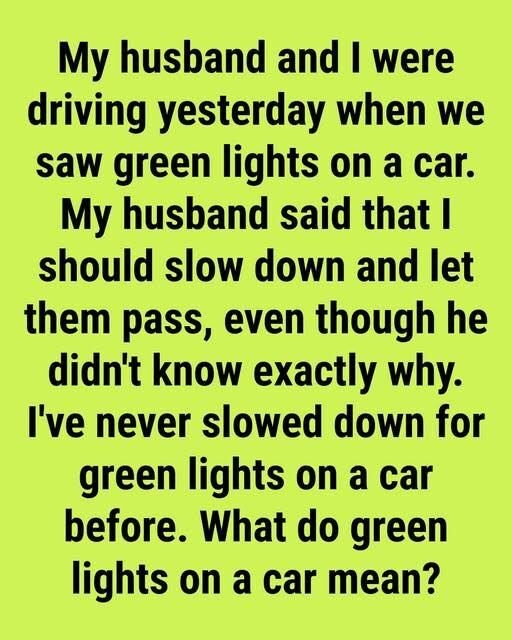
Many drivers are surprised when they first notice a vehicle behind them displaying flashing green lights. Because most people are used to red and blue emergency lights, the appearance of green can create confusion and uncertainty about what action, if any, is required.
In many regions, these green lights are used by authorized community service vehicles. They may be transporting patients to medical appointments, supporting mobility services, or performing other approved non-emergency duties that still require increased visibility on the road.
Unlike police, fire, or ambulance vehicles, green-lighted vehicles do not have emergency priority. Drivers are not legally required to pull over or yield in the same way they would for sirens or red-and-blue flashing lights. Instead, normal traffic rules still apply.
However, drivers are encouraged to remain alert and considerate. If it is safe, giving these vehicles extra space can improve safety and reduce stress for both drivers and passengers. The key is awareness rather than urgency.
Laws regarding green lights vary depending on the jurisdiction. Some areas provide specific guidelines, while others treat them more as courtesy signals than regulated warnings. Because of this variation, understanding local rules is important.
Ultimately, flashing green lights serve as a reminder that not all important journeys are emergencies. Staying calm, patient, and respectful helps ensure safer roads and smoother travel for everyone involved.
Website Disclaimer
The information provided on this website is for general informational and educational purposes only. While we strive to ensure that all content is accurate and up to date, we make no guarantees regarding the completeness, reliability, or accuracy of any information published.
The views and opinions expressed in articles belong to their respective authors and do not necessarily reflect the views of this website. Any action you take based on the information found on this website is strictly at your own risk. We will not be liable for any losses, damages, or inconveniences arising from the use of our content.
Some articles may contain opinions, third-party information, or external links. We do not endorse or guarantee the accuracy of content on external websites and are not responsible for their practices or policies.
All content on this website is provided in good faith and is intended for informational purposes only. Readers are encouraged to verify information independently and seek professional advice where appropriate.