Not the man.
The motorcycle.
It sat outside our bakery window on Crandall Avenue before six in the morning, black and chrome under the streetlight, the engine making those soft ticking sounds machines make when heat is leaving them.
The street was still mostly dark.
Boise has a particular kind of cold before sunrise, the kind that smells like metal, wet pavement, and old leaves pressed into the curb.
My fingers were stiff from the steering wheel.
The bakery was still asleep.
No ovens humming.
No warm sugar smell coming from the kitchen.
No light in the display case.
Just my reflection in the front glass and the shape of a man leaning against a Harley right outside my door.
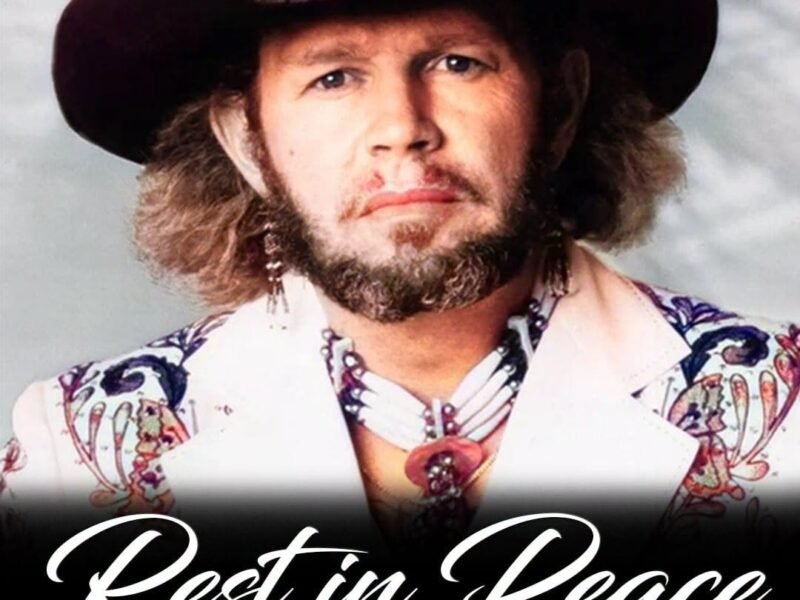
He was enormous.
Six-foot-three, maybe more.
Two hundred and fifty pounds, easy.
Gray beard, leather vest, wide shoulders, heavy boots, tattoos over both hands.
He had one of those faces that looked carved by weather instead of aged by years.
I stopped beside my car longer than I should have.
I wish I could say I did not judge him.
I did.
I was a woman alone at 5:47 AM with a locked bakery, a dark sidewalk, and a stranger standing between me and the front door.
Fear is not always fair.
Sometimes it is just your body trying to read danger before your heart has all the facts.
He saw it happen on my face.
The change in him was immediate.
He stepped back from the door.
Then he lifted both hands, palms open, like he was showing me he was not holding anything.
“Take your time, ma’am,” he said.
His voice was deep and rough, but there was no push in it.
“I’ll wait. I just need one thing when you’re open.”
That sentence stayed with me because of what he did not do.
He did not laugh at me.
He did not tell me not to be scared.
He did not act offended.
He simply made himself smaller.
A man that large knew what his size could do to a quiet sidewalk before sunrise, and instead of making me carry that discomfort, he carried it for me.
I unlocked the door.
The bell above it gave a weak little ring when I stepped inside.
I turned on the front lights, then the kitchen lights, then the strip over the display case.
The bakery came alive in pieces.
The oven fan clicked on.
The mixer bowl was still cold from the night before.
The metal trays clattered louder than usual because my hands were not steady yet.
I set my coffee near the register, right beside the small American flag sticker my niece had put there the summer before, and I went through the opening routine I had done hundreds of times.
Cash drawer.
Receipt paper.
Napkins.
Tongs.
Croissants in the left case.
Cinnamon rolls in the middle.
Cupcakes on the right.
The man outside waited the whole time.
He did not tug the door.
He did not knock.
He did not peer in with impatience.
He stood beside his Harley with his arms loose at his sides and watched the sky brighten over the roofs across the street.
When I finally turned the OPEN sign around, he waited three more seconds, like he wanted to be sure he had permission.
Then he came in.
The bell rang again.
My little bakery felt smaller with him inside it.
His boots were heavy on the floor.
His shoulders nearly filled the space between the counter and the front window.
The leather vest he wore had patches on it, not the flashy kind, but worn ones, softened at the edges from years of wind and road.
I noticed a name stitched near his chest, but I did not read it clearly at first.
His hands stayed visible.
That mattered to me.
People tell you who they are in the first few seconds if you know where to look.
He did not look around like someone casing a room.
He looked at the pastry case.
Slowly.
Carefully.
He passed over the croissants.
He passed over the cinnamon rolls.
He barely paused at the maple bars, which usually pulled every early customer in like gravity.
He looked past the lemon bars, the chocolate cupcakes, the oatmeal cookies, and the little birthday cakes we kept for last-minute office surprises.
Then his eyes stopped.
On the pink cupcake.
It was a small one.
Pink buttercream, rainbow sprinkles, white paper wrapper.
The kind children chose by instinct.
The kind adults bought when they wanted something cheerful but did not know how to say why.
“Just that one,” he said.
I reached into the case with the tongs.
“The pink one,” he added.
There was something in the way he said it.
Not demanding.
Not embarrassed.
Exact.
As if the color mattered more than the cupcake.
I put it in a small white box and folded one side of the lid.
I had already built a story in my head by then.
A girlfriend.
A wife.
Maybe an apology.
Maybe he had worked nights and was stopping on the way home because he had forgotten an anniversary.
Men came into that bakery all the time with panic in their eyes and asked what looked romantic.
I had learned not to judge them too harshly.
Some people are terrible with words and better with frosting.
I rang it up.
The receipt printer hummed.
The total was small enough that it felt almost silly against the size of him.
He put a folded five on the counter, then did not move his hand away.
Instead, he cleared his throat.
It was a soft sound, but it changed everything.
“Ma’am,” he said, “do you write on them?”
I looked up.
“On cupcakes?”
“If there’s room.”
“Usually just initials,” I said. “Or one little word.”
His finger tapped once on the counter.
Then he stopped it.
“Could you do two?”
I pulled the smallest piping bag from the rack under the counter.
We kept it filled with white icing for tiny names, initials, and last-second messages on cupcakes when parents forgot to order ahead.
“Sure,” I said. “What do you want it to say?”
He did not answer right away.
He looked down at the cupcake like it was not a dessert anymore.
Like it was a fragile thing with a pulse.
Then he said, “Still here.”
I thought I had misheard him.
The bakery was quiet enough that I could hear the oven settling in the back.
“I’m sorry?”
“Still here,” he repeated.
Two words.
Not happy birthday.
Not love you.
Not forgive me.
Still here.
I held the piping bag above the counter and waited for the rest of the explanation because people do not ask for words like that at six in the morning unless they have been carrying something a long time.
He looked toward the window.
The edge of sunrise was beginning to show itself in a pale line across the street.
“I need to take it to my daughter before the sun gets all the way up,” he said.
I have worked behind counters long enough to know that strangers will hand you their lives in pieces if the room feels safe.
Usually they do it casually.
A divorce mentioned while buying lemon bars.
A cancer scan mentioned while choosing cookies for nurses.
A custody exchange mentioned while counting quarters for two muffins.
Pain comes through a bakery door wearing ordinary clothes.
This did not feel ordinary.
“How old is she?” I asked before I could stop myself.
He gave a small breath that was almost a laugh, but not quite.
“She would have been nineteen today.”
Would have been.
That was the moment I turned toward the oven rack.
Not because I was busy.
Not because I needed anything from it.
Because my face had changed, and I did not want him to feel like he had to comfort me over his own grief.
When I turned back, he had taken something from the inside pocket of his vest.
It was sealed in clear plastic, the kind people use when they are trying to preserve paper against time, rain, and their own hands.
Inside was a hospital bracelet.
The edges had yellowed.
The print had faded in places.
Behind it was a small photo of a little girl in a pink sweatshirt, grinning around missing teeth, holding a cupcake with frosting on her nose.
“Emily,” he said.
He did not say it like an introduction.
He said it like the name had been sitting in his mouth all morning.
I looked at the photograph.
She was maybe seven in the picture.
Her hair was cut unevenly, like someone had done it at home after too many hospital pillows and not enough patience for tangles.
Her smile was enormous.
There was a paper birthday crown sliding sideways on her head.
The cupcake in her hands was pink.
“She liked pink,” he said, and then shook his head slightly. “No. That’s not right. She loved pink like it was a job.”
That made me smile even while my eyes burned.
He smiled too, but it broke quickly.
“My wife used to bring her here,” he said. “Before you owned the place, I think. Same case. Same kind of cupcake. Emily said the frosting looked like clouds if clouds had a party.”
I looked down at the cupcake in the box.
Suddenly it felt wrong that it cost only a few dollars.
Suddenly it felt like I should have washed my hands twice before touching it.
“Do you want a candle?” I asked.
He shook his head.
“No candles there.”
There.
He did not have to say where.
I knew.
Still, he told me.
“Cemetery is quiet this early,” he said. “I go before folks start mowing or visiting. She liked mornings. Always woke up too early on her birthday.”
He rubbed one thumb along the edge of the plastic sleeve.
“She’d wake me up and say, ‘Daddy, you still here?’ Like I was going anywhere.”
His mouth tightened.
“So that became our thing. Every birthday morning, I’d say, ‘Still here.’”
The two words changed in my hand.
They were not decoration.
They were a promise.
I wrote them as carefully as I have ever written anything.
White icing on pink frosting.
Small S.
Lowercase letters after that so they would fit.
Still here.
My hand shook a little on the last e.
He saw it.
“That’s perfect,” he said.
It was not perfect.
The letters leaned.
The icing was not smooth.
But he looked at that cupcake like I had handed him something sacred.
Then he unfolded one more piece of paper.
This one was not sealed.
It was soft at the creases, worn thin in the center, like it had been opened and closed hundreds of times.
Hospital paper.
A child’s handwriting.
Large letters, uneven pressure, the kind that starts big and runs out of room at the edge.
He did not show it to me at first.
He put it on the counter and covered the bottom line with one thick finger.
“She wrote this after surgery,” he said. “Nurse helped her with the spelling.”
I did not reach for it.
You do not touch another person’s holy thing unless they offer it.
He moved his finger.
The bottom line said:
Daddy, don’t stop coming.
I had to sit down on the milk crate behind the counter.
There was no graceful way to do it.
My knees simply forgot their job.
He looked away when I did, and somehow that made it worse.
Even in that moment, he gave me privacy for my reaction.
I wiped under both eyes with the heel of my hand and stood back up.
“I’m sorry,” I said.
People say that when there is nothing else to say.
It is too small, but sometimes small is the only thing that fits through the door.
He nodded.
“Me too.”
I closed the bakery box.
Then I opened it again because closing it too fast felt careless.
I tucked a small square of wax paper against the inside edge so the frosting would not smear.
I added two extra napkins.
Then, after a second, I took one of the tiny pink sugar flowers we used for special orders and placed it beside the cupcake, not on top, because I did not want to disturb the words.
He noticed.
“You don’t have to—”
“I know,” I said.
That was all I trusted myself to say.
He put more money on the counter.
I pushed it back.
He frowned.
“Business is business.”
“Not today.”
His jaw moved once.
For a second, I thought he might argue.
Then he looked at the box again and let the money stay between us, neither taken nor accepted.
“My name’s Mike,” he said.
I nodded.
I had seen it then, stitched on the vest near one of the patches.
Mike.
Not monster.
Not threat.
Not the shape my fear had made him into on the sidewalk.
Just Mike, a father with scarred hands and a pink cupcake.
“I’m glad you came in,” I said.
He looked at me for a long moment.
Then he picked up the box with both hands.
That was another thing I remember.
Both hands.
A man who could probably lift a motorcycle part I would need help dragging lifted that little white box like it weighed more than anything else in the room.
At the door, he stopped.
“I know how I look,” he said without turning around.
I did not answer.
He looked over his shoulder.
“Folks see the bike and the beard and think what they think.”
My throat tightened.
“I did too,” I said.
He nodded once, not cruelly.
“Most do.”
The bell rang when he opened the door.
Morning air slipped in, sharp and clean.
He walked to the Harley, put the box into a small leather side bag with a care that made my chest ache, and stood there for a second with one hand resting on the seat.
The sun had not cleared the rooftops yet.
He still had time.
I watched him pull on his gloves.
I watched him fasten the strap over the box.
Then he started the Harley.
The sound filled the street.
Not loud in an angry way.
Low and alive.
He rode away before the first regular customer came in.
For the next hour, I made coffee, bagged muffins, and smiled at people who had no idea that a tiny pink cupcake had rearranged my whole morning.
A woman bought cinnamon rolls for her office.
A man complained that we were out of blueberry scones.
A teenager paid for a cookie with coins from his hoodie pocket.
Life kept doing what life does.
It kept walking in hungry.
But every few minutes, my eyes went to the empty spot in the display case.
The place where the pink cupcake had been.
Around 8:30, my part-time baker, Megan, came in through the back, tying her apron as she walked.
She stopped when she saw my face.
“What happened?”
I tried to tell her.
I did a terrible job.
I got as far as “There was this man” and “pink cupcake” and “his daughter” before Megan covered her mouth and leaned against the prep table.
When I showed her the custom order slip, she touched the edge of it with one finger.
Still here.
The words looked different in ink too.
Plainer.
Heavier.
That afternoon, I made another batch of pink buttercream.
I told myself it was because Saturdays were busy.
That was partly true.
But mostly I could not stand the empty space.
For three days, I thought about Mike every time the bell over the door rang.
I wondered if he made it before sunrise.
I wondered if he sat beside Emily’s grave and talked out loud.
I wondered if he told her the frosting was crooked.
I wondered if he told her a stranger had almost cried into the cupcake box.
The following Friday, an envelope came through the mail slot before we opened.
No return address.
Inside was the five-dollar bill he had left on the counter.
There was also a note written in block letters.
Business is business. Kindness is extra. Thank you for the extra.
I stood there in the dark bakery and laughed once, even though I was crying.
I put the five-dollar bill under the cash drawer tray.
Not in the drawer.
Under it.
It stayed there.
A month later, Mike came in again.
This time it was afternoon.
The Harley was outside, shining under a bright Idaho sky.
He bought two black coffees and a cinnamon roll.
No pink cupcake.
He did not mention the cemetery.
I did not either.
Some grief asks to be seen.
Some grief asks to be allowed to sit quietly in the room without being poked.
He stood near the window while I poured the coffee.
“Place smells the same,” he said.
“Good or bad?”
“Good.”
Then, after a pause, he added, “My wife liked the smell.”
I looked at him.
He was staring at the case.
“She gone too?” I asked gently.
He nodded.
“Three winters ago.”
I did not say I was sorry that time.
I had already said it once, and grief does not always need another apology laid on top of it.
Instead, I put an extra cinnamon roll in a bag.
He saw me do it.
“That’s not business,” he said.
“No,” I said. “That’s extra.”
He almost smiled.
After that, he came in every now and then.
Not often.
Maybe once every few months.
He bought coffee.
Sometimes a maple bar.
Sometimes nothing sweet at all.
He always stood in the same place near the window.
He never made conversation just to fill space, which I appreciated because too many people think silence is a problem to solve.
When he did talk, it was usually about ordinary things.
Roadwork on the next block.
The price of eggs.
A cold snap coming in.
Once, he told me Emily had loved grocery store birthday balloons better than expensive gifts because she liked watching them hit the car ceiling on the ride home.
Once, he told me she had called his Harley “the dragon” and insisted it was purple, even though it was black.
Once, he told me his wife used to say nobody should have to wait until after dinner to feel celebrated, so birthdays in their house started with cake in the morning.
That one stayed with me.
Nobody should have to wait until after dinner to feel celebrated.
I wrote it on a receipt and taped it inside the cabinet where we kept candles.
Nearly a year passed.
The morning of Emily’s birthday came around again, though of course I did not know it by the calendar at first.
I knew it by the sound.
At 5:46 AM, before I had unlocked the door, I heard the Harley.
Low.
Steady.
Familiar.
I looked through the front glass and saw Mike outside.
Same leather vest.
Same gray beard.
Same careful distance from the door.
But this time, I did not freeze beside my car.
This time, I lifted one finger to him and smiled.
He nodded.
I unlocked the door.
The ovens were still cold.
The case was still empty.
The sky was dark.
But on the back prep table, inside a white box, was a pink cupcake I had made the night before.
I had not known for sure he would come.
I only knew I could not bear for him to arrive and find the case empty.
The buttercream was already swirled.
The rainbow sprinkles were already set.
The tiny white letters were already written across the top.
Still here.
When he stepped inside, the bell rang once.
He looked at the empty display case, then at me.
“I’m early,” he said.
“I know.”
I brought the box from the back and set it on the counter.
He stared at it.
For a long time, neither of us spoke.
His hand rose, then stopped before touching the lid.
“You remembered,” he said.
“Yes.”
He looked toward the window.
The sky was beginning to pale.
For a second, he was not a huge biker in a leather vest standing in a bakery.
He was just a father who had been bracing himself for the possibility that the world had forgotten his child.
That is a particular kind of loneliness.
The fear that your grief is the only place someone still exists.
I slid the box closer.
“No charge,” I said.
He shook his head immediately.
“Business is business.”
I reached under the cash drawer tray and took out the same five-dollar bill he had mailed back to me months before.
The creases were still there.
I placed it on the counter between us.
“Already paid.”
He looked at the bill.
Then at me.
Then at the cupcake.
His eyes filled so fast he had to turn his head.
I looked away too, because kindness sometimes needs privacy as much as grief does.
The oven hummed behind us.
The receipt printer clicked once even though nobody had bought anything.
Outside, the first car of the morning passed with its headlights still on.
Mike took the box with both hands.
Just like before.
At the door, he stopped.
“She would’ve liked you,” he said.
That one broke me more than the note had.
I had never met Emily.
I had not known her voice, her favorite cartoons, the exact sound of her laugh, or whether she picked sprinkles off one by one or bit straight into the frosting.
But I knew she had loved pink like it was a job.
I knew she asked her father if he was still there.
I knew she left behind a sentence strong enough to keep a man riding before sunrise years after her little hand stopped writing.
And maybe that is what love does when it survives the worst thing.
It finds rituals small enough to carry.
A cupcake.
A note.
A ride before dawn.
Two words written in icing.
He rode away that morning with the box strapped carefully in the side bag.
I watched until the Harley turned the corner.
Then I went back inside and started the day.
The croissants needed proofing.
The cinnamon rolls needed glaze.
Coffee needed brewing.
People would come in hungry, irritated, tired, rushed, half-awake, and unaware of what had happened before the sun came up.
That was fine.
The world does not stop for grief.
But sometimes, if you are lucky, someone makes room for it on the counter.
We still sell pink cupcakes.
Most go to children with sticky hands and parents who are already late for something.
But every year, before sunrise on the same morning, I make one extra.
White box.
Rainbow sprinkles.
No candle.
Two words.
Still here.
And every year, when Mike walks up to the bakery door in the cold blue dark, he still steps back before I unlock it, just like he did the first time.
Not because I am afraid anymore.
Because that is who he is.
The first thing I ever misunderstood about him was his size.
The first true thing I ever learned was his gentleness.
And that is the part I keep remembering.
Website Disclaimer
The information provided on this website is for general informational and educational purposes only. While we strive to ensure that all content is accurate and up to date, we make no guarantees regarding the completeness, reliability, or accuracy of any information published.
The views and opinions expressed in articles belong to their respective authors and do not necessarily reflect the views of this website. Any action you take based on the information found on this website is strictly at your own risk. We will not be liable for any losses, damages, or inconveniences arising from the use of our content.
Some articles may contain opinions, third-party information, or external links. We do not endorse or guarantee the accuracy of content on external websites and are not responsible for their practices or policies.
All content on this website is provided in good faith and is intended for informational purposes only. Readers are encouraged to verify information independently and seek professional advice where appropriate.